One month after earthquake, the recovery of childhood is progressing
- Español
- English
PANAMA CITY, 9 November 2026 – Children and adolescents in the provinces of Los Santos, Veraguas, and Herrera are among the population groups most affected following the earthquake on October 9th. In addition to the loss of or damage to their homes, they face the disruption of their education, routine health services, leisure and play activities, as well as the loss of the sense of security and well-being they enjoyed just a month ago.
According to the national government’s consolidated reports, available on "Panamá Conecta," there are still 4,478 people living in 120 shelters today, along with more than 15,000 children who have been affected by the earthquake. The Ministry of Education reports at least 85 schools collapsed or are severely damaged. Other 491 schools have sustained moderate damage or are being used as emergency response centers, further delaying the restoration of normal learning routines.
The Ministry of Health reports 122 health facilities impacted. The areas most affected by the earthquake have limited access to safe water and sanitation and are endemic for mosquitoes that transmit dengue and malaria. Since October 9, at least one case of hantavirus has been reported in the province of Los Santos, increasing health risks for the population living in shelters or without secure housing.
“Behind every one of these numbers is a child whose life has been disrupted by the earthquake. Children need more than the restoration of their homes,” said Olga Isaza, UNICEF Representative in Panama. “They need safe spaces to learn, play and recover from the emotional impact of this emergency. Childhood—especially during the early years of life—requires routine growth and development check-ups, vaccinations, and stimulating, safe environments to reach full potential. We must ensure that their needs remain at the center of the recovery effort.”
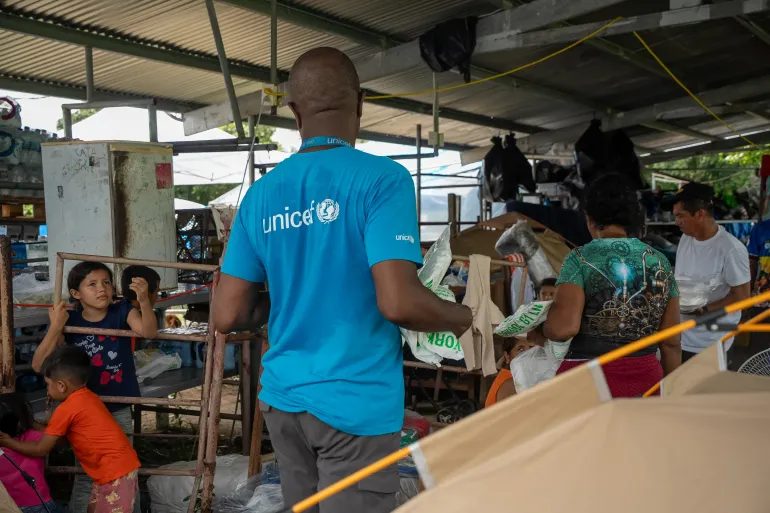
UNICEF works under the coordination of the Office of the Presidency’s Secretariat for Goals, in close collaboration with sister agencies within the United Nations system, and in ongoing dialogue with local authorities to provide a comprehensive, child-focused emergency response.
Working alongside the Ministry of Education, UNICEF is supporting the establishment of 11 temporary learning spaces and the provision of educational and recreational materials, with interventions expected to reach approximately 3,000 students in Veraguas, Herrera and Los Santos provinces. UNICEF is also supporting plans for integral child centered responses including the provision of safe water and sanitation, case management to ensure child protection and maternal and child health services around Child-Friendly Spaces in affected communities.
UNICEF is also supporting improvements to water and sanitation conditions in temporary settlements, including facilities expected to benefit approximately 343 displaced people of Isla Cañas, among them 54 children and adolescents.
As the response enters its early recovery phase, many families continue to face precarious living conditions and uncertainty about when they will be able to return to their homes and normal routines. Sustained support will be essential to restore essential services and ensure that children affected by the earthquake are not left behind.
Media contacts
About UNICEF
UNICEF works in some of the world’s toughest places, to reach the world’s most disadvantaged children. Across more than 190 countries and territories, we work for every child, everywhere, to build a better world for everyone.
Follow UNICEF on Twitter, Facebook, Instagram, LinkedIn and YouTube