Strengthening the cold chain boosts vaccination coverage for children
With Gavi support, UNICEF strengthens cold chain management systems in flood-affected Sindh.

Sujawal, Sindh: The devastating floods in 2022 impacted 33 million people, including 16 million children and damaged vital health infrastructure. Immunization services were disrupted leaving children more vulnerable to vaccine preventable diseases. Sindh was one of the worst affected provinces.
“Floods damaged 70 percent of the health facilities in Sujawal, including five sets of cold chain equipment which made it very difficult to continue vaccinating children,” says Dr. Anwar Ahmed, Additional District Health Officer and focal point for Expanded Programme on Immunization (EPI)/Polio Eradication Initiative (PEI), in Sujawal, Sindh.
“To ensure that immunization services continued despite damaged cold chain equipment, we made special arrangements for getting vaccines from nearby EPI centres where vaccines were stored in Ice lined refrigerators (ILRs). This took time as the vaccines needed to be transported from far away locations.”

When UNICEF began repairing the damaged cold chain system with funds provided by Gavi, the Vaccine Alliance, the impact was immediate.
The equipment in the cold room in the District Headquarter Hospital (DHQ), Sujawal and in the Basic Health Unit (BHU) in Rahoot were repaired as a top priority. Since then, vaccines are supplied to the entire district from the cold room in DHQ.
“Repairing the cold chain equipment improved our vaccine management drastically,” says Dr. Anwar. “We can see the impact. Vaccines are being supplied to 36 EPI centres.”
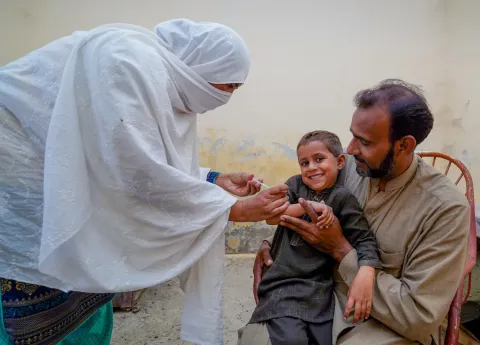
People from the surrounding villages bring their children to the BHU Rahoot for vaccination, while the EPI team conducts outreach sessions to vaccinate children living in remote villages.
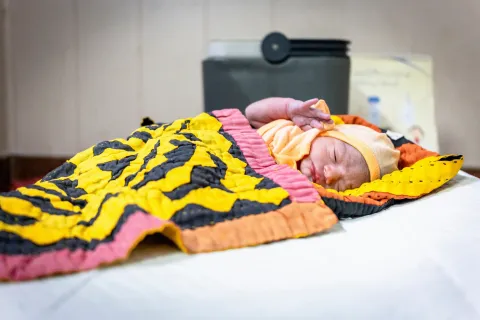
“Travelling away from our village is challenging and expensive. If this facility was not close to our village, it would be very difficult for mothers like me to vaccinate our children,” says Noor Jehan, who brought her two-month-old baby Anzer Ali for vaccination in the BHU.

Like Noor Jehan, mothers in this community are aware of the importance of vaccination and its vital role in protecting their children’s health against deadly vaccine preventable diseases.
Thanks to funding from GAVI, UNICEF repaired 96 ice lined refrigerators and cold room equipment in Sindh, with a notable impact on service delivery.
The repair of cold chain equipment has contributed to a 16 to 18 per cent increase in vaccination coverage in the province with plans in place to scale-up cold chain management systems even further, according to Fahad Fehmi, Effective Vaccinate Management (EVM) Coordinator EPI Sindh.
“Children are now getting vaccinated on time and at their doorstep. This is a relief for all of us,” says Dr. Muhammad Hanif Memon, District Health Officer (DHO) Sujawal.