Fighting Typhoid
Gavi, the Vaccine Alliance and UNICEF help Pakistan integrate Typhoid Conjugate Vaccine into Routine Immunization

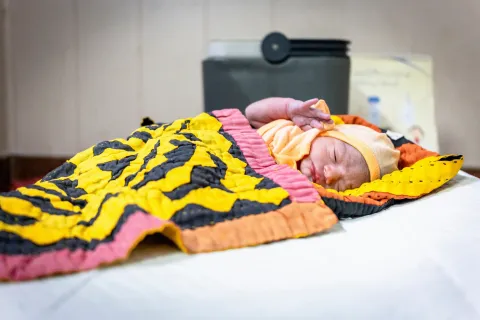
Quetta, Balochistan: Perag, just nine months old, is a healthy, happy, and active baby - thanks to his parents, who understand the importance of timely vaccination to protect their child from preventable diseases.
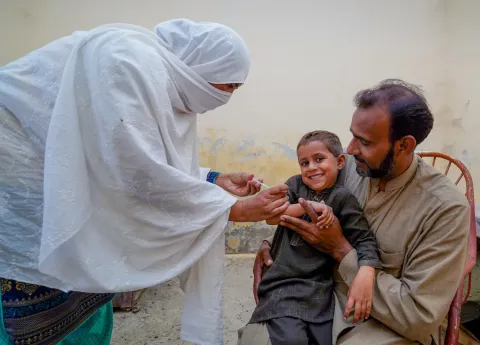
His father, Saghir, has taken a day off from work to bring him to the vaccination centre at Bolan Medical Complex Hospital in Quetta for his typhoid conjugate vaccine shot.
Typhoid is a serious bacterial infection that spreads easily from person to person, particularly through contaminated food or water. The risk is especially high in overcrowded communities with limited access to safe water, sanitation, and hygiene.
As the vaccinator draws the Typhoid Conjugate Vaccine (TCV) into a syringe, Saghir looks uneasy. He knows the prick will hurt his child, but he also understands that a moment of pain now can protect Perag, and the entire family, from far greater suffering in the future.
Perag receives the shot, lets out a loud cry, and is immediately soothed by his father. The procedure takes less than a minute, but its impact will last a lifetime. A precious life shielded from a potentially deadly disease.

Typhoid is highly prevalent in South Asia, where poor communities, vulnerable groups, and children are most at risk.
Symptoms of typhoid infection can include fatigue, prolonged fever, headaches, nausea, abdominal pain, constipation, and diarrhoea. In severe cases, it can lead to serious complications or even death.
The Typhoid Conjugate Vaccine (TCV) is the first vaccine developed to protect children as young as six months up to 45 years of age. It provides strong protection for at least four years, requires only a single dose, and is used in typhoid-endemic regions as part of routine immunization for children.
UNICEF and Gavi, the Vaccine Alliance, have supported countries in introducing TCV into their national immunization programmes. So far, only five countries, including Pakistan, have done so.
A world first – Pakistan leads on typhoid vaccine integration
In 2019, Pakistan became the first country in the world to include TCV in its routine immunization programme. Since then, multiple vaccination campaigns have been conducted across the country, protecting millions of children from typhoid.
Integrating TCV into the routine immunization schedule, which already protects against 12 childhood diseases including TCV, is crucial to preventing frequent outbreaks of extensively drug-resistant typhoid fever, particularly among vulnerable populations.
Balochistan, Pakistan’s largest province, covers 43.6% of the country’s land area but has a low population density of just 39 people per square kilometre. Its rugged, barren, and mountainous terrain makes it especially challenging to reach scattered rural communities with health services.
Low immunization coverage remains a major concern in the province, contributing to high rates of illness and death among children from vaccine-preventable diseases. Other contributing factors include limited access to clean water, poor sanitation, and inadequate hygiene practices.
Community engagement yields strong results
In 2022, a major TCV campaign was carried out in Balochistan. Extensive preparation was undertaken, training sessions were organized for 940 healthcare workers prior to the campaign.
Awareness activities were held to maximize demand, reach and impact, including advocacy, community engagement, social mobilization, partnerships with academic institutions, and the use of mass media and digital platforms.

Numerous vaccination sites were set up across the province. Mobile teams travelled from community to community—both in rural and urban areas—focusing especially on high-risk and underserved populations to ensure that every child was reached.
Both at static centres and through mobile teams, TCV was administered alongside other routine vaccinations, ensuring broader protection for children across Balochistan.
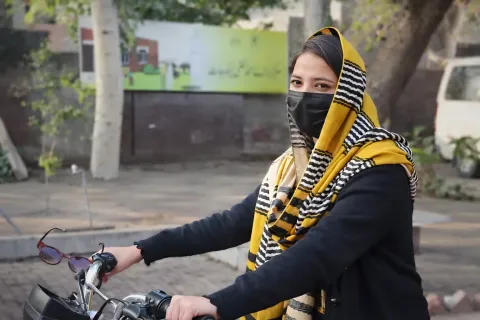
“There are many misconceptions in society about childhood vaccination,” says Shazia Imran, a Lady Health Worker who has been serving in the province for nearly eight years.
“When we visit communities to vaccinate children, some parents refuse, saying their child becomes unwell after the shot. Others believe vaccines contain ‘haram’ [religiously forbidden] ingredients,” she explains.
“While many parents are eager to protect their children through immunization, we do face refusals. It often takes time, patience, and a great deal of convincing to help families understand the importance of vaccines and agree to immunize their children.”
As a result of the efforts of frontline health workers and strong community engagement, over 1.7 million children aged 9 months to 15 years were vaccinated—covering almost 98 per cent of the target population.
The integration of TCV into Pakistan’s routine immunization programme has been vital in preventing frequent outbreaks of drug-resistant typhoid fever.

This success was made possible through the leadership of the Federal Directorate of Immunization, strong collaboration with provincial health departments, generous and flexible funding from Gavi, the Vaccine Alliance, and UNICEF’s continued support, to ensure that children receive protection against typhoid as part of their regular healthcare.
“With the introduction of the Typhoid Conjugate Vaccine, Pakistan has taken a major leap forward in protecting its children from drug-resistant typhoid - turning the tide against a deadly disease and saving countless precious lives," says Dr. Khalid Nawaz, UNICEF Health Specialist.