Evening Hours, Brighter Futures
How extended immunization timings are helping families

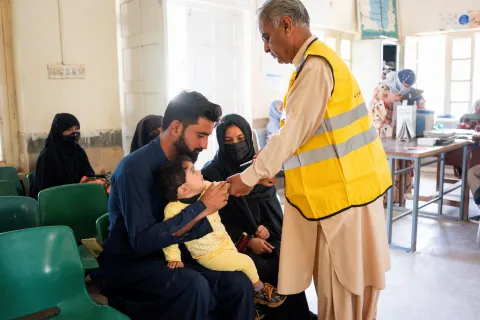
Islamabad, Pakistan: The waiting area at the Capital Development Authority (CDA) Medical Dispensary of Islamabad buzzes with movement. Mothers cradle sleepy infants while some fathers scroll through their phones, and a nurse’s steady voice calls out the next name on the list. One of the names on the list is Shumaila Abid. She has been coming here for years to keep her children’s vaccinations up to date. But this time, something is different… she’s here after sunset.
Shumaila, a mother of four, carries her youngest, six-month-old Azhan, on her hip as she waits her turn. Her husband works long hours as a driver, and her days are spent balancing household chores and caring for her children aged twelve, nine, five, and her youngest Azhan.
“It’s very hard to step out during the day,” she says. “There’s always something keeping me busy at home. These evening hours make it so much easier for me to come to the centre without rushing or worrying.”
Like many families in busy urban neighbourhoods, Shumaila and her husband struggled to fit routine immunization visits into their daytime schedule. Until recently, most health facilities closed their immunization counters by early afternoon. Parents with other commitments found it difficult to visit during those hours.
“Before, I used to think maybe we’ll go tomorrow,” she admits. “But with evening timings, there’s no excuse left. I can come after finishing my work and make sure my baby doesn’t miss his vaccine.”

The initiative to extend vaccination hours is part of a broader effort by the Ministry of National Health Services, implemented by local health departments with support from UNICEF and funding from Gavi, the Vaccine Alliance. Together, they are helping ensure that parents who cannot visit during regular hours still have access to life saving immunization services for their children.
UNICEF has also supported round the clock birth dose vaccination corners in maternity wards. From 2020 to 2025, more than one million newborns were vaccinated with their birth doses at 67 public and private hospitals across Pakistan, helping ensure that babies receive their first vaccines as early as possible after birth, no matter what time they are born.
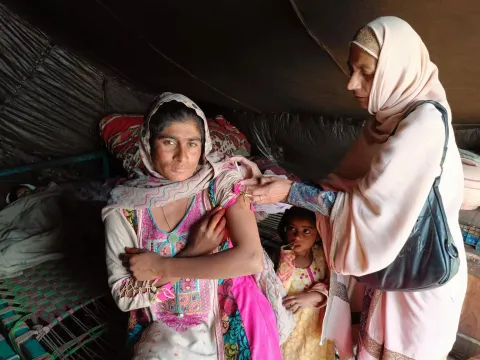
To increase reach, UNICEF and Gavi also helped introduce evening and weekend outreach sessions in underserved communities. Twenty-three mobile vans equipped with vaccines and supplies have been deployed, enabling vaccinators to reach families who were previously missed. This outreach has now expanded to 23 districts, including informal and low income settlements where many daily wage earners are away from home during the day.
Because of this, more than 200,000 previously unvaccinated children under two received their first routine vaccination. These efforts are designed to strengthen Pakistan’s overall immunization system and make vaccines more accessible to every family, regardless of schedule or location.
Shumaila first learned about the extended hours from the staff she has known for years. “We were at the hospital one morning for medicines,” she recalls. “One of the doctors told us vaccines are now available in the morning and in the evening. Later, the polio workers also reminded us to come in the evening if mornings are busy. That is how I found out.”
For her, the convenience brings relief. “Vaccines protect our children from deadly diseases. They’re like a shield,” she says, adjusting Azhan’s blanket.

“This initiative has really made a difference,” says Fakhra, a community health supervisor in the area. “I work a full day myself, so I understand how hard it can be for parents. Often both parents are out working all day, some even take their young children along, so evenings are often the only time they can manage to come for this important task.”
Health workers at the centre have noticed the impact. Families who previously postponed immunization visits are now returning.
“Often if parents arrived a little late and found the facility closed, they would delay the visit and miss the next scheduled dose,” says Samina, a vaccinator. “With the extended hours, we have seen those gaps closing, with more children now completing their vaccinations on time.”
Many parents arrive after work, sometimes with older children in tow. And while the centre remains busy, the overall daily pace has become easier to manage with extended timings, giving vaccinators more room to guide caregivers and answer questions.
“The process is easy, no difficulty at all,” says Shumaila. “The staff know us. They help us every time, and everything runs smoothly. I have already got my other children, and now Azhan, vaccinated here, and I will keep coming until all his doses are complete.”

As she leaves the centre, Azhan now asleep in her arms, Shumaila shares a simple message for other parents: “Children’s vaccination should never be missed. It’s better to get your child vaccinated today rather than face problems in the future.”
With support from Gavi, the Vaccine Alliance, UNICEF has enabled health departments across Pakistan to extend service hours, strengthen birth dose vaccination in labour rooms, and expand outreach activities so parents like Shumaila can ensure their children receive lifesaving vaccines, no matter the time of day.