Bringing life-saving vaccines closer to mothers and children in Balochistan
With support from GAVI and UNICEF, a new solar powered warehouse and cold room in Lasbela is helping strengthen immunization services across southern Balochistan.

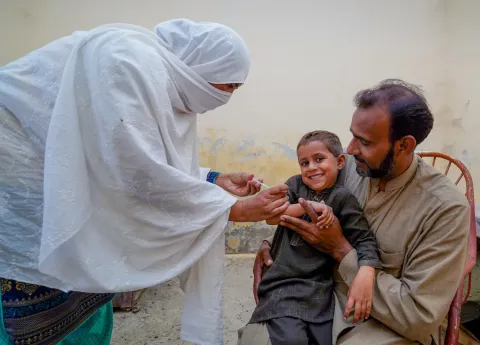
Lasbela District, Balochistan: Muhammad Arsalan watches as his 14-month-old daughter, Zaibunnisa, receives a vaccine at the main district health facility in Uthal, Lasbela district.
For Arsalan, getting his children vaccinated under Pakistan’s Expanded Programme for Immunization (EPI), which protects children against 12 vaccine-preventable diseases is an important part of protecting their health and their future.
“Children are vulnerable to many diseases,” he says. “I vaccinate my children because, God forbid, if anything happens to them, it should not be because I chose not to get them vaccinated.”
Behind every vaccine administered to a child like Zaibunnisa is a complex journey. Vaccines must travel hundreds of kilometres while remaining within a carefully controlled temperature range. Any interruption in that cold chain can affect the vaccine’s efficacy.
Until recently, vaccines and other routine immunization supplies destined for districts across Balochistan were transported from Islamabad to Quetta before being distributed onward to their respective destinations. For districts in southern Balochistan, this added significant travel time and logistical complexity.
For Lasbela, a district located near the Sindh border, this meant that vaccines often spent around 10 hours in refrigerated vehicles before reaching it, increasing the risk for vaccines and the burden of maintaining the cold chain. Similar challenges were faced by other districts in the Kalat and Makran divisions.
Road closures and security-related disruptions could make the journey even less predictable.
And when the vaccines finally arrived, another challenge awaited.
Without a dedicated cold room, the district relied on ice-lined refrigerators and could store only around a month's supply at a time. There was also limited capacity to store larger quantities of syringes, cotton swabs and other supplies needed for vaccination.
A disruption anywhere along the supply chain could therefore be felt at the vaccination centre, and ultimately by families.
“If your supply chain is disrupted, community members may come to the vaccination centre from far away and, if vaccines aren't available, they may never return,” explains Dr Malik Mansoor, Deputy District Health Officer in Lasbela.
Frequent power outages added another challenge. Lasbela can experience between 10 and 15 hours of power outages a day, making the reliable storage of large quantities of vaccines difficult.
Generators provided backup power during outages, but rising fuel costs made them increasingly expensive to operate and an unsustainable long-term solution for the district health authorities.
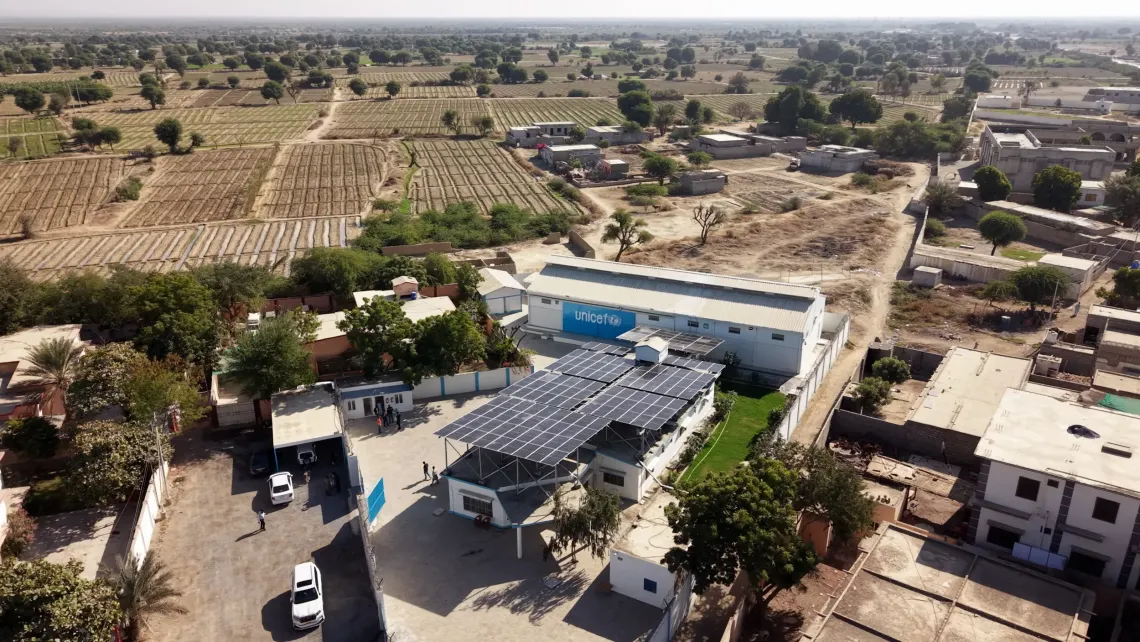
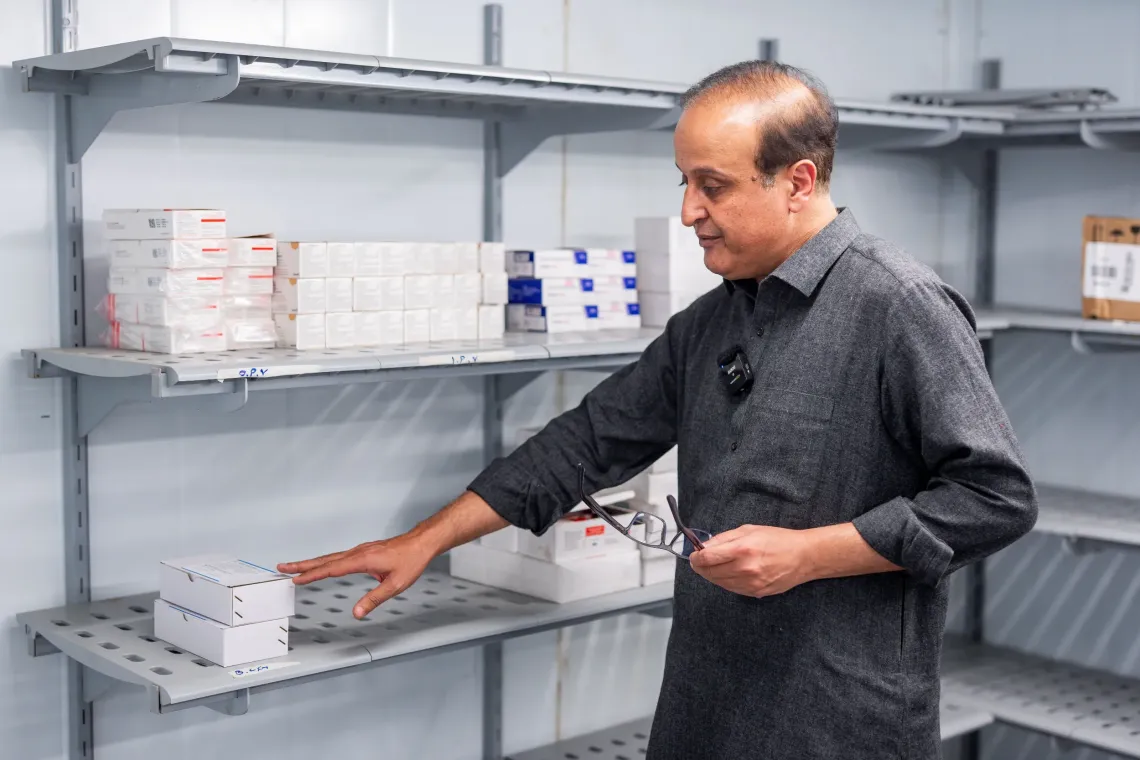
To help address these challenges, UNICEF, with funding from Gavi, the Vaccine Alliance, supported the construction of a new provincial level dry logistics warehouse and established a district level cold room in Uthal, Lasbela District.
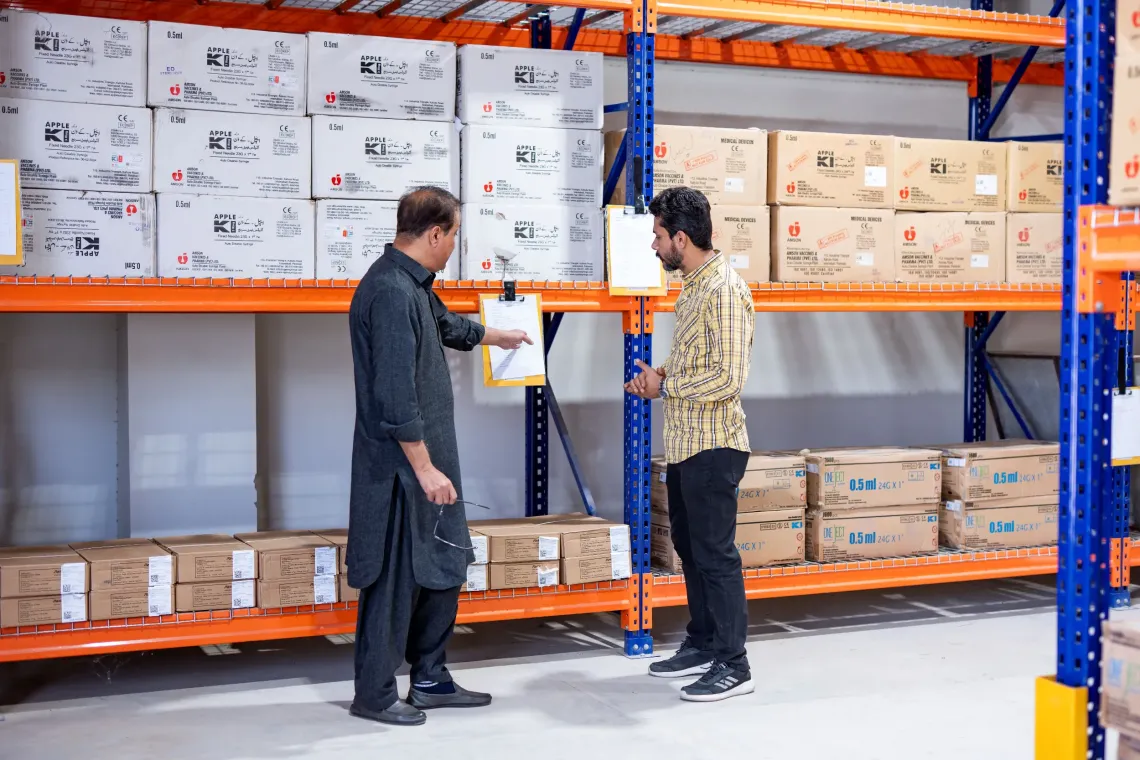
“Ever since this warehouse and cold chain facility were established, our capacity to store vaccines and the required dry supplies has increased significantly,” says Dr Malik. “While earlier, we were barely self-sufficient, now we are helping out other districts.
But increasing storage capacity was only part of the solution. Vaccines need to be kept at the right temperature around the clock, making a reliable source of electricity essential. The new warehouse and cold room were therefore fully solarized, providing uninterrupted power even during prolonged outages. The District Headquarters Hospital (DHQ Hospital) and the District Health Officer’s Office in Uthal, District Lasbela were also solarized as part of the same intervention.
“Solar power helps maintain the required temperature for vaccine storage, safeguarding their quality and effectiveness. It also ensures the continuous functioning of the warehouse and supports round-the-clock security and operations, contributing to a more resilient vaccine supply chain,” says Dr. Amir Akram, UNICEF Health Specialist.
For the provincial and district health authorities, solar power has reduced reliance on generators and the fuel needed to run them, providing a more reliable and sustainable way to protect vaccines from fluctuations in electricity supply.
The facility has also transformed the route that vaccines and dry goods take to reach southern Balochistan.
“The purpose of this provincial level warehouse is to receive supplies directly from Karachi and distribute them across two divisions,” says Dr Amir Akram, UNICEF Health Specialist. “Now, the supplies no longer go to Quetta. Instead, they are distributed to the districts from this warehouse.”
From Uthal, vaccines and other immunization supplies can now be distributed to districts across the Makran and Kalat divisions through a shorter and more reliable supply route.
This facility is particularly important in Balochistan, where vast distances, scattered communities and low immunization coverage continue to make reaching every child a challenge. Greater storage capacity, reliable solar power and a more direct supply route are helping make the immunization system more resilient to the disruptions that once threatened the availability of vaccines and supplies.
This effort is part of a broader initiative to strengthen Pakistan's immunization supply chain. With the funding from Gavi, UNICEF has supported the solarization of six warehouses and cold rooms across Pakistan, helping ensure vaccines are safely stored and delivered to the mothers and children who need them.