Disaster Risk Reduction and Humanitarian Action
UNICEF works with communities, governments, and partners to strengthen systems and ensure every child is safer, better prepared, and supported before, during, and after a disaster.
Challenge
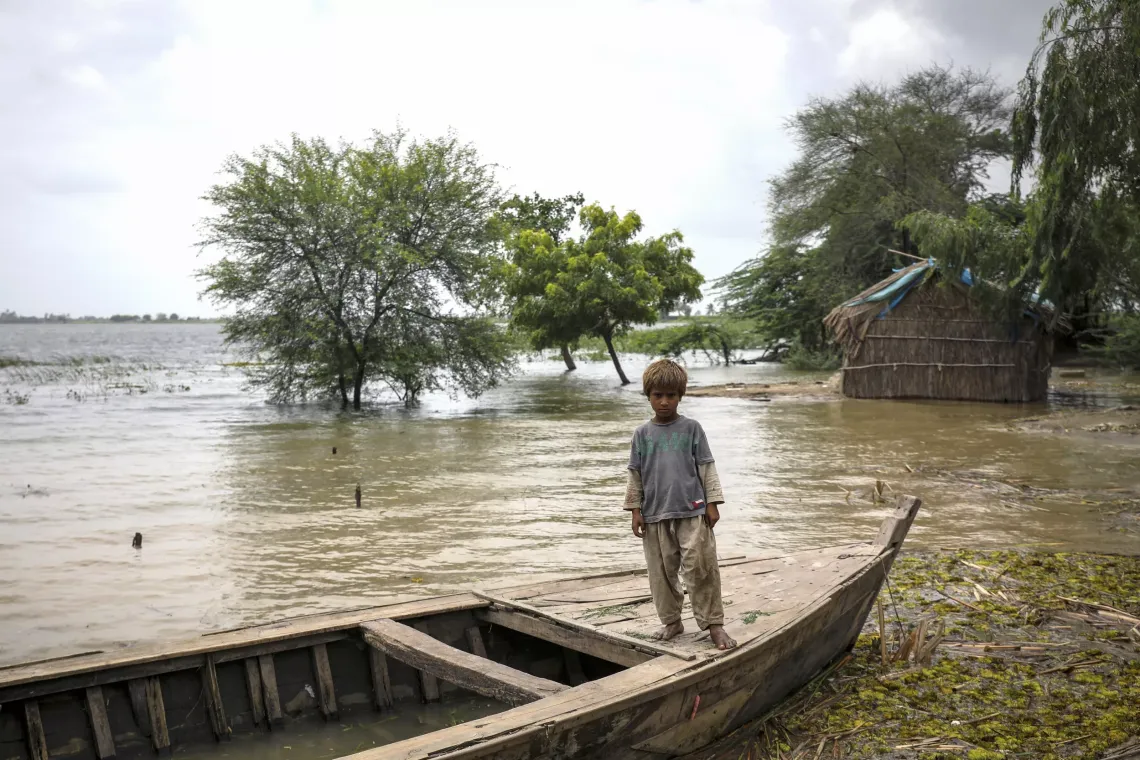
Children are the most vulnerable during and after disasters. In Pakistan, millions of children live in areas exposed to floods, droughts, earthquakes, heatwaves, landslides and glacial lake outburst floods (GLOFs). Climate change is increasing the frequency and severity of these hazards, placing children's health, education, safety, and well-being at growing risk.
Pakistan is among the world's most disaster-prone countries, ranked 19th on the 2026 INFORM Risk Index. When disasters strike, children are often the first to feel the impact and the last to recover. Access to education, healthcare, nutrition, safe water and child protection can be disrupted for months, increasing risks of disease, malnutrition, violence, family separation, and psychosocial distress. Adolescent girls, children with disabilities, and other vulnerable groups are often hit the hardest.
Preparedness and response capacities remain uneven, particularly in remote and underserved areas where early warning information and essential services may not reach those who need them most. Beyond large-scale emergencies, children also face everyday risks such as drowning, domestic fires, road accidents, electrocution, and snake or insect bites, which remain significant causes of preventable injuries and deaths. These hazards rarely make headlines, yet they affect children and families every day.
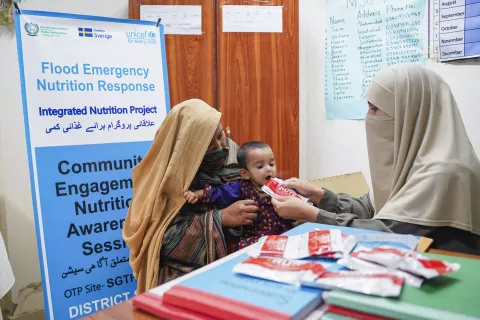
The 2022 floods highlighted the scale of these challenges. One-third of Pakistan was submerged, affecting more than 33 million people and disrupting access to schools, health care, safe water and protection services for millions of children.
Without stronger systems, resilient services, and better-prepared communities, future disasters risk repeating the same cycle of loss for children.
The solution
UNICEF works with the Government of Pakistan, partners, communities, schools, and young people to reduce disaster risks and ensure children can survive, learn and thrive before, during and after emergencies.
Our approach combines system strengthening with community action, placing children at the centre of disaster risk reduction and humanitarian preparedness.
Children as Agents of Change
Children and young people are not only affected by disasters. They also play a critical role in building safer and more resilient communities.
Across Pakistan, children help identify local risks, participate in preparedness activities, share life-saving information and promote safer behaviours among their peers and families. UNICEF supports children and young people to develop leadership skills, advocate for their rights, and contribute to solutions that help protect their communities from disaster risks.
By empowering children to participate meaningfully, we help transform them from vulnerable populations into active agents of resilience and change.
Our Key Strategic Initiatives
UNICEF works closely with the National Disaster Management Authority (NDMA) and Provincial Disaster Management Authorities (PDMAs) to integrate child-sensitive approaches into disaster risk management policies, planning, coordination and response systems. This helps ensure that children's needs and rights are considered before, during and after emergencies.
Together with NDMA, UNICEF developed Pakistan’s School Safety Framework, a practical guide that helps schools become safer spaces and centres for disaster preparedness.
The framework promotes:
- Safer school infrastructure
- Effective school safety management
- Age-appropriate disaster risk education
- Preparedness planning and evacuation procedures
By strengthening school safety, UNICEF helps protect children's right to learn even during emergencies.
UNICEF supports emergency preparedness and response planning and conducts simulation exercises and training for government officials, frontline workers, implementing partners and communities.
These efforts strengthen the capacity of those responsible for protecting children and delivering essential services during emergencies.
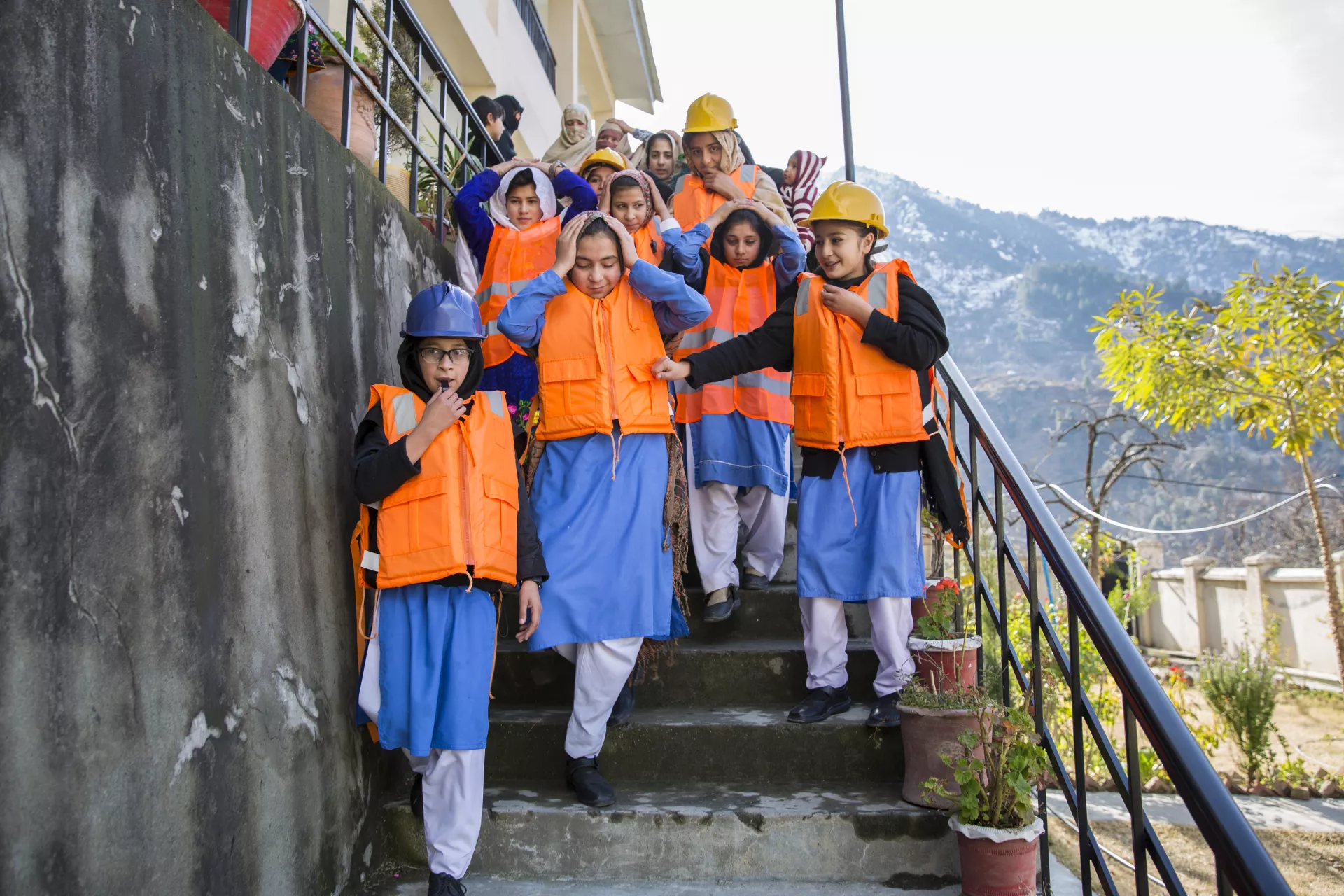
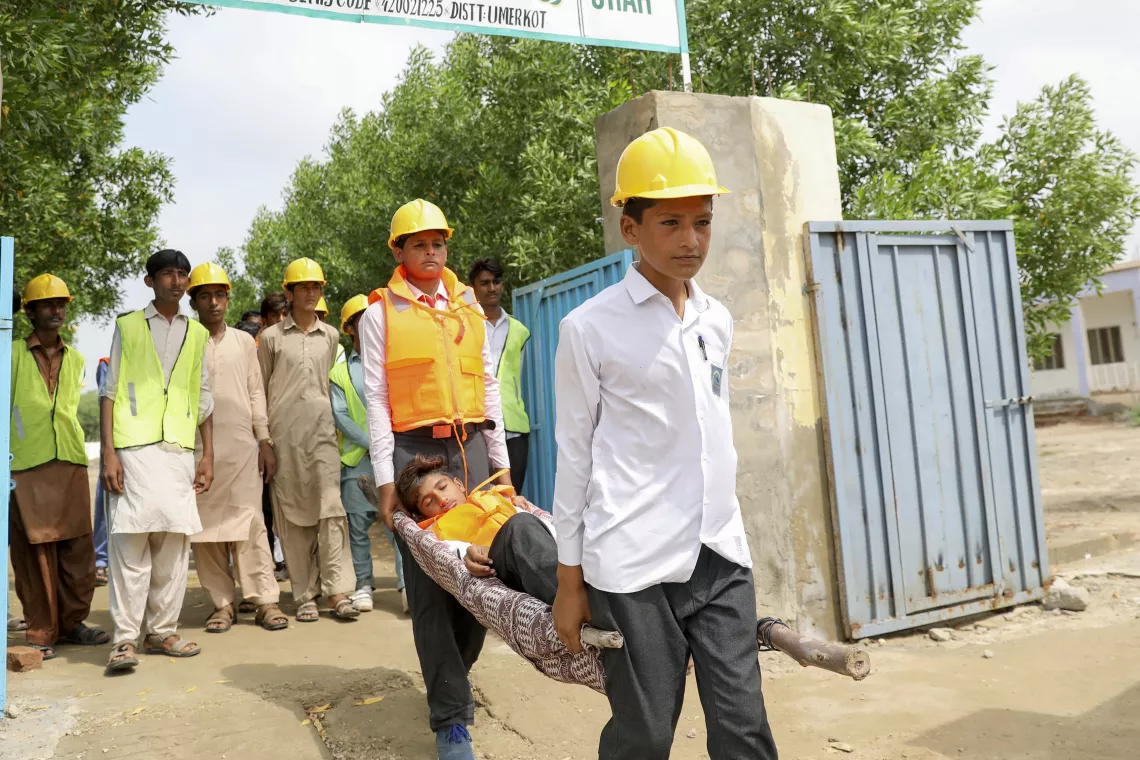
Through community and school-based disaster risk management programmes, UNICEF equips children, teachers, schools and communities with practical life-saving knowledge and skills to prepare for and respond to disasters.
UNICEF works with partners, including the Pakistan Girl Guides Association (PGGA), to equip young people with knowledge, leadership skills and preparedness tools.
Young people are trained as peer educators, community mobilizers and disaster risk reduction advocates, enabling them to raise awareness and promote safer practices within their communities.
Early warning information saves lives only when it reaches the people who need it.
UNICEF supports efforts to ensure that timely and accessible early warning messages reach all communities, particularly those that are hardest to reach.
Through the Accountability to Affected People (AAP) and Community Engagement Framework developed with NDMA, communities are empowered to participate in decision-making and shape humanitarian actions before, during and after emergencies.
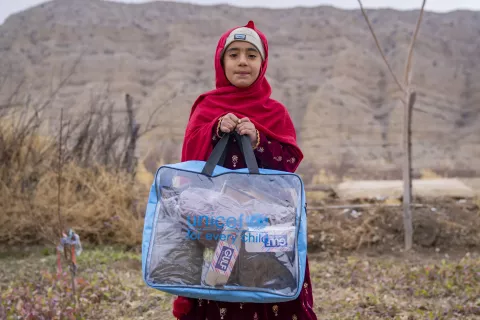
UNICEF strategically pre-positions emergency supplies across Pakistan to ensure rapid delivery of life-saving assistance when disaster strikes.
These supplies help children and families access essential items, services and support during the critical early stages of an emergency.
UNICEF uses child-friendly communication tools, including Meena storybooks, videos, educational materials and localized awareness campaigns, to help children and families understand both major disaster risks and everyday hazards.
Through trusted community channels, schools and partners, these resources promote practical actions that help keep children safe and prepared.
Every Child Resilient
UNICEF’s disaster risk reduction work goes beyond responding to emergencies.
We help children prepare for risks, strengthen the systems and services they rely on, and support communities to recover more quickly when disasters occur. By investing in preparedness, resilience and local capacity, UNICEF is helping build a future where every child can continue learning, growing and thriving despite increasing climate and disaster risks.
Together with partners, we are working to ensure that every child in Pakistan is safer, better protected, and better prepared for the challenges ahead.
Resources
Policy and Systems Strengthening
- School Safety Framework - developed with NDMA to guide child-safe school preparedness across Pakistan.
- AAP Guidelines - developed with NDMA to strengthen community-centered humanitarian response.
- Parliamentary Caucus on Disaster Risk - advocacy resource supporting policy-level engagement on child-centered DRR.
Learning and Capacity Development
- Climate Change Toolkit for Children - age-appropriate resource helping children understand and respond to climate risks.
- Girls Guide DRR Manual - building disaster preparedness skills among adolescent girls through the Pakistan Girl Guides Association.
Media and Communications Resources
- Media Engagement Materials- supporting journalists and communicators to cover disaster risk with a child-focused lens.
- Meena Storybooks
Child-friendly storybooks (Urdu) that help children understand and prepare for emergencies and everyday risks:
- Dealing with displacement
- Dealing with an earthquake
- Dealing with floods
- Dealing with general risks
- Dealing with winter
- Meena's Adventures
These resources help children, families, schools and communities build the knowledge and skills needed to stay safe and resilient in the face of growing climate and disaster risks.