In the Pacific, thousands of people will still lack access to safe water, sanitation and hygiene in 2030 unless progress increases – warn WHO, UNICEF
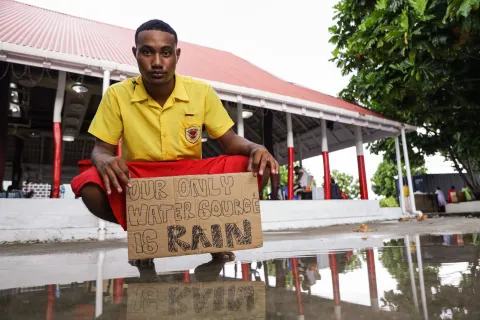
SUVA, 4 July 2021 – Thousands of people in the Pacific Islands, including children, will be unable to access safely managed household drinking water, sanitation and hygiene services in 2030 unless the rate of progress increases, according to a new report from WHO and UNICEF.
The Joint Monitoring Programme (JMP) report – Progress on household drinking water, sanitation and hygiene 2000 - 2020 – presents estimates on changes to household access to safely managed drinking water, sanitation and hygiene services over the past five years, and assesses progress toward achieving the sixth sustainable development goal (SDG) to ‘Ensure availability and sustainable management of water and sanitation for all by 2030’. For the first time, the report also presents emerging national data on menstrual health.
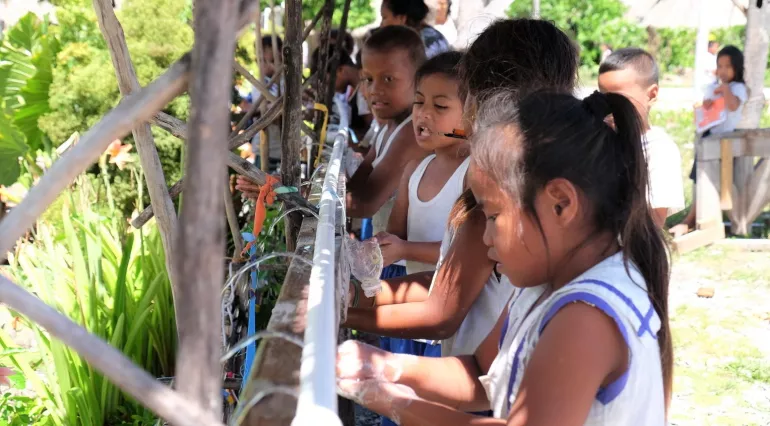
Handwashing with soap and water is vital to help prevent illness and to stay healthy. COVID-19 has highlighted the urgent need to ensure everyone can access good hand hygiene. Countries in the Pacific are noted in the report as having limited progress on household handwashing facilities, including Kiribati, Niue and Marshall Islands.
“Too many people living in Pacific Island countries are unable to consistently access basic services ensuring clean water, hygiene and the adequate treatment and disposal of waste. This leaves them exposed to deadly yet preventable diseases. On the other hand, as the COVID-19 pandemic has shown, being able to wash your hands can literally save your life. We need united action now to ensure access to safe water, sanitation and hygiene across the Pacific,” said Dr Akeem Ali, acting WHO Representative to the South Pacific.
Some progress reported, but not enough
The report notes some progress towards achieving universal access to basic water, sanitation and hygiene (WASH) services in the Pacific Islands. For example, Tokelau is highlighted in the report as being on track to achieve universal basic sanitation services by 2030. However, progress is moving too slowly in several countries, with many countries off track to reach the target of universal access to basic water services by 2030.
The 21 countries and territories in the Oceania region (excluding Australia and New Zealand) covered in the report include: American Samoa, Cook Islands, Fiji, French Polynesia, Guam, Kiribati, Marshall Islands, Federated States of Micronesia, Nauru, New Caledonia, Niue, Northern Mariana Islands, Palau, Papua New Guinea, Samoa, Solomon Islands, Tokelau, Tonga, Tuvalu, Vanuatu, Wallis and Futuna Islands.
Urgent need for investment
The report makes clear that, if current trends persist, thousands of children and families in the Pacific will be left without critical, life-saving WASH services.
This report also notes vast inequalities with vulnerable children and families suffering the most. A significant scale up in investment is needed to achieve universal access to safely managed water, sanitation and hygiene.
“Even before the pandemic, many children and families across the Pacific faced challenges in accessing clean water, safe sanitation, and a place to wash their hands,” said UNICEF Representative Sheldon Yett. “Despite the impressive progress to date to improve these lifesaving services, it is vital, now more than ever, to scale up these services for communities. We will continue to work with our government partners around the region to ensure that every child and family has access to the most basic needs for their health and well-being, including fighting off infectious diseases like COVID-19.”
Emerging data on menstrual health included in the report shows that, in many countries, a significant proportion of women and girls are unable to meet menstrual health needs. Significant disparities exist, particularly among vulnerable groups, such as the poor and those with disabilities.
Accelerating WASH coverage will require prioritization at the highest levels of decision making by international agencies, governments, civil society and the private sector. For this to happen, WASH must be a regular fixture on the agenda at high-level political meetings to ensure member states keep track of progress. This is important in the context of the forthcoming mid-term review of the Water Action Decade in 2023 – the first UN conference on water and sanitation in almost 50 years.
###
Note for editors:
The WHO/UNICEF Joint Monitoring Programme (JMP) for Water Supply, Sanitation and Hygiene is responsible for monitoring global progress towards the Sustainable Development Goal (SDG) targets and indicators relating drinking water, sanitation and hygiene (WASH). The JMP produces national, regional and global estimates of progress on WASH in households, schools and health care facilities.
Related links:
WHO/UNICEF Joint Monitoring Programme (JMP) for Water Supply, Sanitation and Hygiene
WHO: Water, sanitation and hygiene (WASH)
UNICEF: Water, Sanitation and Hygiene (WASH)
For more information please contact:
In the Pacific
Cate Heinrich, UNICEF Pacific, Tel: +679 992 5606, [email protected]
Lauren O’Connor, WHO South Pacific, Tel: +679 777 9733, [email protected]
In Geneva
Ceridwen Johnson, WHO Geneva, World Health Organization, Mobile: +41 795 789 678, [email protected]
In New York
Sara Alhattab, UNICEF New York, Tel: +1 917 957 6536, [email protected]
About WHO:
The World Health Organization (WHO) is the United Nation’s specialized agency for international public health. In the Pacific, WHO’s Division of Pacific Technical Support provides tailored, timely support to 21 Pacific island countries and areas. Our main office is in Suva, Fiji, and the Division has six other offices across the region: The Federated States of Micronesia, Kiribati, Samoa, Solomon Islands, Tonga and Vanuatu.
Media contacts
About UNICEF
UNICEF promotes the rights and wellbeing of every child, in everything we do. Together with our partners, we work in 190 countries and territories to translate that commitment into practical action, focusing special effort on reaching the most vulnerable and excluded children, to the benefit of all children, everywhere.
For more information about UNICEF and its work for children, visit https://www.unicef.org/pacificislands/