

Kiribati Field Office
UNICEF Field Office

Children in Kiribati
UNICEF Pacific has a field office in Kiribati, which also supports our programmes in Kiritimati and Naoeru
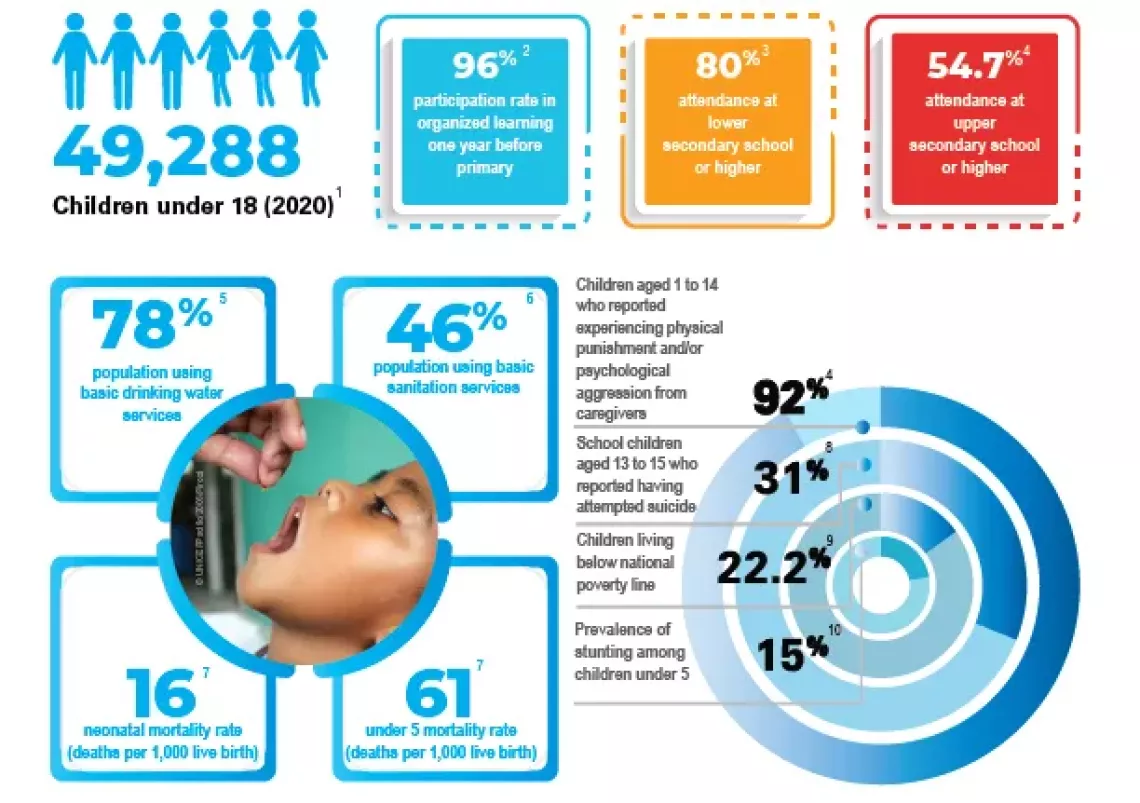
One of the most remote and geographically dispersed countries in the world, Kiribati has approximately 49,288 children, consists of 33 coral islands, spread across 3.5 million km2, and is one of the poorest countries in the Pacific. Most of the population of 118,700 lives on the Gilbert Islands, where the capital of Tarawa is situated.
Kiribati’s economy is highly dependent on the fishing industry, for its economic progress. However, climate change has the potential to disrupt the country’s largest resource by affecting fish migration and spawning patterns.
Climate change also affects daily life in Kiribati through challenges such as storm surges, coastal erosion, saltwater intrusion, as well as longer, more intense and more frequent drought events. Rising sea levels mean that Kiribati faces increasingly severe environmental threats with most islands above sea level, the safety and livelihoods of communities are at risk, and may require them to relocate in the future.
Emerging Issues
The increase in natural disasters and climate change threats – including rising sea levels – pose a severe threat to Kiribati, undermining the country’s sustainable development and the wellbeing of its people.
Water, sanitation and hygiene challenges are aggravated by Kiribati’s small size and high population density in some areas.
The country has one of the highest rates of neonatal and child mortality in the Pacific, while mental illness, suicides and gender-based violence are growing health concerns.


