We call it escalation. They see horror.
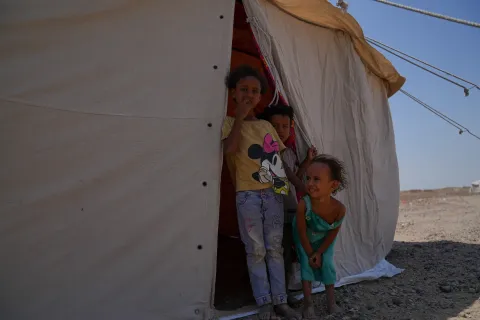
Across the region, escalating violence is exposing children to danger, displacement and distress, often not for the first time.
- English
- العربية
“As I was driving to pick up my younger son, Yusef, 10, I received a text from my older son, Maseeh, 14: ‘Mom, they hit. Call me.' But the phones were not working.
“When I finally reached him, he was in the school basement with his friends. Some were panicking. Others were crying. I told him: ‘Dad is coming.’ He got quiet and asked: 'Is this a war?’”
For Maryam, a mother of two boys living in Tehran, that question marked the moment everything changed.
Outside, the streets were filled with children. Some ran. Others stood still, waiting for parents who could not reach them. Traffic came to a standstill as fear spread.
“The drive that usually takes 15 minutes took an hour and a half. I stopped the car and ran. My heart was beating so fast I could hear it. When I reached Yusef, I just hugged him quietly.”
But the relief did not last. In the days that followed, the sound of jets and bombardments became part of daily life. The fear settled into the night, into moments meant to feel safe.

Across the region, the new wave of violence is taking a devastating toll on children. Hundreds have reportedly been killed and many more injured in recent weeks, while hundreds of thousands of children have been forced to flee their homes, many now living in displacement.
Schools and hospitals are increasingly affected, disrupting essential services and putting children at risk. Under international humanitarian law, children and civilian infrastructure must be protected at all times, yet these obligations are not being upheld.
For far too many children, exposure to violence is not a single event but a repeated experience, with lasting impacts on their mental health and sense of safety.


Rahaf, 5, in Lebanon, describes the fear of leaving home:
“The bombing was very strong. We came here because it wasn’t safe. We were very scared. They were going to hit our home.
“I don’t want to be here. I want to go back home, play with my toys and sleep in my bed.”
Adam, 10, also in Lebanon, remembers the journey:
“It sounded like thunder. We left at 3 a.m. All the way, there were airstrikes, one after another. It felt like everything was shaking. The strikes were very strong, like the whole world was on fire. My heart was beating fast. I was crying.”
Children in Iran describe similar fears, even when they try to appear strong.
“Since I had gone through another war, I wasn’t surprised or scared. But there is always some stress; what if they hit us? Or my family?” says Maseeh, 14.
For Sina, 16, in Iran, the impact is harder to put into words.
“The war and the internet blackout are mentally exhausting. You are constantly on edge, not knowing what comes next.”

Not all of this fear is visible.
It shows in small moments, in silence, in the questions children ask and in how they try to cope.
“When my 10-year-old turns up the volume of music, so he does not hear the bombs… when my teenage son calls his friend and asks, ‘Are you alive? Was that near you?’ then asks, ‘What about school? Will we leave town again? Is it going to end in 12 days?’” Maryam explains.
The questions come without answers.
“The sad part is that this is not his first war,” she says quietly.
For many children, war is no longer an exception. It is becoming part of their childhood. For parents, fear does not end with the moment. It lingers in the quiet hours that follow.
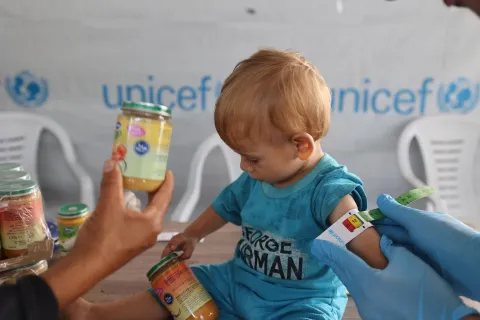
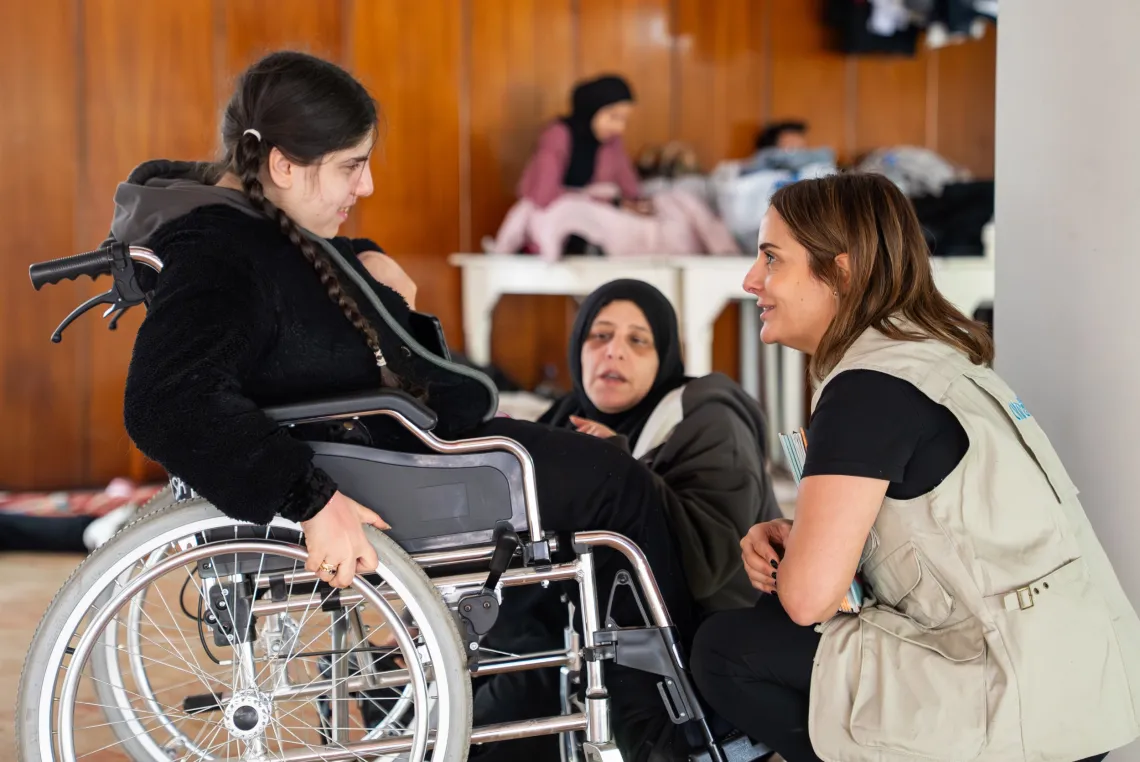
Across the region, in addition to humanitarian support, UNICEF and its partners are providing mental health and psychosocial support to children and families, but the impact of repeated exposure to violence is profound.
Maryam describes the weight she carries silently as she tries to protect her children.
“I can’t sleep because I am afraid that I won’t wake up quickly enough to hold them,” she says.
She tries to focus on her sons. Like many parents across the region, she grew up with war. Now, she is watching her children live through it too.
“I try to keep the worst thoughts out of my head. I try to shield them from the trauma of war — something I grew up with. I try to stay strong. But sometimes I can’t.
She thinks about the parents who will not be able to do any of this anymore. The thought stays with her along with a quiet sense of guilt for the safety they still have, even as others have lost everything.
This is becoming a reality for too many families.
Childhood should never look like this. Children should be protected and hostilities should stop – now.