Strengthening Immunization for Children
Tackling Gender Barriers and Promoting Parenting Alliance

- English
- العربية
Highlights
Strengthening immunization through gender equity and engaging fathers in child health and family wellbeing.
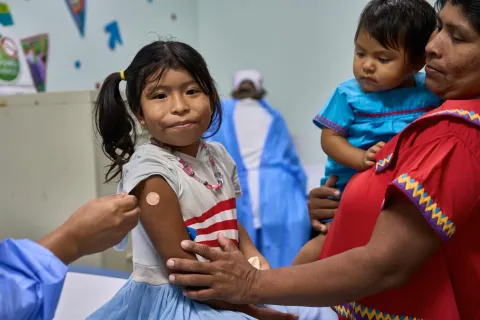
Across the Middle East and North Africa, UNICEF is promoting positive parenting programs that engage fathers as active participants in child health and more equitable outcomes for the entire family. These programs leverage cross-sectoral collaboration to ensure immunization is positioned as a shared parental responsibility through a strong parenting alliance between caregivers. More specifically, there is an increasing emphasis on promoting gender-responsive parenting programmes to stimulate demand for immunization and address service barriers in zero-dose communities.
The new UNICEF Brief, Strengthening Immunization for Children: Tackling Gender Barriers and Promoting Parenting Alliance, examines the existing evidence and conceptual rationale for policies and programmes that promote fathers’ engagement and advocates for supportive allies for maternal and child health and well-being. It highlights programmes in Yemen and Egypt, two of the several programmes in MENA. The brief is a compelling call to action for policymakers and practitioners to integrate gender-responsive frameworks into immunization and child health initiatives, ensuring that no child is left behind.
Gender can influence implementation efforts and outcomes through patterns of individual and collective decision-making, access to and control over resources for service use, quality of health care delivery and biases in service provision (Feletto and Sharkey, 2019). Women are typically assigned the role of primary caregivers in the family, yet they are often not empowered to fulfil this role. They are tied to a gendered division of labour that leaves them with little time or opportunity for seeking health care. Furthermore, their lower status in the household and community limits their ability to influence and enact decisions about their own and their child’s health. Gender and security concerns can restrict women’s mobility in public, thereby hindering their access to immunization services. Considering that resource allocation (such as time and transport), conflicting priorities (such as livelihood insecurity and subsistence versus preventive interventions like vaccination), and safety concerns are mediated and negotiated within the family and community sphere, where fathers wield critical influence, it appears short-sighted to sideline fathers in child health and immunization programmes.