


Regional & Country Reports: Integrating Mental Health & Psychosocial Support in Primary Health Care
for Children, Adolescents, Pregnant Women and New Mothers in the Middle East and North Africa Region
The regional and country reports explore the integration of Mental Health and Psychosocial Support (MHPSS) into Primary Health Care (PHC) for children, adolescents, pregnant women, and new mothers across the Middle East and North Africa (MENA) region. Led by the UNICEF Middle East and North Africa Regional Office (MENARO), the Burnet Institute, and the World Health Organization (WHO), the research highlights key challenges and provides recommendations for scaling up mental health services within PHC.
The research covers Jordan, Lebanon, Libya, Kuwait, and Saudi Arabia, in addition to a regional analysis. It reveals a significant mental health burden, with 1 in 6 adolescents in the region estimated to have a mental disorder. Mental health services are often limited to specialized care, with insufficient integration at the primary care level. Key challenges identified include the lack of national mental health strategies, limited financial resources, inadequate workforce training, and poor coordination between sectors such as health, education, and child protection.
To address these challenges, the reports recommend developing national strategies that prioritize mental health for children and adolescents, increasing investments in PHC, and enhancing workforce capacity through training. There is also a focus on reducing stigma through community engagement, improving mental health literacy, and fostering cross-sector collaboration to ensure accessible and holistic care.
The findings emphasize that integrating MHPSS into PHC systems in Jordan, Lebanon, Libya, Kuwait, and Saudi Arabia is essential to addressing the mental health needs of vulnerable populations and promoting sustainable mental health solutions across the region.
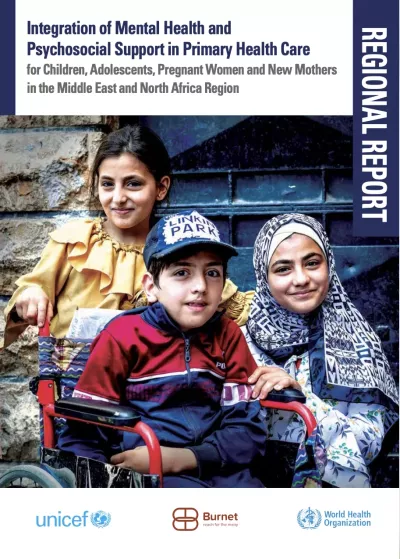
This report highlights the mental health burden in MENA, where 1 in 6 adolescents has a mental disorder. Services are limited to specialized care, leaving PHC providers unprepared. Key challenges include insufficient youth strategies, funding, and poor sector coordination.
Recommendations:
- Develop national strategies and enhance cross-sector collaboration.
- Increase PHC investments and train providers.
- Engage communities, reduce stigma, and boost mental health literacy.
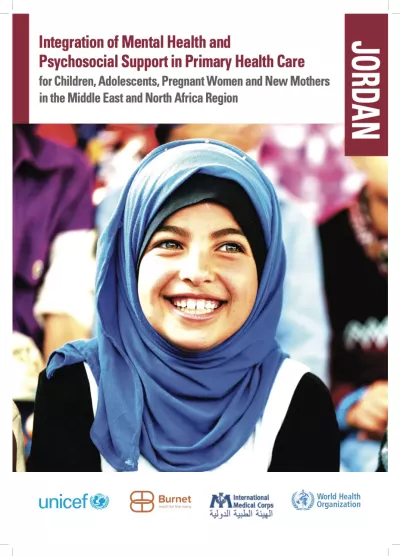
This report focuses on the integration of MHPSS into PHC in Jordan, identifying issues such as the lack of validated screening tools, management protocols, and legislation for mental health care targeting children and adolescents.
Recommendations:
- Develop a national mental health plan and secure financial resources.
- Provide standardized tools and training to health professionals.
- Integrate MHPSS services with child protection and education sectors.
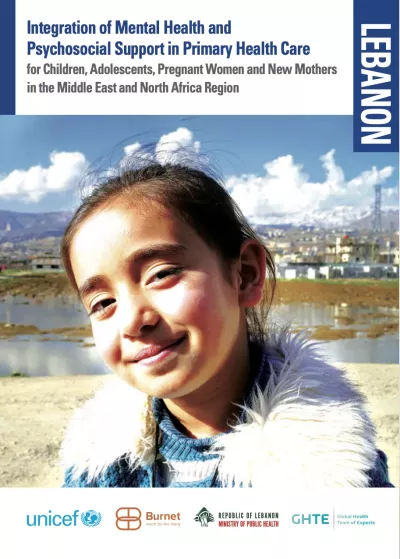
Lebanon's report emphasizes the need for a national mental health strategy for children and mothers, fully integrated with PHC services. It highlights the importance of incorporating evidence-based mental health interventions into school curricula and increasing community engagement to combat stigma.
Recommendations:
- Strengthen communication efforts and promote mental health awareness.
- Establish standard procedures for consistent care in PHC.
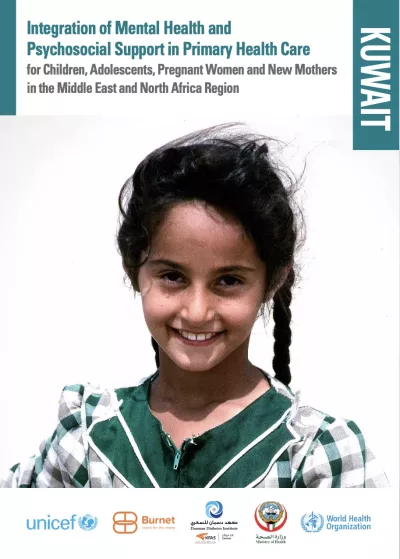
Kuwait's report underscores the need to promote MHPSS within government systems and integrate screening into Well Baby clinics. It emphasizes the role of digital technology in monitoring care and the importance of community engagement.
Recommendations:
- Secure funding for care model development.
- Establish guidelines for children and adolescent care.
- Use digital tools for monitoring MHPSS services.
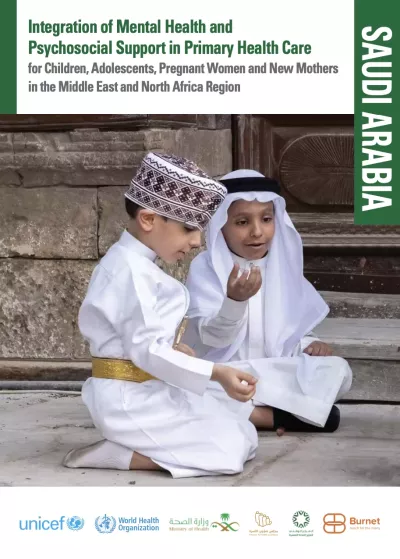
The Saudi Arabia report highlights the need to develop national mental health policies and strengthen PHC services with MHPSS integration. The report emphasizes collaboration between sectors and using digital technology to enhance care.
Recommendations:
- Raise public awareness to reduce mental health stigma.
- Increase workforce training and improve coordination across sectors like education and social services.
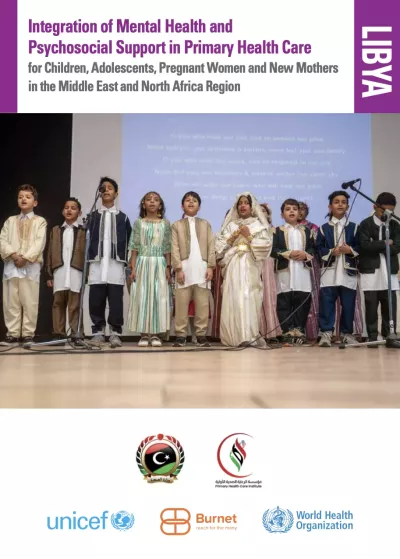
The Libya report calls for a National Mental Health Act to protect children, adolescents, and mothers. It emphasizes community-based services and multisectoral collaboration to ensure comprehensive care.
Recommendations:
- Standardize tools for early detection and care within PHC.
- Create a multisectoral mental health committee to coordinate efforts.
- Reduce financial burdens for mental health patients and improve workforce capacity.