RewirEd Summit 2021: an opportunity to curb global education crisis - UNICEF
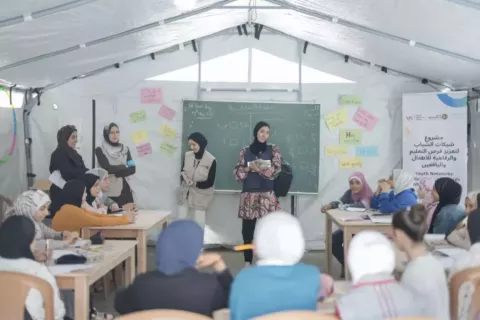
WHAT: UNICEF will take part in this year’s global education summit RewirEd. The COVID-19 pandemic has deepened a pre-existing learning crisis, further holding back millions of children – and their societies and economies – from progress. RewirEd presents an opportunity to curb the crisis and reimagine what education looks like for the world’s children.
WHO: UNICEF global and regional spokespeople will be available for interview at the Summit and via phone and video including:
UNICEF Regional Director for the Middle East and North Africa Ted Chaiban
UNICEF Global Chief of Education Robert Jenkins
Generation Unlimited Chief Executive Officer Kevin Frey
Giga Co-Lead Chris Fabian
UNICEF Advocacy and Communication Manager Rafik ElOuerchefani
WHEN: 12-14 December 2021
WHERE: RewirEd Summit, Dubai Exhibition Centre. The Summit will also be available here. To arrange an interview with UNICEF spokespeople please contact Lina Elkurd, [email protected], +971 50 213 9769; Fatima Zahra El Atrach, [email protected], +971 54 580 7438.
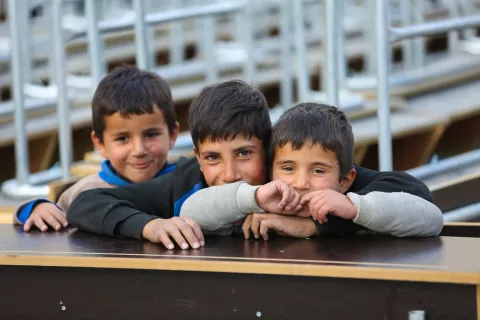
WHY: Before COVID-19, the world was grappling with a learning crisis. Pre-pandemic data from the World Bank reported that half of ten-year-olds living in low- and middle-income countries were unable to read or understand a simple story. Today, this figure is estimated to have reached up to 70 per cent. School closures, poor access to remote learning and cuts to already stretched education systems have pushed even more children into ‘learning poverty’.
Without access to school, children’s mental health, well-being, socialization, labour market participation, and even expected lifetime earnings have all suffered, with the most marginalised children bearing the heaviest price. In the MENA region alone, an entire generation of students could lose up to USD1 trillion collectively throughout the course of their lives due to COVID- 19.
To help curb the crisis, reopening schools and keeping them open must remain high priority. Countries must assess students’ learning levels and adopt learning recovery programs, and schools must go beyond places of learning and provide children with the services needed to thrive including healthcare, psychosocial support, nutrition, water and sanitation, and protection.
Inadequate investment in evidence-based solutions and strategies to improve learning outcomes is resulting in poor learning outcomes, especially for the most marginalized children. Political buy-in at the international level and among national governments is essential to prioritizing investments in education, including investment in digital learning.
Media contacts
About UNICEF
UNICEF promotes the rights and wellbeing of every child, in everything we do. Together with our partners, we work in 190 countries and territories to translate that commitment into practical action, focusing special effort on reaching the most vulnerable and excluded children, to the benefit of all children, everywhere.
For more information about UNICEF and its work for children, visit www.unicef.org/mena
Follow UNICEF on Twitter Facebook Instagram LinkedIn Youtube TikTok
Join our UNICEF MENA WhatsApp group to get the latest news. Send us a text message at the following number and we'll add you to our list: 00962790082531