

UNICEF Malaysia: 70 years of prioritizing children
A look through our journey for children in Malaysia 70 years in the making
Introduction
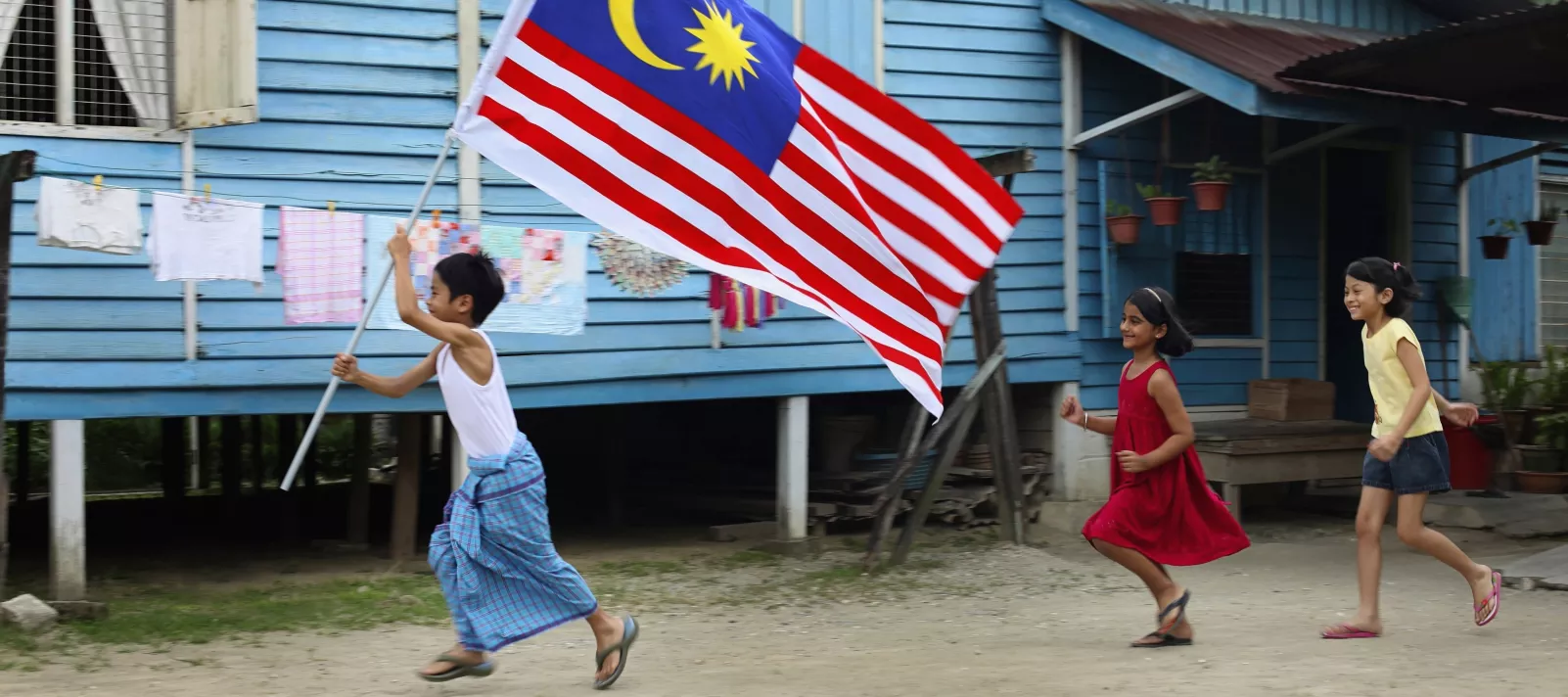
For 70 years, UNICEF has been working for children in Malaysia, focusing on the most pressing needs of the moment. Together with the Malaysian government, civil society organizations, the private sector and various integral stakeholders – we’ve made decent strides in many areas of child welfare, development and protection.
Join us on a journey from the past to the present, and then some.
The Early Years: a focus on the basics
In December 1946, the immediate aftermath of World War II left millions of children in dire straits. In response, the United Nations Assembly created the United Nations International Emergency Fund for Children (UNICEF) to organize emergency relief for immediate post-war needs.
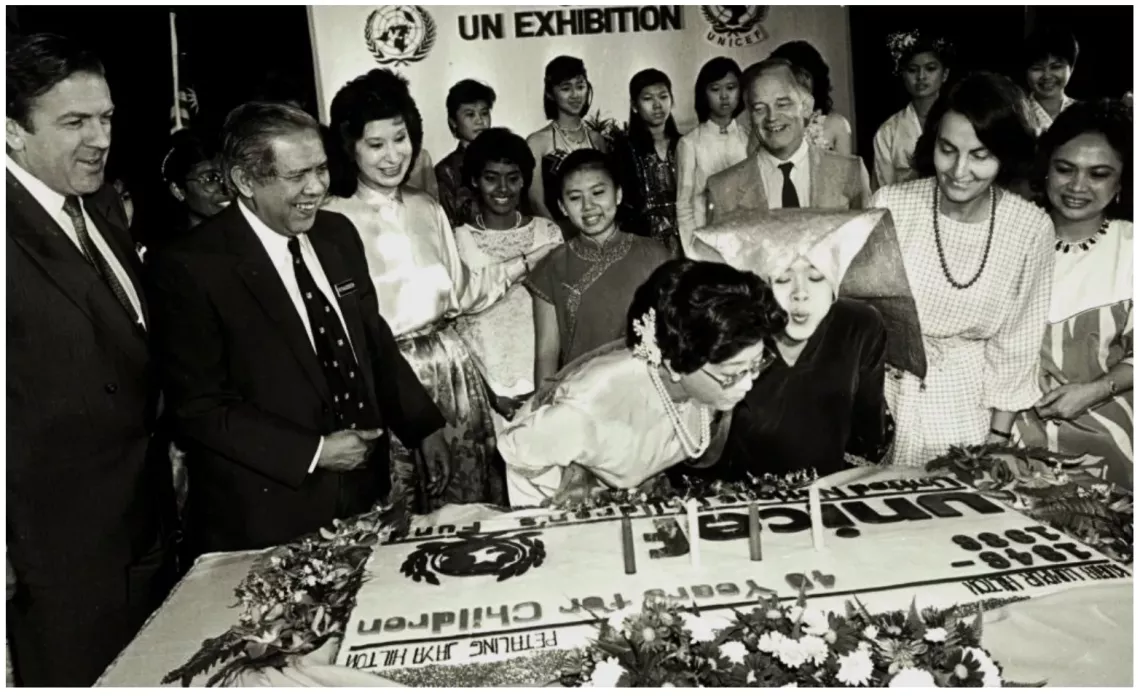
UNICEF’s work in Malaysia didn’t begin with a physical location. Through a field office in Manila in 1948, the organization orchestrated aid towards neighbouring nations such as Malaya and Singapore. 1954 brought initial partnerships with the Malayan Government on foundational issues such as improving child health, nutrition, sanitation, education and welfare services.
| Nutrition & Breastfeeding | Immunization | Training & Development | The beginning of child rights |
| ● 400,000 lbs milk for pregnant mothers and children aged 1-5 in Malaya (1955) | ● Supplies for 66 BCG teams across Malaya to test and vaccinate 40,000 school children (1951) | ● Providing resources (bus, lab equipment, reference books, etc) to the Public Health Inspectors Training School (1959) | ● Basic Co-operation Agreement siugned between first PM Tunku Abdul Rahman and UNICEF Representative S. Polak (1964) |
| ● 1.25 million pounds of skimmed milk powder distributed, benefitting 40,000 children annually (1964) | ● USD 500,000 worth of equipment for the support of tuberculosis control programmes (1966) | ● Mid-wifery kits, equipment and vitamins to support mother-child services in Sabah & Sarawak (1955) | ● Co-sponsored participation of Malaysian delegation to the Asian Conference on Child and Youth in National Planning in Bangkok (1966) |
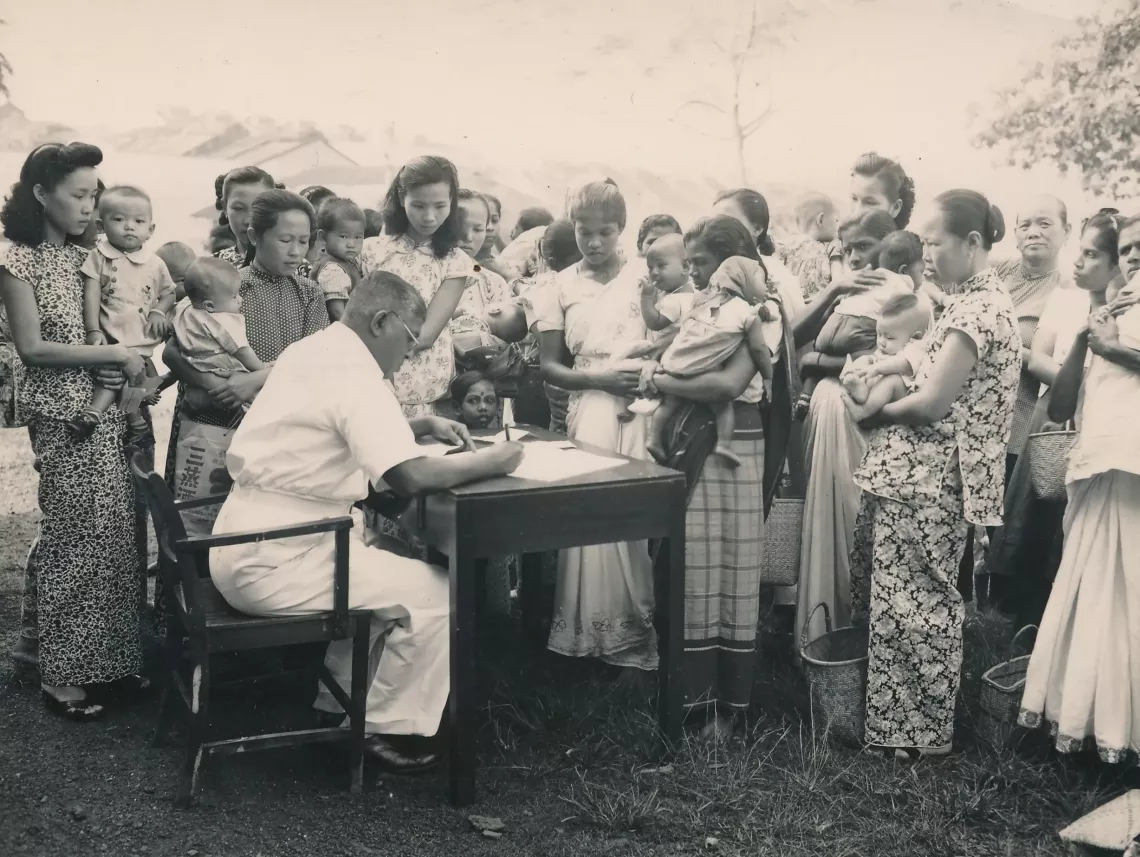
Twenty-five years after the war saw much improvement but also new challenges emerge for children in Malaysia. The 1970s were known as the Second Development Decade, with many economic wins yet poverty persisted in some communities. The Malaysian government recognized the need for a robust strategy in line with global development shifts.
Health remained a focus for UNICEF in Malaysia. In the early 1970s, aid was provided to expand Malaysia's health infrastructure, focusing on maternal and child health in rural areas. From grants to mid-wifery centres, water and sanitation supplies for supply of safe drinking water, to educational programmes targeting reproductive health; UNICEF continued initiatives to nurture healthier children.
Entering a new era: The Child Survival and Development Revolution
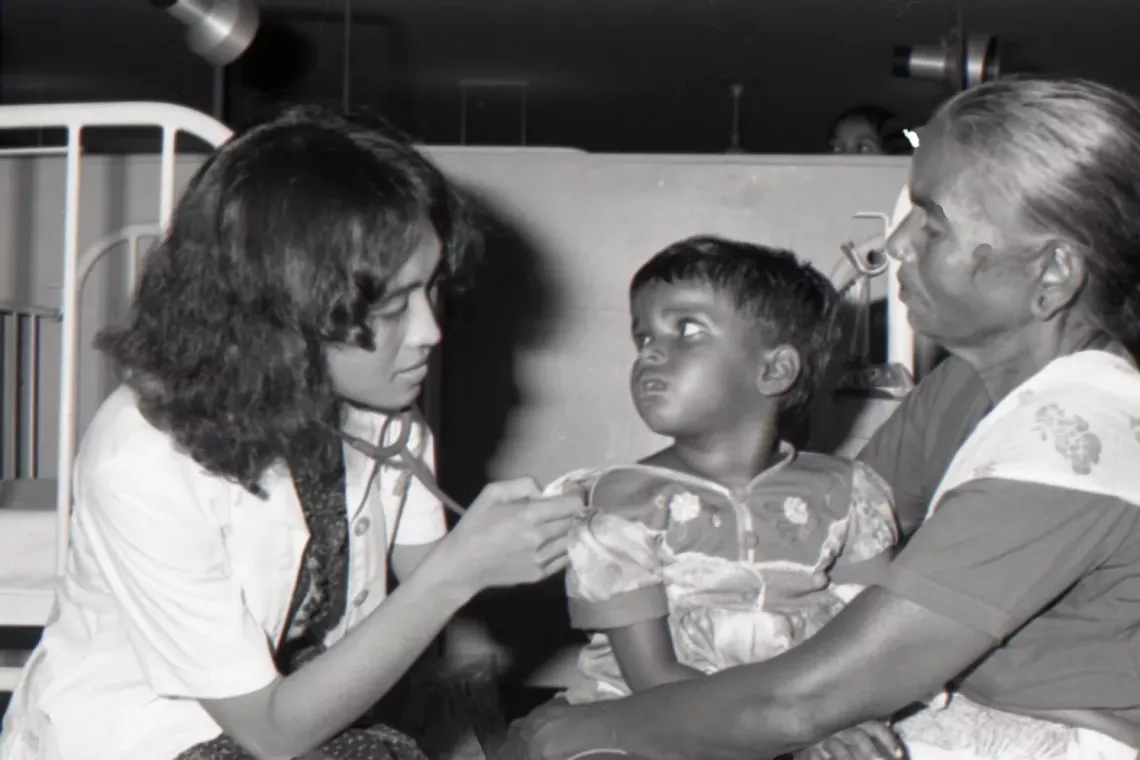
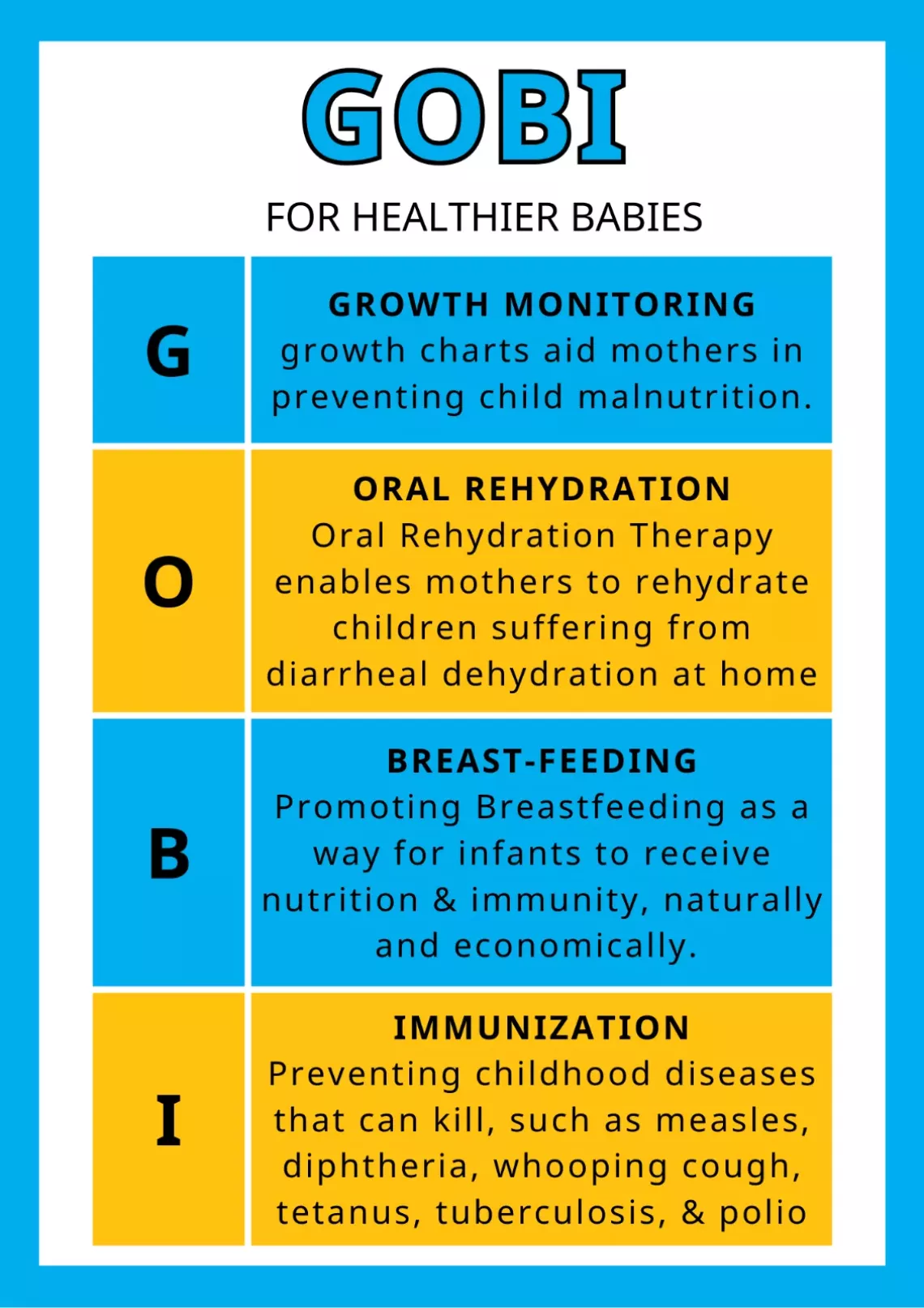
The 1980s witnessed the Child Survival and Development Revolution sweeping across the globe. The revolution significantly reduced infant mortality rates in the developing world, saving the lives of six to seven million infants annually through simple health techniques collectively known as GOBI: Growth monitoring, Oral rehydration therapy (to treat diarrhoeal dehydration), Breastfeeding initiatives, and Immunisation to protect against early childhood diseases such as measles, diphtheria, tetanus, and polio.
The focus on health and emerging health issues continued. HIV and AIDS proved a new challenge for children in the late 80s, early 90s. The risk of exposure through breastfeeding and the loss of parents to HIV and AIDS were a real threat to children. During 1996-1997, the Ministry of Health and UNICEF collaborated on an HIV/AIDS awareness and prevention peer-to-peer program for youth, to promote healthy lifestyles and educate young people about HIV/AIDS.
A Convention for Children
Malaysia ratified the Convention on the Rights of the Child (CRC) on 17 February 1995, with 12 reservations. Today, 7 have been withdrawn while 5 remain [Articles 2 (Principle of non-discrimination), 7 (Name and nationality), 14 (Freedom of thought, conscience and religion), 28 paragraph 1(a) (Right to free and compulsory primary education), and 37 (Torture and deprivation of liberty)].
Malaysia’s ratification of the CRC is a giant leap forward for child rights. With the dawn of a millenium, the focus shifted from a needs and welfare focus to that of rights and responsibilities of, and for children.
In 2001, the Child Act 2001 was enacted to further fulfil the country’s obligations under the CRC. UNICEF assisted the operationalizing of these obligations by conducting sensitization workshops among senior government officers in the Department of Social Welfare in 2003 and developing training modules on handling child abuse cases, involving Child Protection Teams, the Health Department, police, and prison personnel.
UNICEF’s work in Malaysia continued to evolve in the technical sphere with research and publications providing the crucial data needed to devise interventions for children. Browse our latest publications here. But we did not forget our fundamental purpose: upholding child rights. This meant on occasion, pivoting back to the welfare model. In December 2014, heavy flooding in Kelantan, Terengganu, Pahang, and Perak affected approximately 400,000 people including children.
UNICEF supplemented national relief efforts, distributing 10 metric tons of High Energy Biscuits (HEB) and 900 school bags to support the affected communities, to address the immediate nutritional needs and educational continuity of children in flood-affected areas.
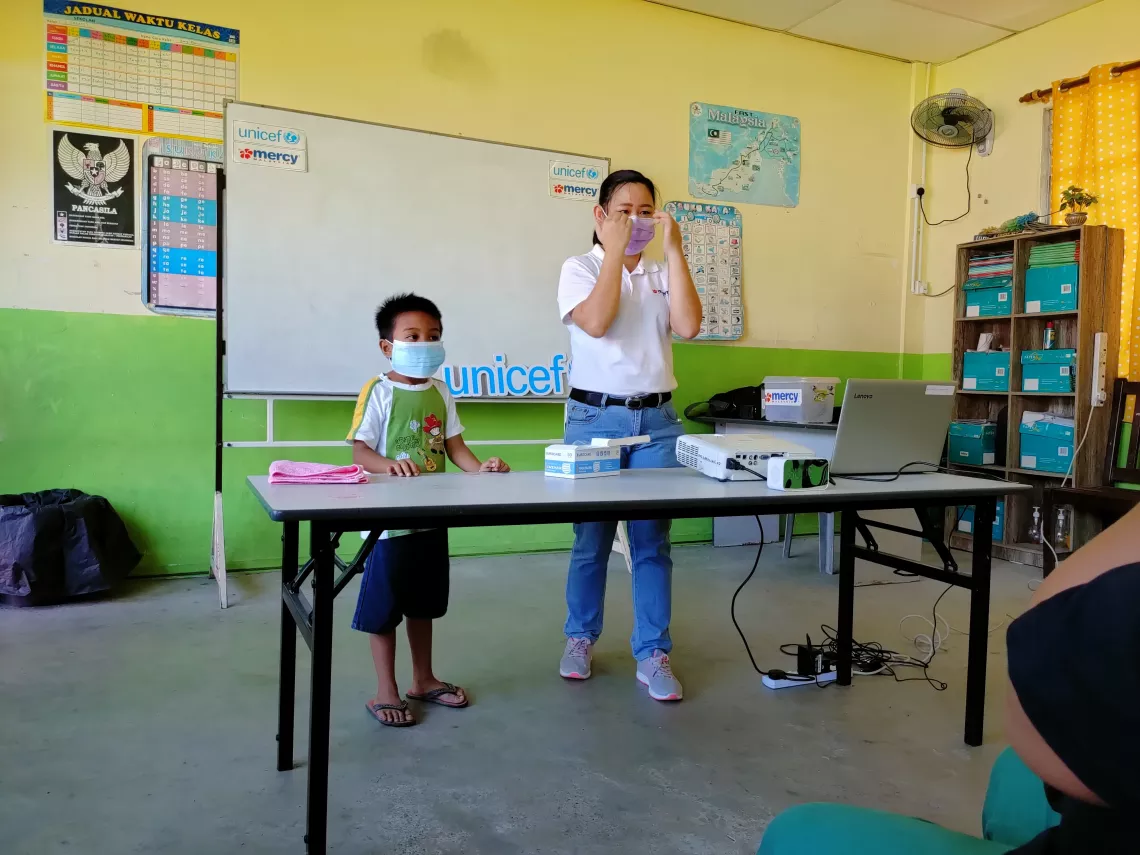
Later in 2021, the COVID pandemic took UNICEF to the field once again: assisting in vaccine procurement (with over 1.3 million doses secured), and teaming up with local organizsations to distribute hygiene supplies and conduct awareness-raising sessions in schools, alternative learning centres, low-cost flats, detention centres, and other key community locations across the country to help contain the spread of COVID-19.
UNICEF’s work will continue to match children’s needs of the day, but our mission is clear: we want lasting change for children, and thus we need to focus on creating the best foundation for it through the right policy and mindset shifts.
Forward Focus: New challenges, same commitment
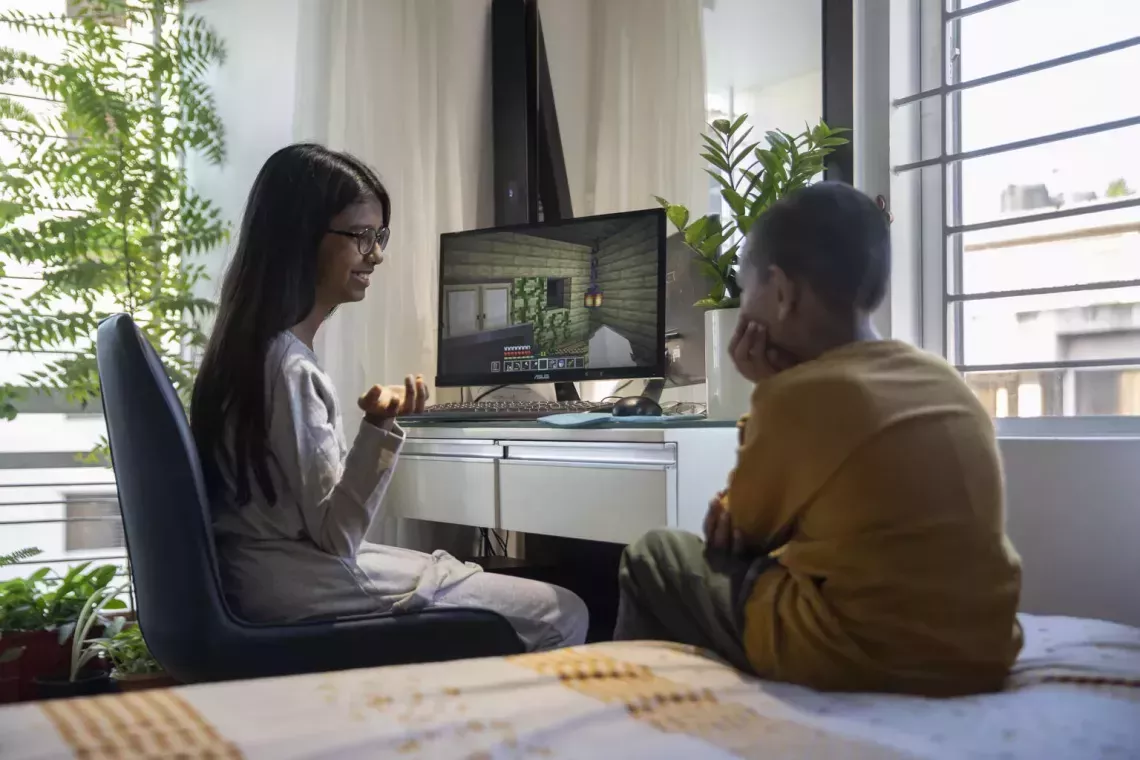
The world is changing; and with it, the threats to a child’s well-being are shifting as well. Once upon a time, we feared the dangers outside our door. Today, they are in a child’s hand in the form of a mobile device.
While new challenges emerge, some age-old ones persist. Poverty continues to deprive children of the opportunity to thrive, often causing issues such as malnutrition, delayed development, dropping out of school, early pregnancy, and child marriage. COVID-19 only made this worse.
Children in Malaysia are exposed to violence, abuse, neglect and exploitation across a range of settings. Malaysia recorded 1,705 sexual abuse cases in 2018, 1,865 in 2019 and 1,373 in the first nine months of 2020.
Child physical and mental health indicators are also not where we’d like them to be. Stunting and wasting have risen and obesity among children aged 5–17 years more than doubled between 2011 and 2019. Rates of mental ill-health have also climbed in recent years.
UNICEF’s focus for the future is clear. The challenges may be new, but our commitment is built to last.
The road ahead
| Ending Violence | Child well-being & inclusion | Climate Change |
| Creating an enabling environment for a society free of violence against children. Evidence generation and research to better understand the magnitude of violence, nature, and drivers, so data can inform policy, be it to challenges such as corporal punishment, legal identity, child detention, early pregnancy, or protection of children on the move. | Ensuring all children, especially the most marginalized, have improved access to quality social protection systems and public services. The multifaceted support includes evidence-based policymaking, strengthening the social protection system, planning for children's well-being, and optimizing public resources for equitable development. | Building capacity, identifying and managing risks to children vulnerable to climate change and environmental issues. This includes raising awareness, providing technical support, developing a sustainability-focused education curriculum, and empowering children and young people to engage in public dialogue on environmental sustainability. |
However, UNICEF did not and cannot do any of this alone.
Together with the Malaysian government, all partners, donors, and a supportive public, we can make even more impactful changes for children in Malaysia. Are you with us?
UNICEF in Malaysia 70th Anniversary videos
UNICEF Malaysia at 70: 5min Hero Video through the ages.
UNICEF Malaysia at 70 Milestone videos.
Part 1: The Beginning
Part 2: The Development Decades
Part 3: Child Survival Revolution
Part 4: The Dawn of Child Rights
Part 5: MDGs, AIDs & Tsunami Response
Part 6: Digital Challenges
Part 7: Emerging Challenges