Families on the Edge in Penang: Impacts of rising costs and persistent poverty
Report calls for streamlined federal and state aid to enhance resilience and recovery of low-income families.

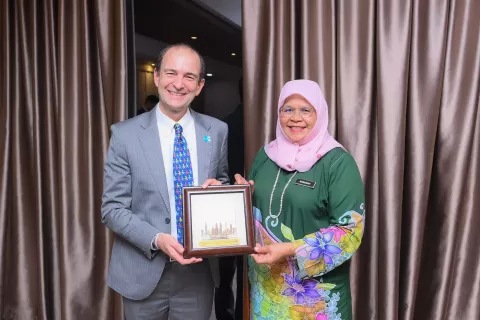
George Town, 26 August 2024 – In 2022, low-income households led by women or persons with disabilities reported a decline in living standards compared to pre-pandemic levels. While income levels showed an improvement in the following year, soaring costs pushed living standards even lower. These findings were presented in the Families on the Edge, Penang report, launched today at the Penang Institute and officiated by YB Lim Siew Khim, Penang State Exco for Social Development, Welfare and Non-Islamic Religious Affairs and YB Jagdeep Singh Deo, Deputy Chief Minister II and EXCO of Human Capital Development, Science and Technology.
“The Federal Government of Malaysia as well as the Penang State Government have taken commendable steps to bring the economy and livelihoods of people back on track. These interventions have contributed to clear improvements in economic growth, household income and employment. Yet, some low-income households, specifically those led by women as well as by people with disabilities still encounter barriers and challenges” said Robert Gass, UNICEF Representative in Malaysia.
Expanding the analysis on urban family poverty in Malaysia, the Penang State Government and UNICEF Malaysia commissioned the Penang Institute to produce the Families on the Edge, Penang report. This comprehensive study evaluates the impact of social welfare services on low-income households in Penang, with a particular focus on women and children.
Key findings from the Families on the Edge, Penang include:
- Over sixty per cent of low-income households in Penang reported having no savings from their monthly income.
- Heads of household aged 40-54 faced a 53 per cent higher chance of unemployment, which increased to 87 per cent for those aged 55-64 as compared to heads of household aged 15-39.
- Eggs replaced meat as the primary protein source, with a 47 per cent decline in meat consumption in 2022 as compared to pre-pandemic levels.
The study surveyed 632 low-income households in the first phase and 433 low-income households in the second phase across all five districts in Penang. The surveys were supplemented by interviews and focus group discussions with low-income flats residents in PPR Sungai Pinang, PPR Taman Manggis, PPR Mak Mandin, and PPR Desa Wawasan.
There were two rounds of surveys, from April to August 2022, and from February to May 2023. This allowed the project to track longitudinal information on the socio-economic status, welfare, and overall well-being of beneficiary households - comparing low-income household’s living conditions to pre-pandemic standards and demonstrating the effects of persistent poverty.
The report contains policy recommendations to address key issues prevalent in low-income communities in Penang:
- Streamline federal and state aid policies to ensure comprehensive delivery of support to vulnerable communities,
- Increase access to public employment services such as training and development opportunities with a specific focus on women and youth,
- Expand coverage of social protection to self-employed and informal or gig workers,
- Improve financial and health literacy for low-income communities, and
- Provide affordable childcare and social services.
Robert Gass, UNICEF Representative in Malaysia, emphasized the importance of targeted interventions, stating, “Full recovery hinges on protecting our most vulnerable. Providing affordable childcare, increasing access to employment opportunities, and enhancing financial literacy are vital steps in ensuring no family, no child, is left behind.”
UNICEF Malaysia and the Penang State Government are committed to addressing the challenges faced by low-income households and ensuring a better future for all. The Families on the Edge, Penang report is part of UNICEF’s continuous effort to understand vulnerable communities and improving the well-being of children in Malaysia.
###
Notes to the Editor
The full report and key findings summary to the editor can be found here: Families on the Edge, Penang | UNICEF Malaysia
Key findings from the Families on the Edge, Penang study:
Employment:
- Employment among heads of households decreased in 2023, particularly among those with chronic illnesses or disabilities.
- Household heads aged 40-54 faced a 53.4 per cent higher chance of unemployment, which increased to 87 per cent for those aged 55-64.
Economic Welfare and Living Standards:
- Despite a 2.9 per cent annual growth in real household income since 2019, household spending decreased by 10.4% in 2023.
- Over 60 per cent of households reported having no savings from their monthly income.
- Households led by women or persons with disabilities reported a decline in living standards.
Financial Aid:
- About 85 per cent of low-income households received federal aid, but a significant number of households remained excluded.
- Aid was primarily used for essential needs, with food and groceries being the top priority, followed by rent payments.
Health:
- 27 per cent of household heads had chronic illnesses, and 6.5 per cent were persons with disabilities.
- Financial worries and caregiving responsibilities contributed to declining mental well-being, with nearly half of female household heads reporting increased anxiety.
Nutrition:
- Eggs replaced meat as the primary protein source, with a 47 per cent decline in meat consumption in 2022.
- Households expressed satisfaction with the quality and quantity of their food, favoring homemade meals.
Care Work:
- In about 79 per cent of households, females are the primary caregivers, with about 30 per cent of caregivers feeling burdened by their responsibilities.
- Respondents from female-headed households described access to affordable and convenient childcare as a major challenge
Education:
- Lack of access to technology and difficulties in maintaining focus were reported as major challenges during online schooling.
- Academic performance improved moderately for more than 50 per cent of children, highlighting the benefits of in-person schooling.
Media contacts
About UNICEF
UNICEF promotes the rights and wellbeing of every child, in everything we do. Together with our partners, we work in 190 countries and territories to translate that commitment into practical action, focusing special effort on reaching the most vulnerable and excluded children, to the benefit of all children, everywhere.
For more information about UNICEF and its work for children, visit www.unicef.org.
Follow UNICEF on Twitter, Facebook, Instagram, YouTube & Threads.