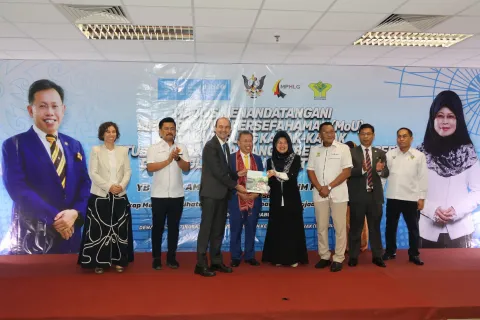
Kuala Lumpur Commits to Putting Children First: DBKL and UNICEF Sign MoU for Child Friendly Cities Initiative and ASUH KL Programme

Kuala Lumpur, 14 August 2025 — In a commitment towards building a more inclusive and equitable city for children, Dewan Bandaraya Kuala Lumpur (DBKL) and the United Nations Children’s Fund (UNICEF) Malaysia today formalized a partnership to put children at the centre of city planning and social protection through two key initiatives: the Child Friendly Cities Initiative (CFCI) and the ASUH KL Programme.
These initiatives represent more than programme launches. They reflect a shift in how Kuala Lumpur plans for its future, by prioritizing children’s needs, rights and wellbeing first. The partnership supports Malaysia’s national priorities and contributes to the Sustainable Development Goals especially on reducing child poverty and building inclusive, child-friendly cities.
The Memorandum of Understanding (MoU), signed during the ASEAN Sustainable Urbanization Forum, marks Kuala Lumpur’s official entry into the global CFCI movement and the launch of Malaysia’s first-ever pilot social assistance initiative for young children in public housing. Together, these initiatives reflect a bold shift from designing cities around infrastructure, to designing them around the needs and everyday realities of children.
“As we formalize this partnership, we are laying the foundation for a future where children are at the heart of urban development and cities are shaped to be responsive to their rights, voices, and dreams,” said Robert Gass, UNICEF Representative to Malaysia.
As part of the CFCI cycle, a city-wide analysis will be conducted to better understand the realities of all children, including those living in public housing, with disabilities, or in other vulnerable environments. The findings will inform a three-year CFCI Action Plan, co-created with children to ensure meaningful youth participation in municipal decision-making.
Datuk Seri Maimunah Mohd Sharif, Mayor of Kuala Lumpur, reaffirmed the city’s support to child participation, stating, “We will soon be establishing our first Child Council, in recognition of the fact that children are part of the People pillar in our 4P approach. They must be given the space and trust to be active contributors to their city’s future.”
The partnership builds on DBKL’s existing child-friendly actions, including:
- Free GoKL bus services for children under 12
- Safer school zones in collaboration with Malaysian Institute of Road Safety (MIROS) and Global Designing Cities Initiative (GDCI)
- Toy libraries and play spaces in community hubs like UTC Sentul
Running alongside this effort is the ASUH KL Programme, which combines monthly financial support and periodic community-based activities on nutrition for pregnant mothers and children under five years old living in Public Housing (PA or PPRs) in Kuala Lumpur. Launched under Belanjawan 2025 and supported by the Ministry of Finance, the pilot will provide RM150 per month to every child under five, from August to December 2025 with the possibility of extension.
“Food insecurity remains a hidden challenge for many households and ensuring that every child has access to nutritious meals must be a shared priority”, added Robert Gass, referring to UNICEF’s 2024 Living on the Edge study, which found that 1 in 2 households in Kuala Lumpur’s low-cost housing are cutting back on food, with some children skipping meals due to financial hardship.
UNICEF has worked closely with DBKL and national partners to design the ASUH KL Programme and will support the rollout. The programme will be closely monitored and evaluated to understand how integrated social protection helps children thrive. This will provide the evidence needed to potentially expand the initiative in the future.
Media contacts
About UNICEF
UNICEF works in some of the world’s toughest places, to reach the world’s most disadvantaged children. Across 190 countries and territories, we work for every child, everywhere, to build a better world for everyone.
For more information about UNICEF and its work in Malaysia, visit: www.unicef.org/malaysia. Follow UNICEF Malaysia on X, Facebook, Instagram, LinkedIn, YouTube and Spotify.