I feared losing my child
Rina's recovery from severe acute malnutrition

Flora Sadwala looked her baby straight in the eye and the 19-month-old smiled broadly for nearly a minute.
Rina's smile has restored a missing spark in her 24-year-old mother's life after a two-month fight against severe acute malnutrition.
"The baby was weak and frequently bedridden because of diarrhoea. She rarely smiled or played with anyone. I had no peace of mind," she says.
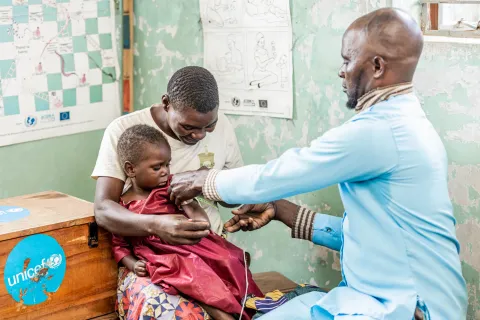
Rina was found with severe acute malnutrition in July this year at Matandani Health Centre in Neno District, southern Malawi. When a health worker measured the baby's middle upper arm circumference (MUAC) with a tape, the reading fell in the red section, signaling severe wasting. A standard scale showed the child weighing 6kg.
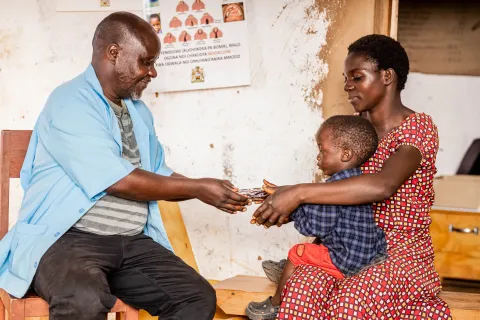
However, the baby bounced back in August after five weeks of taking Ready-to-Use Therapeutic Food (RUTF), a peanut butter-based supplement fortified with essential nutrients for treating severe wasting in children.
"I feared losing my child. Now, Rina can afford to smile because I made sure she took RUTF as instructed by health workers. She loved it from day one and would cry for it. I never allowed any other child to share her dose," Flora narrates.
During a recent visit to William Village, the mother was preparing her fields for early planting to beat erratic rainfall that disrupts food production.
"With the baby out of danger, I have time to farm and do other chores," she says.
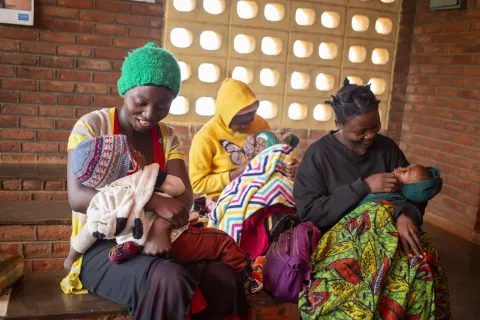
Flora also benefited from Thanzi cooking sessions, where women learn from one another how to prepare diverse and nutritious meals using locally available foods from the six recommended food groups. The sessions promote good feeding practices for young children and equip families with knowledge to prevent malnutrition before it becomes severe.
UNICEF Malawi, with support from the European Civil Protection and Humanitarian Aid Operations (ECHO), is supporting the Government of Malawi to strengthen community and health system capacity to prevent, identify and manage child wasting in Neno, Mwanza and Chikwawa districts.
Alongside the provision of lifesaving RUTF for children requiring treatment, UNICEF has supported the training of frontline health workers in early detection, referral, integrated management and prevention of wasting, including through Thanzi sessions.
“The new knowledge, skills and standards have improved how we conduct nutrition screening, health talks and the management of malnourished children,” says Kalemba Health Unit Disease Control and Surveillance Assistant (DCAS/HSA) James Matumbo.
“The training addressed critical knowledge gaps in nutrition among health workers and strengthened collaboration with community members. Nutrition promoters and cluster leaders now play a stronger role in identifying malnourished children in their neighbourhoods, referring them to health facilities for treatment, following up on their progress and sharing key health information with families.”
Neno District Health Office Nutrition Coordinator Esnart Macheka says children with malnutrition benefit from a continuum of care that starts in their communities and continues at health facilities.
In another household, Dalesi Jamu adopted improved feeding practices for her children after learning from a neighbour who attended a 12-day Thanzi session. The experience highlights how nutrition knowledge is spreading beyond direct participants and helping families make healthier choices for their children.
Community-based promoter Sabina Allan, who oversees three clusters in Kalupsya Village, says UNICEF support has strengthened collaboration between health workers and community volunteers.
"UNICEF support has strengthened the bridge between our communities and health workers. We share information on the nutrition status of children in our areas, and health workers equip us with messages that we pass on to our neighbours as well. No malnourished child escapes our eyes and ears," says the trained volunteer.
For Flora, that strengthened community-health system link, combined with the knowledge gained through Thanzi sessions and timely treatment, has made all the difference.
Similar gains are being seen across Neno district, where more than 2,800 caregivers have increased their knowledge and skills in optimal complementary feeding through Thanzi sessions. Further, at least 2,800 children with moderate acute malnutrition or at risk of becoming malnourished have been reached with nutrition services and support, helping families prevent, detect and address malnutrition early.
As Rina beams at her mother with renewed energy and good health, her smile stands as a reminder that preventing, detecting and treating malnutrition early can give children the chance not only to survive, but to thrive.