Bwalo La Pamoto rescues undernourished children
For Every Child, Nutrition

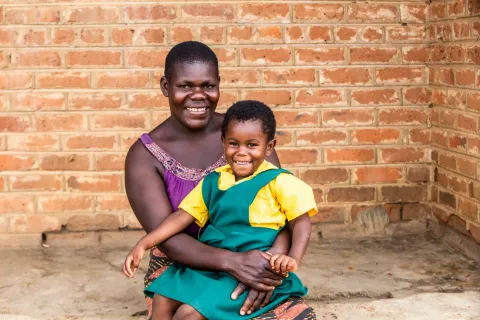
Kelvin Anderson was barely 11-month-old in December 2022 when he faced his first significant health challenge that had his mother, Nelia Matrino Nalitsiro, spending sleepless nights.
Nalitsiro, from Matsinde 2 Village in Traditional Authority Chigaru in Blantyre, watched with trepidation as Kelvin progressively lost weight. His mid-upper arm circumference (MUAC) measurement was in yellow, indicating moderate malnutrition.
She took Kelvin to the health facility and was advised to feed him with nutritious food. Try as she might, it appeared Kelvin was only getting worse.
“At that time, community health workers in our area organised bwalo la pamoto, where we prepared nutritious porridge to feed undernourished children. After feeding Kelvin for 12 days, he gained substantial weight from around 12kg on day one to over 14kg on the last day. Even his MUAC turned green,” Nalitsiro explains.
Her parents, she adds, were delighted with the sudden improvement in their grandchild's health and committed to look out for him with nutritious food.
Bwalo la pamoto, also known as phala session (community-led complementary feeding and learning session), is an initiative under the Scaling Up Nutrition (SUN) Project, which the Farmers Union of Malawi (FUM) in implementing in Blantyre with funding from KFW through UNICEF Malawi.
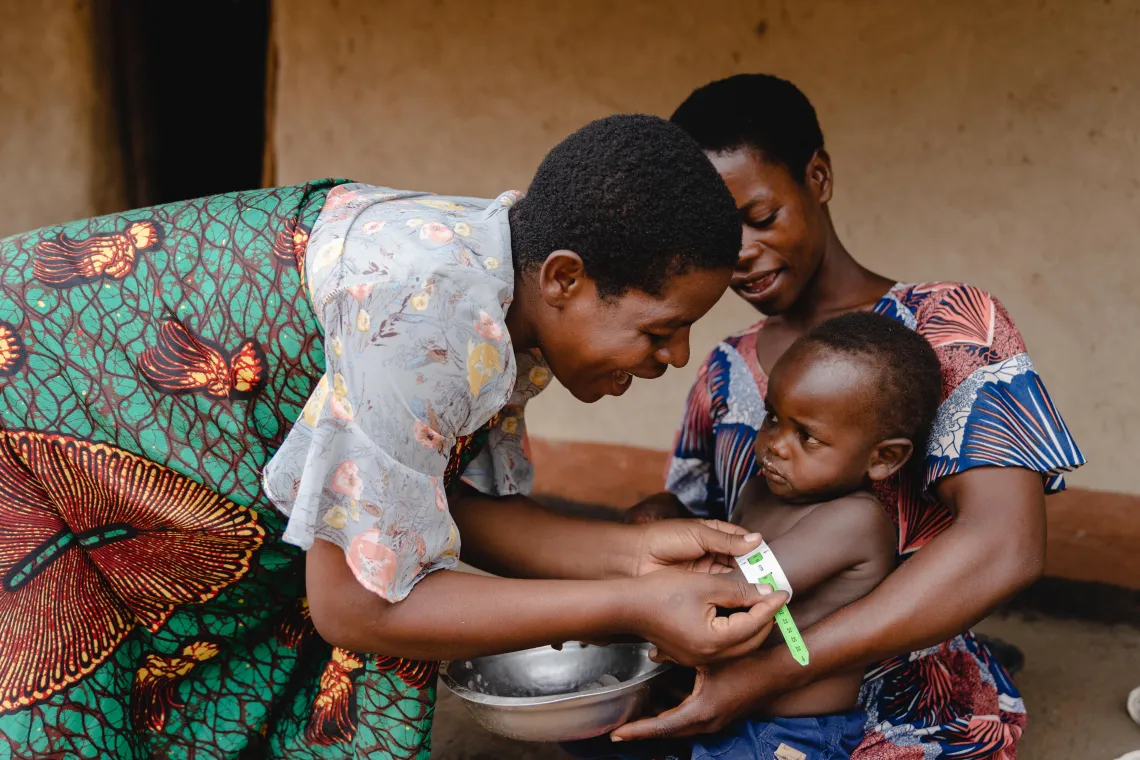
Under the initiative, parents and guardians share tips on preparing nutritious meals from foods available in the community to rehabilitate malnourished children.
Chrissy Issah, a care group promoter in the area under Group Village Head Masinde, states that the community has come a long way in efforts to ensure all children enjoy healthy lives by eating nutritious foods.
Issah oversees 369 households, providing them, through cluster leaders, with valuable and life-changing lessons about nutrition, hygiene, and sanitation.
Since she became a promoter under the SUN Project, she has identified 72 children suffering from malnutrition, including Kelvin.
“Bwalo la pamoto ensures we deal with all cases of undernourishment in children. Once we identify children with malnutrition, we conduct bwalo la pamoto almost immediately to set them on the right health course. We conducted the last one mid-this year,” Issah says.
Bwalo la pamoto is not exclusively aimed at undernourished children but also includes those with healthy MUAC readings. To avoid any sense of discrimination towards mothers with malnourished children, Caswell Kachingwe, the FUM District Coordinator for Blantyre, highlights the significance of including children who are out of danger (green MUAC reading) in the process.
Kachingwe explains that the previous, traditional approach to managing malnourished children was to refer them to a hospital where they would be provided with fortified porridge or, in some instances, ready-to-use therapeutic food (RUTF).
“In case of RUTF shortage at the hospital, parents encounter challenges in restoring their children's health. However, the bwalo la pamoto approach offers a solution by educating parents on how to prepare nutritious meals using the food available in their community. These sessions last 12 days and involve all screened children except those with red, indicating severe malnutrition. The latter group is referred to health centres for treatment,” Kachingwe explains.
Kelvin’s health could never have been better. Nalitsiro regularly uses the MUAC tape to track the progress of his health.
“Whenever it goes down, I feed him a lot of nutritious food; sometimes I go to the hospital because his weight goes down, and almost always when he falls sick,” she says.
Nalitsiro is grateful to health workers and community volunteers such as promoters and cluster leaders for taking an active role in the health of children in the area: “They visit us frequently to check if we are feeding the children proper food if our surroundings are hygienic, and whether we have backyard gardens for growing vegetables to ensure the nutritional well-being of the child.”