

Learning Passport Honduras
Educatrachos: improving the educational experience in children and adolescents, including in emergency settings
- Español
- English
The Educatrachos-Learning Passport Honduras is a learning platform that provides educational content spanning from early childhood to secondary education. It includes content of the formal curricula, alongside skills development opportunities for adolescents. In Honduras, this platform has proven instrumental in addressing educational challenges, particularly those linked to educational access and quality.
How did Learning Passport Honduras start?
During the outbreak of the pandemic of COVID-19, the Secretary of Education in Honduras (SEDUC) together with UNICEF Honduras took significant steps to foster the growth of the digital learning ecosystem. This involved several key aspects, such as enhancing connectivity infrastructure, facilitating access to technological devices, delivering teacher training, and establishing educational platforms.
In this period, the Learning Passport educational platform was implemented, framed in these efforts. This initiative had a clear mission: to provide pre-primary, primary and secondary school students unfettered access to high quality digital content and engaging, interactive online learning activities free of charge.
High quality digital educational content
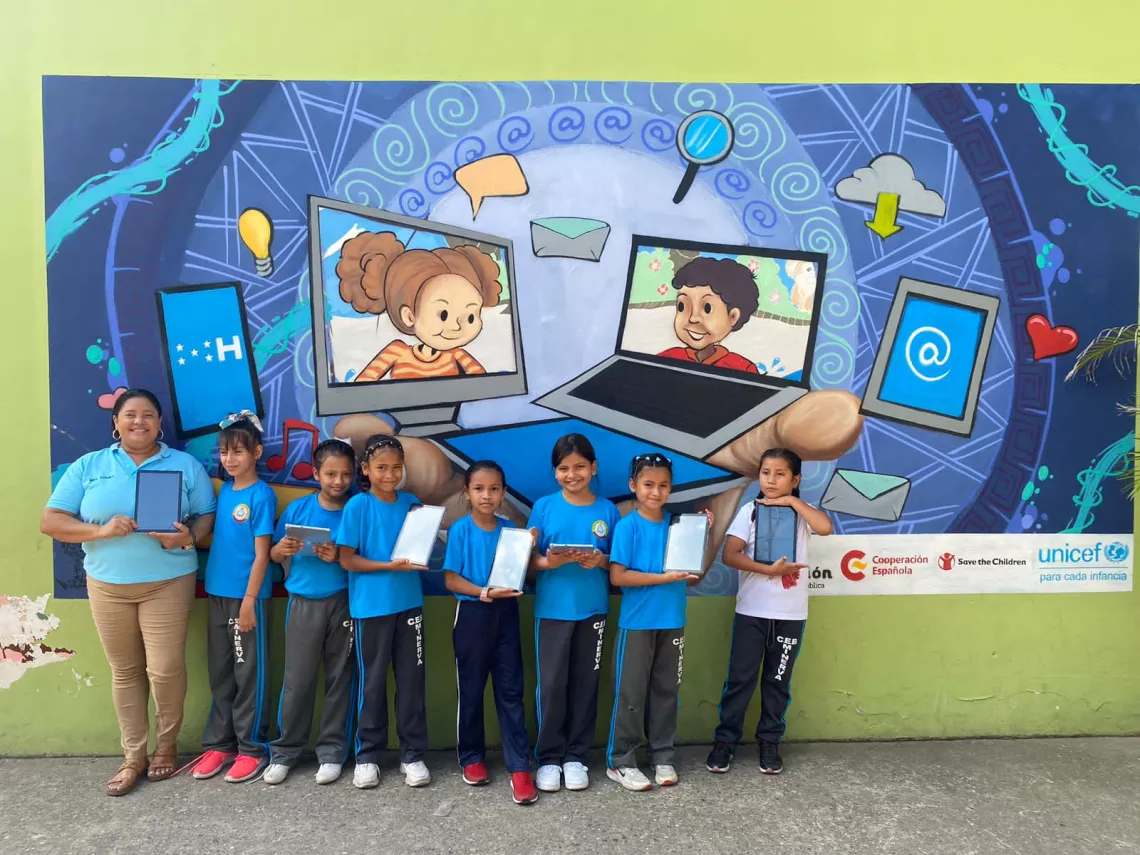
Through the Learning Passport, both teachers and students gain access to prioritized educational content in alignment with current curriculum standards. Furthermore, the platform simplifies tasks such as resource downloads, participation in diagnostic tests, and completion of surveys, among others.
The platform offers a structured collection of more than 500 courses, the majority of which focus on fundamental curriculum subjects such as mathematics, natural sciences, social sciences, and Spanish. In addition to these subjects, the Learning Passport provides content addressing digital literacy, life skills, and supplementary materials that teachers can incorporate into their daily classroom practice. Each course consists of a series of lessons and evaluations with content encompassing official textbook resources, supporting videos, audio, and additional interactive materials in different formats.
In an administrative capacity, teachers can tailor optimal resource combinations from a diverse range of digital formats, allowing for the effective integration of the Learning Passport with their pedagogical practices.
Teacher training and ongoing support through the learning passport
By the first half of 2023, Learning Passport training had been delivered to over 2,000 teachers and education authorities through a combination of in-person and virtual formats.
The initial phase of teacher training focused on ensuring that participants became well-versed in the various features and functionalities offered by the platform. This stage aimed to equip educators with the knowledge and skills needed to effectively utilize the platform in their teaching practices, maximizing its potential for enhancing the learning experience of students. Additional demonstration classes were organized not only to inspire and motivate teachers but also to reinforce their digital competencies and understanding. These sessions serve as practical examples, showcasing how the platform's features can be effectively applied to the teacher's educational context.
Accessing Learning Passport Honduras
Users can access Learning Passport Honduras through the ‘Educatrachos’ Android application. This application facilitates participation in courses and enables content downloads for offline review.
Moreover, teachers have the option to use the web version https://educatrachos.learningpassport.unicef.org/ for administrative functions, enabling them to monitor their student's progress on the platform.
Modes of Utilizing the Learning Passport

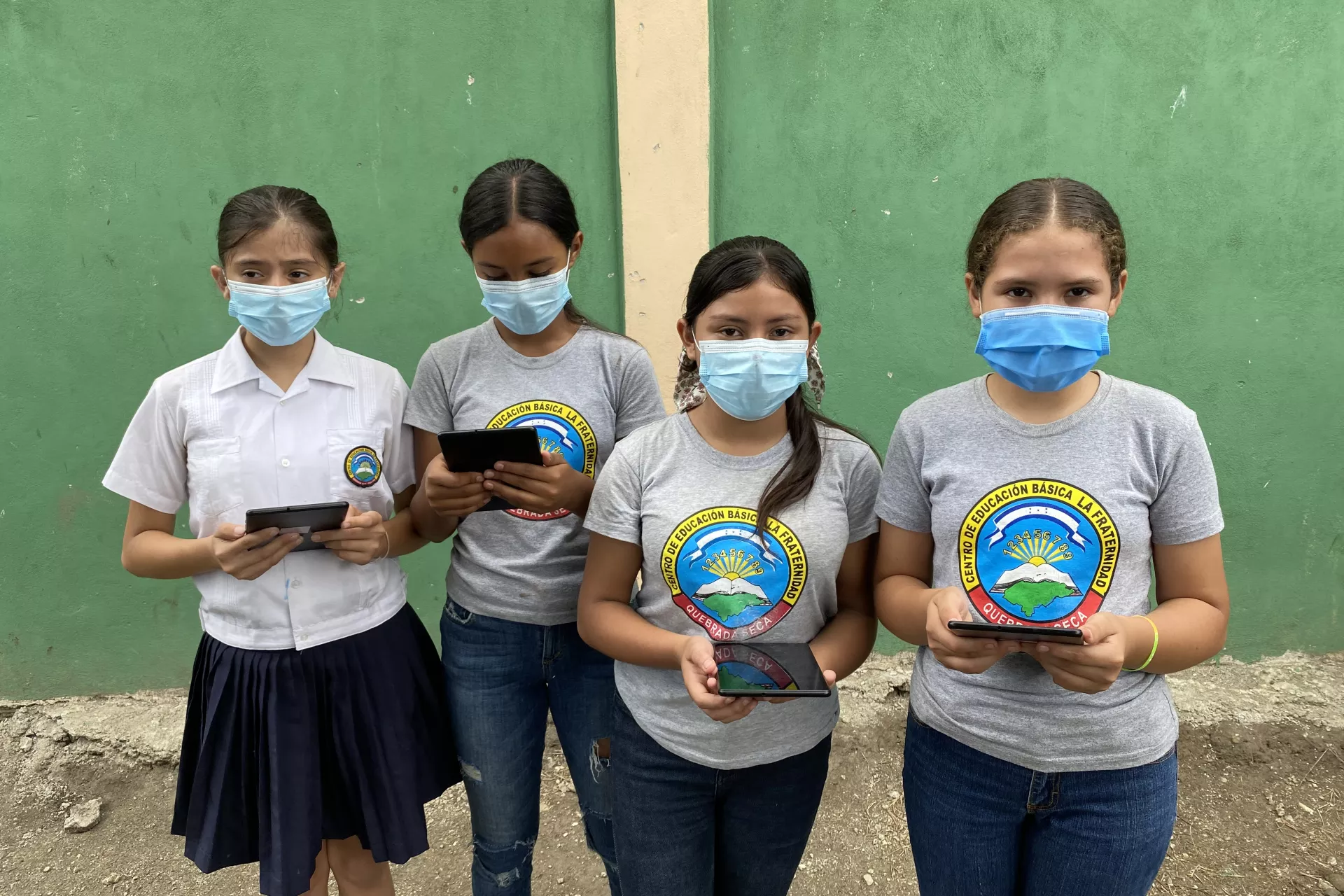
During the COVID-19 school closures, teachers employed the platform for remote education, bolstering the provision of essential content by:
-
Displaying the platform's multimedia resources during videoconference sessions (online classes).
-
Assigning homework related to the Learning Passport digital resources.
-
Providing feedback on the content of the platform.
-
Defining goals based on content progress. Establishing unique learning objectives derived from content progression.
With the resumption of presential classes in 2022, many teachers adapted the use of the Learning Passport to support remedial processes and strengthen foundational literacy and logical-mathematical thinking skills. Serving as both a supplemental resource and a means of reinforcing pedagogical approaches within the classroom, the Learning Passport has been instrumental in:
-
Addressing the scarcity of textbooks in schools by offering access to official digital books.
-
Allowing students to reinforce their classroom learning by engaging with relevant content at home.
-
Enhancing lesson planning through the incorporation of digital resources for compelling and effective activities.
-
Applying diagnostic tests and ongoing evaluations to provide both teachers and students with insights into academic advancement. Providing both teachers and students with insights into academic advancement through the application of diagnostic tests and ongoing evaluations.
-
Supporting crucial skills development for students in their final years of schooling, aiding their transition from school to the workforce.
Future actions
To further align classroom teaching methodologies and the digital resources accessible via the Learning Passport, a comprehensive approach will be carried out to reinforce teacher training and extend support to educational institutions in using the platform.
To achieve this goal, we will accelerate the nationwide dissemination of the platform. Additionally, a training strategy will be designed to strengthen pedagogical skills that integrate technology into the teaching-learning process.
Honduras also did an excellent job including content in indigenous languages such as Chorti and Lenca. The country is now preparing to face a new challenge by implementing the platform for children on migratory trajectories, with specific content that can support their educational continuity even in adverse scenarios.
Explore our Learning Passport Resources
Blog: The Learning Passport in Honduras, an innovative learning experience: https://www.learningpassport.org/stories/learning-passport-honduras