

‘My daughter went from girl to adolescent while she was walking along the motorways’
Nataly*, 11 years old, got her first period as she walked along a Colombian motorway on the way to her final destination, Peru.
- Español
- English
By Ana María Castro
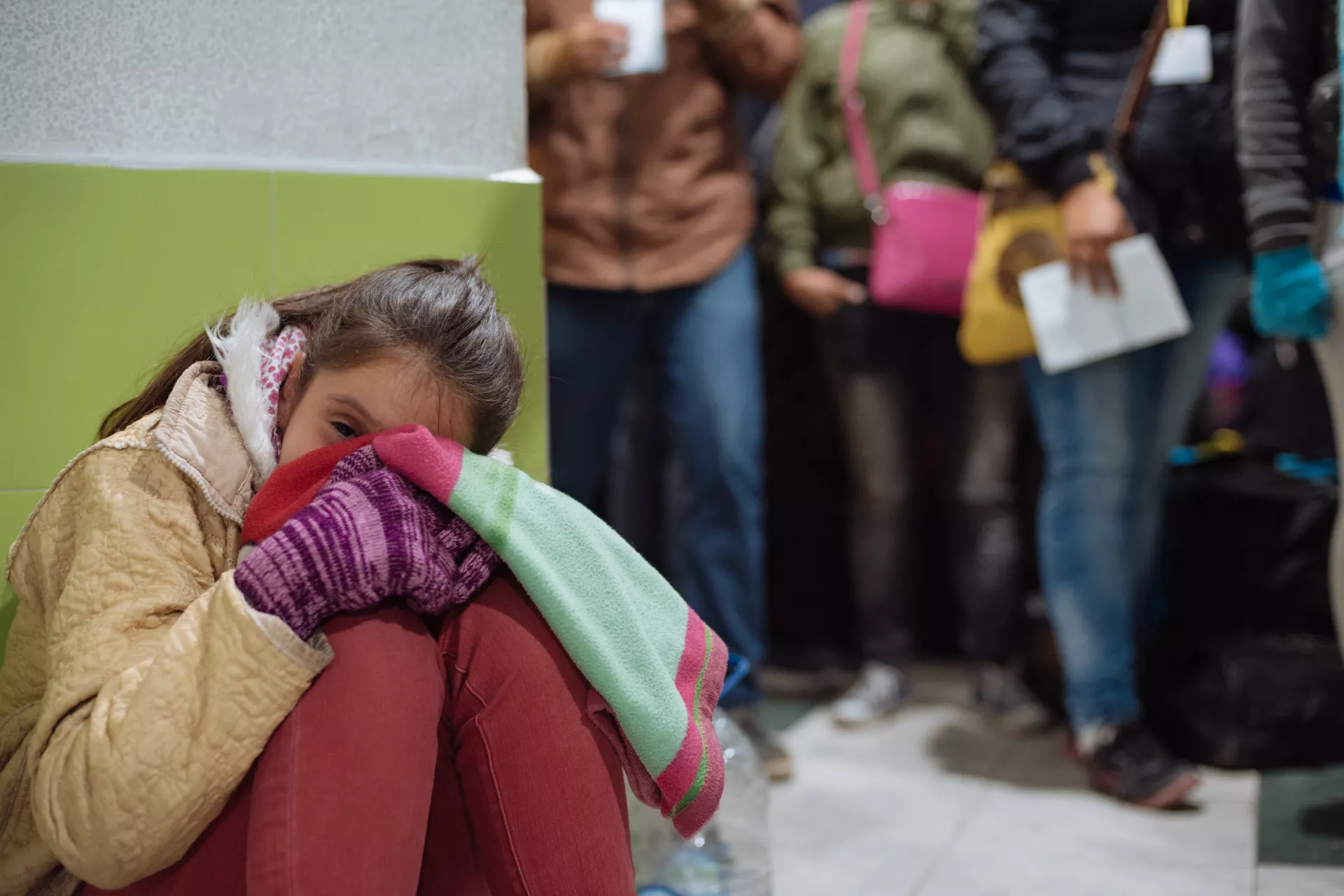
Rumichaca, Ecuador - It is nighttime on Monday 6 August, the temperature is 3° C and 11-year-old Nataly, who is from Venezuela, is sat in a long line of people waiting to enter Ecuador. She is at the Rumichaca border crossing, which connects Ecuador with the south of Colombia, accompanied by her parents and four other people with whom she is making her way to Peru.
Nataly is young, but she has already had to experience things that are not normal for a child of her age. To protect herself from the cold she covers herself with a blanket and two jackets. She is not used to this climate. In her hometown of Cagua, in the state of Aragua, the average temperature is 30° C.
Her eyes show the exhaustion of walking for days on end, but her timid smile expresses the comfort she feels from being with her family, despite the difficult circumstances.
It is a long night and the waiting time to pass through migration, get their documents stamped and enter Ecuador can be longer than three days, depending on the flow of people.
Although there is a priority queue for children and families, many travel with friends they have made along the journey and decide to wait for them to avoid separation.
Just like Nataly and her family, there are thousands of venezuelans here who want to enter the country through formal channels to then carry on to their destination. The majority are on their way to Peru, Chile or Argentina. Only an average of 20%[1] remain in Ecuador in search of opportunities.
Nataly’s mother, Sara, says that they have been walking along motorways in Colombia for days. For some stretches of the journey, they hitched lifts with cars that were going their way.
“When we were in the city of Pasto, in Colombia, a petrol tanker picked us up. We had to hang on to the back of the vehicle for almost four hours. It was really hard, because of the wind, the rain and the cold. Luckily, Nataly was able to go in the cabin at the front,’ Sara recalls.
But perhaps one of the defining moments that has marked this family’s journey came as they were walking in the outskirts of the city of Bucaramanga, in northeastern Colombia. While they were walking, Nataly felt a sharp tummy ache and started to bleed.
These were the symptoms of her first period, an event that marks the end of girlhood and the beginning of adolescence.
For Nataly, this important life event came as she migrating from her country, tired from walking, with no access to toilets beside the motorway, and without pain relief or menstrual hygiene products.
“The fact that Nataly is experiencing this change on the open road gives me mixed feelings. On the one hand, it was nice because I was with her at that moment, but at the same time it was sad because we had to walk, she wasn’t feeling well and she didn’t know what was happening - she thought that she was ill. We had to explain to her what was going on,” Sara says.
This brave mother says that she would never have imagined leaving her country in this way, much less with her daughter. “She has been so patient and she’s been such a brave girl. It isn’t fair that she has to go through all this. I just ask colombians, ecuadorians and peruvians to have some understanding and to put themselves in our shoes. We aren’t doing this because we want to. I love my country and I look forward to the day that things get better so that I can go back home,” Sara says, her voice faltering.
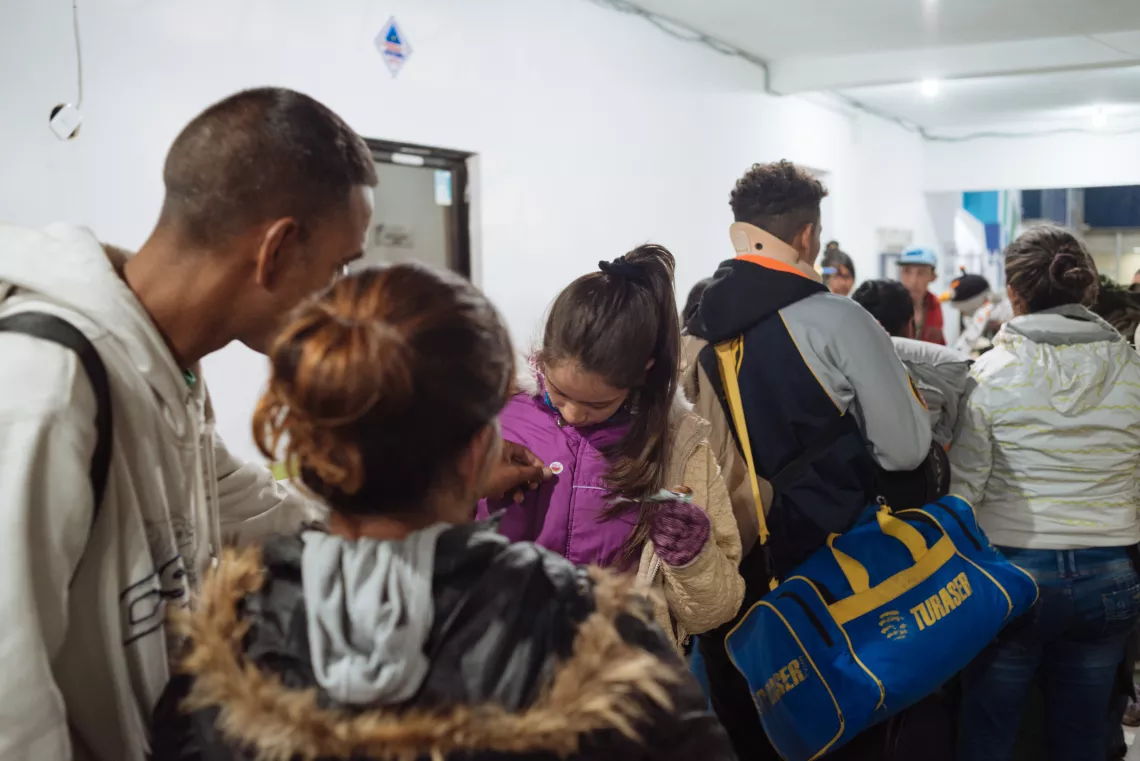
After three days on the Rumichaca Bridge, sleeping outdoors in all weathers, without any money, but with their documents tightly sealed so they can enter Ecuador formally, they decided to carry on with their journey.
“We’ve met a few angels along the way. An evangelical pastor in Guayaquil has heard about our situation, he’s sent us money for tickets and he will host us for a few days there,” Sara added.
A fresh start
Months later, Sara got in touch with the UNICEF Ecuador team to share her joy at having started a new life in the city of Guayaquil.
Although her original plan was to get to Lima (Peru), she decided to settle in this city in Ecuador’s Costa region because she received help from a number of people there.
“We’re doing well, I’ve got a job with a mobile phone company and we’re doing all we can to make sure Nataly starts school as soon as possible.”
*Nataly’s name has been changed to protect her identity.
UNICEF Ecuador’s response
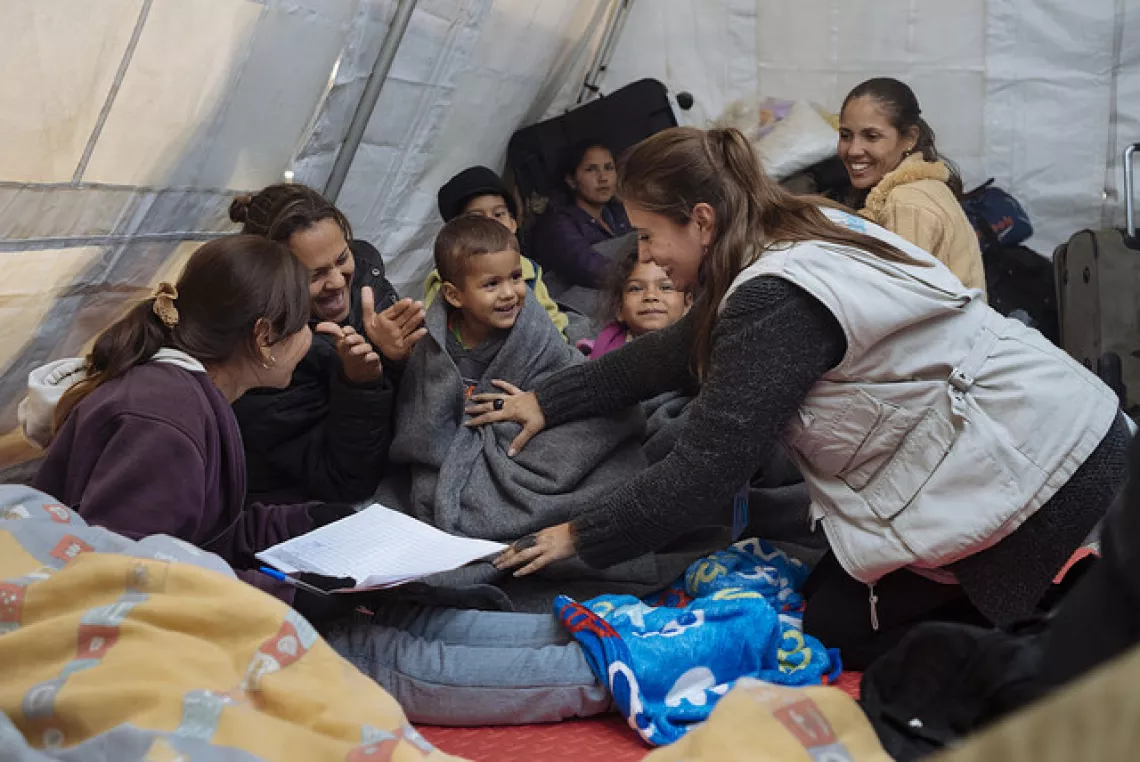
Working in coordination with national authorities, UNICEF has allocated 2.5 million dollars and they are present in in the border areas of Rumichaca and San Miguel, located on the border with Colombia, and in Huaquillas in the south. So far, 15,600 children have been provided with safe drinking water and sanitation, 4,600 thermal blankets have been handed out, to protect against the icy temperatures. 2,500 baby kits and 5,000 hygiene kits[2] have also been provided. In addition, child-friendly spaces and tents for temporary rest have been installed and cash transfers have been given to 230 family groups, including 450 children, so that they can carry on with their journeys.
Alongside this, UNICEF is doing important advocacy work with the authorities to guarantee the rights of the venezuelan children and adolescents who are entering Ecuador every day. One example of this is the protocol for the assistance of children in contexts of human mobility which was approved by the Ministry of Foreign Affairs and Human Mobility, the Ministry of Economic and Social Inclusion and the Interior Ministry. The protocol was drawn up with help from UNICEF and it will contribute to the implementation of the plan at border crossing points, through training, technical assistance and case monitoring.
From July to October this year, UNICEF has identified 1,192 children[2] who have not been registered because they lack the necessary documents or exit permits, or because they are travelling alone. This protocol is important because it responds to these cases, ensuring protection measures, preventing family separation, unjustified return of children to their country of origin, and identifying children who are victims of violence, trafficking or exploitation.
Faced with the challenges of those families who decide to stay, UNICEF is working with the Ministry of Education on the inclusion of venezuelan children in schools and on specific programmes to combat xenophobia and discrimination. This complements ongoing work to ensure that all ecuadorian children access a quality education.
[1] (Migration Registries, Ministry of Interior, GoE)
[2] These figures are not official, they are recordings obtained by UNICEF and partners at the Rumichaca and San Miguel border crossing points. As such, they are thought to be under-estimates.