

Page
Every Child Learns in Haiti
Haiti Country Office
- Español
- English
Haiti in Numbers

What are we doing?
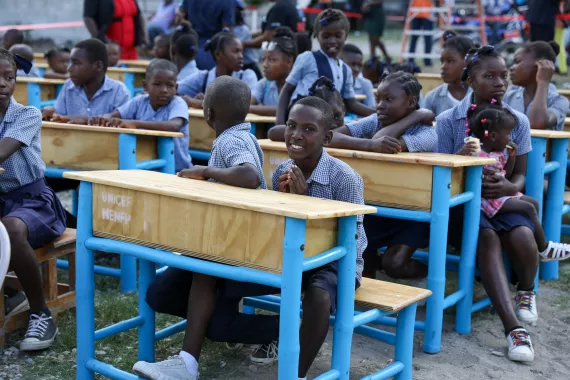
To improve the quality of teaching and learning:
- We support the development and implementation of a play-based curriculum for early childhood education and a model that supports young children’s learning processes early in life.
- We support the development of non-formal education policy and alternative programmes that respond to the needs of over-aged students and those excluded from the education system.
- We promote academic success by strengthening reading and writing skills, creating quality learning environments during the first four years of basic education.
- We advise on teaching-learning methods for fundamental skills, improved pedagogical competencies of teachers and inspectors, and support for teacher certification.
- We encourage the introduction of an early warning system to track absenteeism and support the creation of student clubs to encourage good practice in their studies.
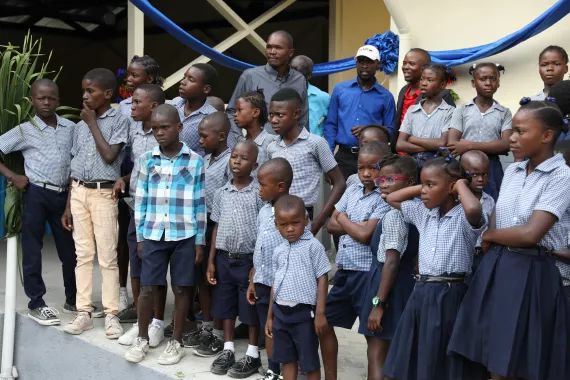
To improve access to free education:
- We support the Ministry in promoting access to education at age 4 (preschool) and right age entry at age 6 to curb over-age and dropout, with a special focus on the most vulnerable, i.e., those living in rural areas.
- We provide school materials to newly arrived students to reduce the indirect costs of schooling for families.
- We promote participatory school management, in partnership with local authorities and back-to-school campaigns to increase school attendance.
- We prioritize back-to-school initiatives and campaigns with a door-to-door system to register out-of-school children and adolescents, with a special focus on cross-border populations.
- We generate evidence on out-of-school children and violence in schools to facilitate decision-making.
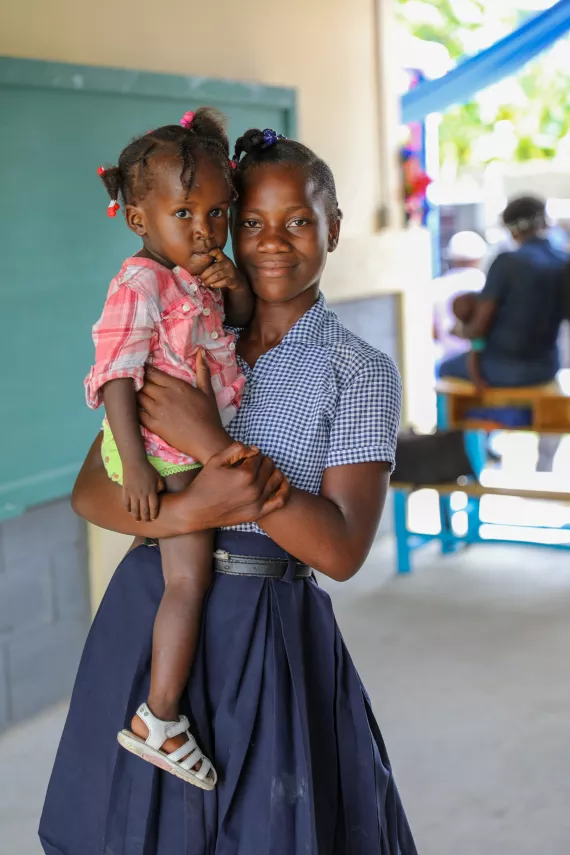
Education in emergencies
- We support the Ministry in promoting emergency preparedness – including development of contingency plans, inclusion of disaster risk reduction in the university curriculum for teaching professions.
With the essential objective of preventing the increase in school drop-outs due to the multifaceted crises of recent years, we have focused considerable efforts on responding to the needs of children and adolescents with education in emergencies interventions that include:
- The construction of schools, particularly in the South of the country, following the August 2021 earthquake, which affected an estimated number of 1,200 schools.
- The provision of psychosocial support.
- Distribution of educational materials and classroom furniture, cash transfers to vulnerable families.
- The promotion of non-formal education programmes and vocational training interventions mainly targeted to adolescents in violent urban areas who are at risk of joining gangs, through catch-up learning activities for school days missed during the pandemic.