Safe, Clean Water: Climate Smart Borehole in Sesia Village, Samburu County
Strengthening community resilience in Samburu County

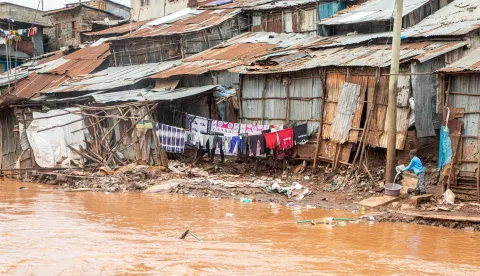
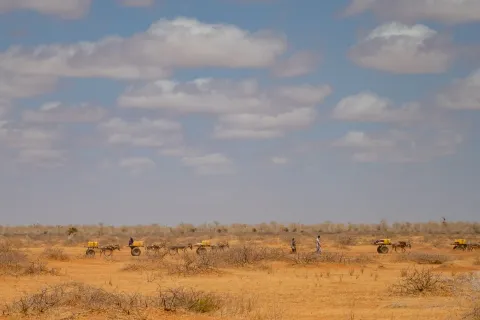
For many years, life for 30-year-old mother of two, Naram was a daily struggle in Sesia village, Samburu County, Kenya. Naram would walk 15 kilometers to the nearest river to fetch water for her family and their animals. The water was unsafe for drinking, and it often led to stomach upset and waterborne diseases for her children.
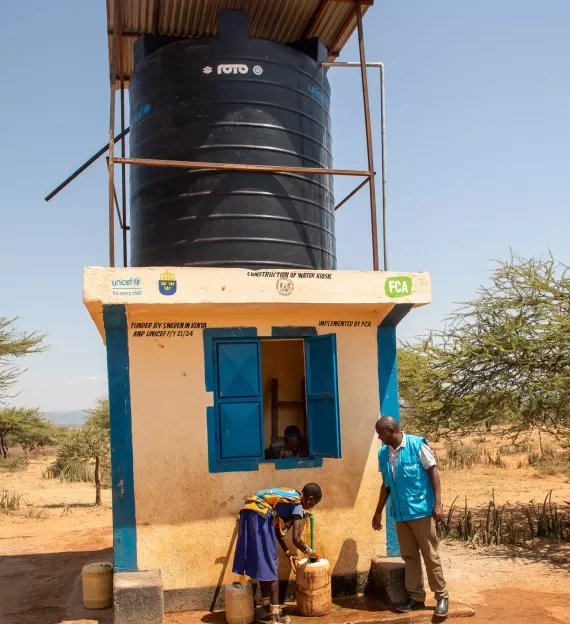
But now those days are over for Naram and her family. Today, just metres from her home, Naram fills her jerrycan at a water kiosk established by the community with the support of UNICEF and funding from the government of Sweden. Naram fills her water container from the tap, as her two-year-old daughter clings to her back, relieved that the days of long walks and unsafe drinking water are over. The kiosk is supplied with water from a rehabilitated climate-smart borehole, through UNICEF’s support. The water kiosk provides clean and safe drinking water to over 400 households, their animals, and a nearby Early Childhood Education Center in Narams community.

"I am happy and grateful," says Naram. “I don’t have to walk long distances to get water and I now have plenty of time to care for my children. Access to the borehole and the water kiosk has also helped me to start a kitchen garden in my homestead, providing us with fresh vegetables for our meals.”
26,140 people
More than 26,140 people in Samburu County now have access to climate-resilient water supply services.
Thanks to support from the Government of Sweden, UNICEF has constructed 3 sand dams and rehabilitated 8 boreholes with solar powered pumping systems.

“The aim of this project is to strengthen community resilience to climate-induced shocks in drought-prone Samburu County,” UNICEF Water, Sanitation and Hygiene (WASH) Specialist Jackson Mutia explains. “Solar-powered borehole systems like this one in Sesia Village help communities to access sustainable safe water supply, without the need for electricity thus reducing their dependence on a traditional power grid, and at the same time it mitigates the impact of the climate crisis on families and children.”
The solar powered boreholes are also supporting the communities' main sources of livelihoods including providing water for livestock, pasture regeneration, and vegetable kitchen gardens.

Access to water has enhanced food security for Naram and her family. Her kitchen garden is flourishing with maize and fresh vegetables like kale and spinach that she uses to feed her children.

Water troughs are incorporated into the design of the water kiosks. These troughs fill with overflow water when community members use the taps to fill their jerrycans, providing a convenient source of drinking water for goats. Livestock farming is an important source of livelihood for many families in Samburu County.