Cash Transfers Support Families Affected by Floods in Tana River County
Reducing poverty and building resilience

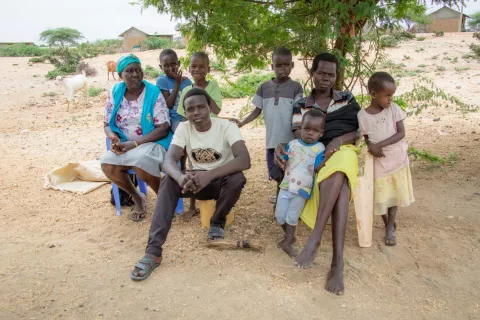
Heavy, grey rain clouds gather over Centre 2 village in Garsen Town, Tana River County. Eva Ghamaharo, a mother of three, is walking home with her 3-year-old twin daughters Grace and Jane after purchasing groceries from a nearby kiosk. Her daughters excitedly sip on their milk packets. They enter their home, where a mattress rests against a wall next to a green mosquito net. She unpacks rice, porridge flour, onions, and tomatoes into her blue kitchen rack.
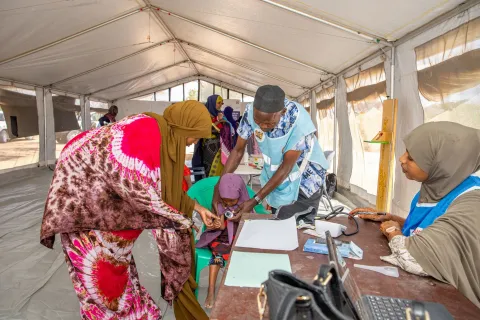
Eva is a beneficiary of the emergency cash transfer programme for families affected by floods in Tana River County. The programme, implemented by UNICEF in collaboration with the State Department of Social Protection and National Drought Management Authority, aims to support vulnerable families by providing them with cash transfers of 2,700 Kenya Shillings per month. The cash received helps families like Eva’s meet their most pressing needs.
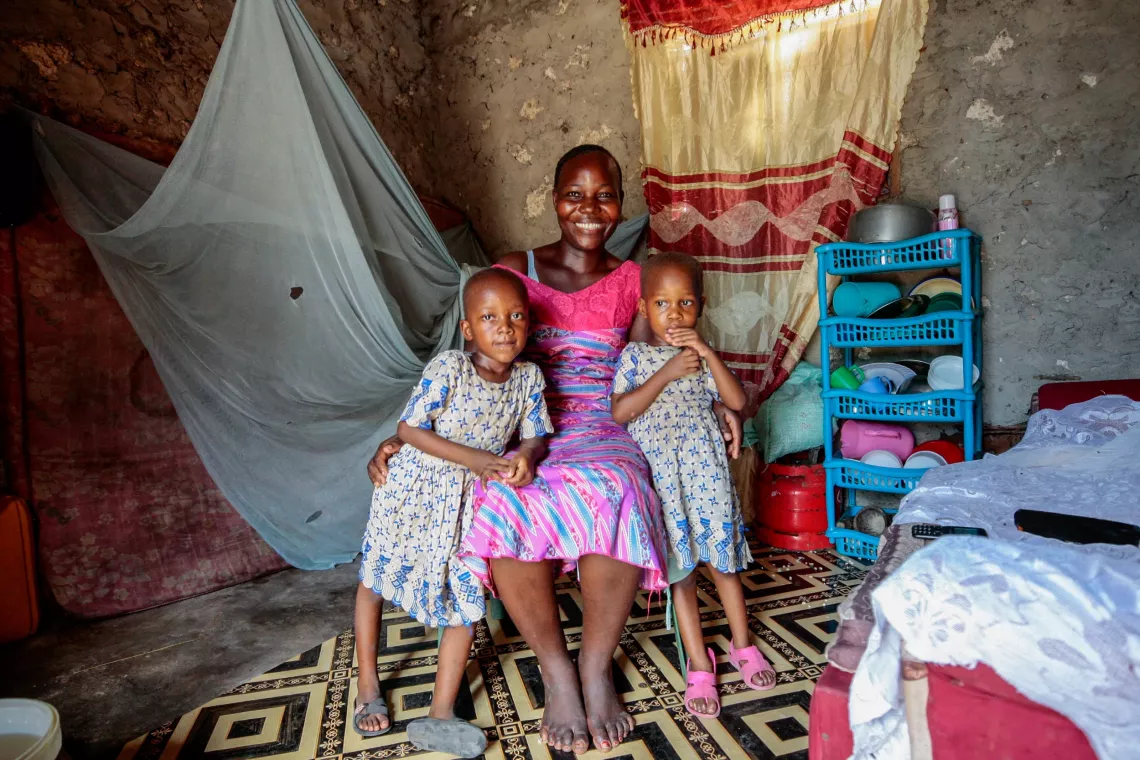
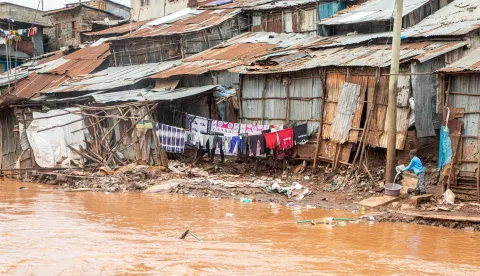
As a single parent, Eva has been struggling to care and provide for her three children. She had been trying her best to make ends meet by selling roasted cassava in the nearby town and trying her hand at tailoring but the situation became worse after the flooding in December 2023.
“The floods washed away our homes, destroyed farms and many of us had to relocate. This also affected my livelihood, and life became even harder,” says Eva. “Shortly after the floods, I was thankfully registered for the cash assistance programme. The money I received went to buy food for my children and for enrolling my twins in school. I was also able to buy school uniforms and bags for them.”
"I am grateful for the cash assistance programme and the help provided to my family. I hope that it can be extended to support more mothers with young children, and the amount possibly increased," she adds.
In emergencies such as droughts and floods, a cash transfer programme is one of the most effective ways to support affected families. Mothers like Eva are best-placed to decide what their children need most when disasters strike. Through cash transfers received, families can purchase basic necessities like food, medicine, and clothes while they rebuild their lives after emergencies strike.
Funded by UK Aid through the UK’s Foreign and Commonwealth Development Office (FCDO), the emergency cash transfer programme In Tana River County targeted households in areas with a higher malnutrition status. Households with children under the age of 3, and those with pregnant and breastfeeding mothers were considered as priority beneficiaries. To fast-track implementation, the programme leveraged existing beneficiary lists from the National Drought Management Authority (NDMA) which had the most vulnerable families listed and identified. This approach demonstrated that by leveraging existing government social protection mechanisms during emergencies, the response can be deployed more quickly and efficiently. In turn, this contributes to building and strengthening a shock-responsive social protection system.
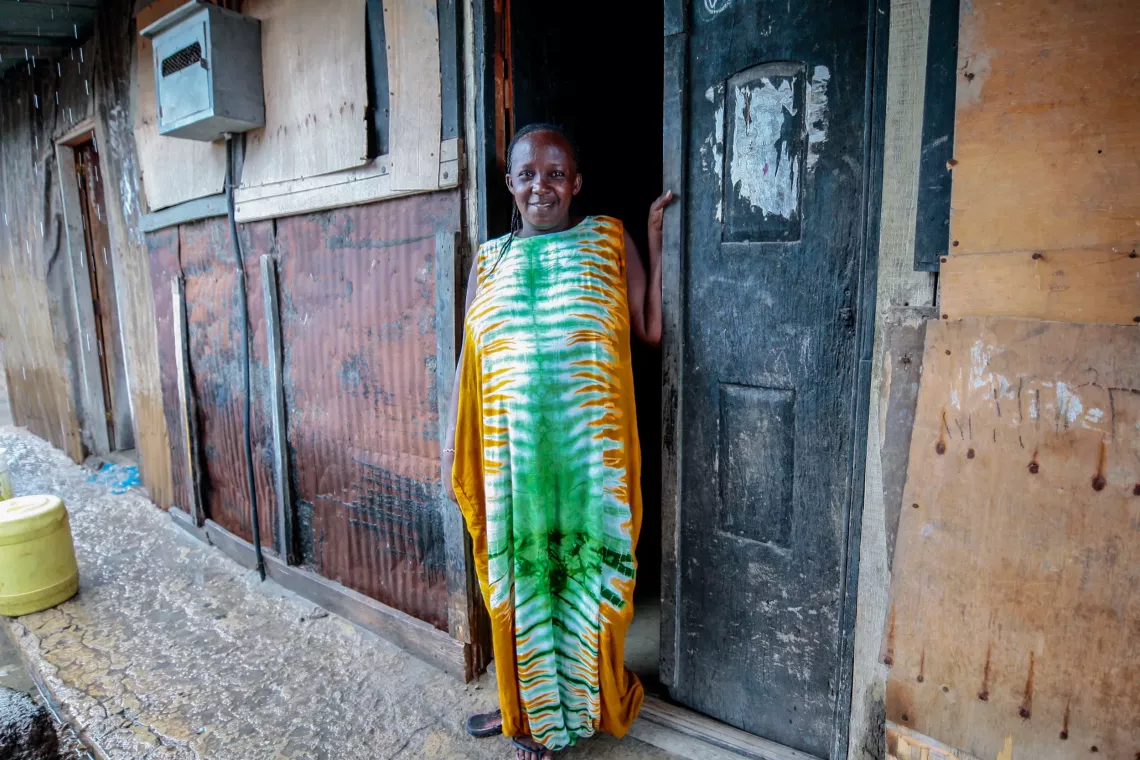
A few meters from Eva’s house lives Tina Mula, a 34-year-old pregnant mother expecting her second child. When the floods came, Tina’s family had to seek shelter in a school located on higher ground.
The floods damaged Tina’s home and washed away most of the family’s belongings including her source of livelihood. Her chickens, which laid eggs she sold for money and used for food, were also swept away by the flood waters.
Tina shares, "When I became part of the cash transfer programme I used the money to buy rice, maize flour and cooking oil in the first month. I have also been able to send my first-born child back to school. We are thankful for the support. It has helped our family to slowly move on from the effects of the floods.”
Over the years, Tana River County has increasingly been amongst the counties often hit by floods. With climate change disrupting weather patterns, poor families are getting more vulnerable. For Eva and Tina, the cash transfers provided a lifeline to cope with their family’s basic needs as they were getting back on their feet.
“Humanitarian cash transfers are a proven and cost-effective means of quickly getting support to those who need it most during emergencies. Cash transfers provide ready and much needed liquidity for basic needs, and allow families to better cope with shocks. The aim is to reduce vulnerability to future crises,” UNICEF Kenya Social Protection Officer Rachael Wamoto explains.

“This cash transfer programme was implemented in six counties, including Tana River. In Tana River County alone, we were able to reach over 1,800 flood affected households and those with a higher burden of malnutrition in Galole and Garsen sub-counties. The existing lists by Government and the National Drought Management Authority enabled us to reach beneficiaries faster,” she concludes.
In Kenya, the cash transfer programme remains a crucial support system for communities facing difficult conditions. Most importantly, the Tana River County cash transfer programme demonstrated that providing emergency cash assistance can be done swiftly by leveraging existing government social protection systems such as the list provided by the NDMA. UNICEF and partners were able to implement the programme sooner, resulting in families receiving help quicker and helping reduce their pain and suffering resulting from the floods.