From weather data to early action: How young innovators are building Libya’s early warning system
Mozn began as a youth-led network of weather stations. Today, it is growing into an early warning system designed to help communities act before extreme weather strikes

In September 2023, as Storm Daniel swept across eastern Libya, Mozn’s weather station in Derna recorded more than 200 millimetres of rainfall. Hours later, dams above the city collapsed, causing catastrophic flooding and killing thousands of people. The Mozn team had been collecting and reporting weather data as the storm unfolded. But the scale of the disaster exposed a critical gap: knowing what was happening was not enough if that information did not reach people early enough for them to act.
That’s when it hit us: our weather stations could actually power an early-warning system and save lives
Mozn’s story began two years earlier. In 2021, a group of young Libyan scientists and engineers set out to improve access to local weather information and help communities understand changing conditions across the country. Through Mozn, an initiative led by the Roaya Foundation, they raised funds for their first 10 weather stations and began collecting data with community volunteers.
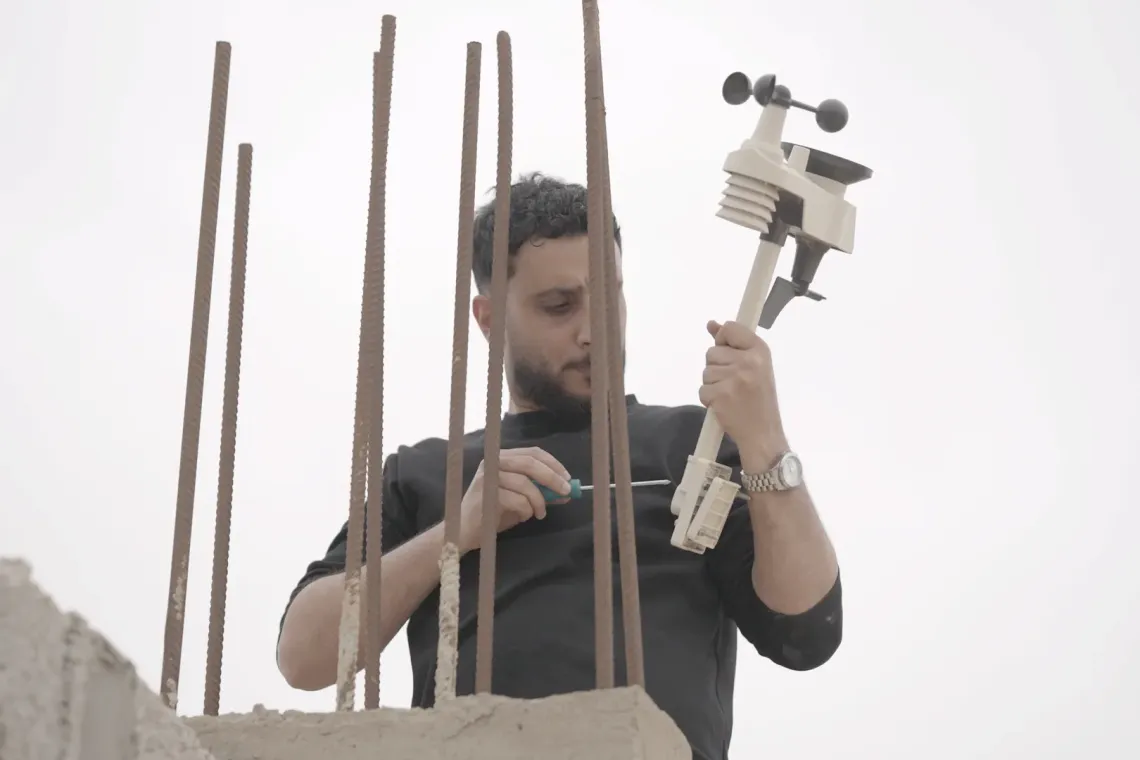
As scientists and engineers, we wanted to take action in Libya to keep our families and ourselves safe
Storm Daniel changed the direction of their work. In 2024, Mozn launched an online system connecting data from its stations with a mobile app and social media. In 2025, UNICEF provided funding and technical support through the Spark Accelerator, while helping connect the initiative with government and other partners as it continued to grow. In 2026, Mozn took another step forward. Working with UNICEF, disaster management authorities and technical partners, the team developed an integrated digital system that can detect hazards, assess risk and trigger alerts, including push notifications, maps and public dashboards. Instead of reporting an event only as it unfolds, the aim is to give authorities and communities greater lead time to respond.
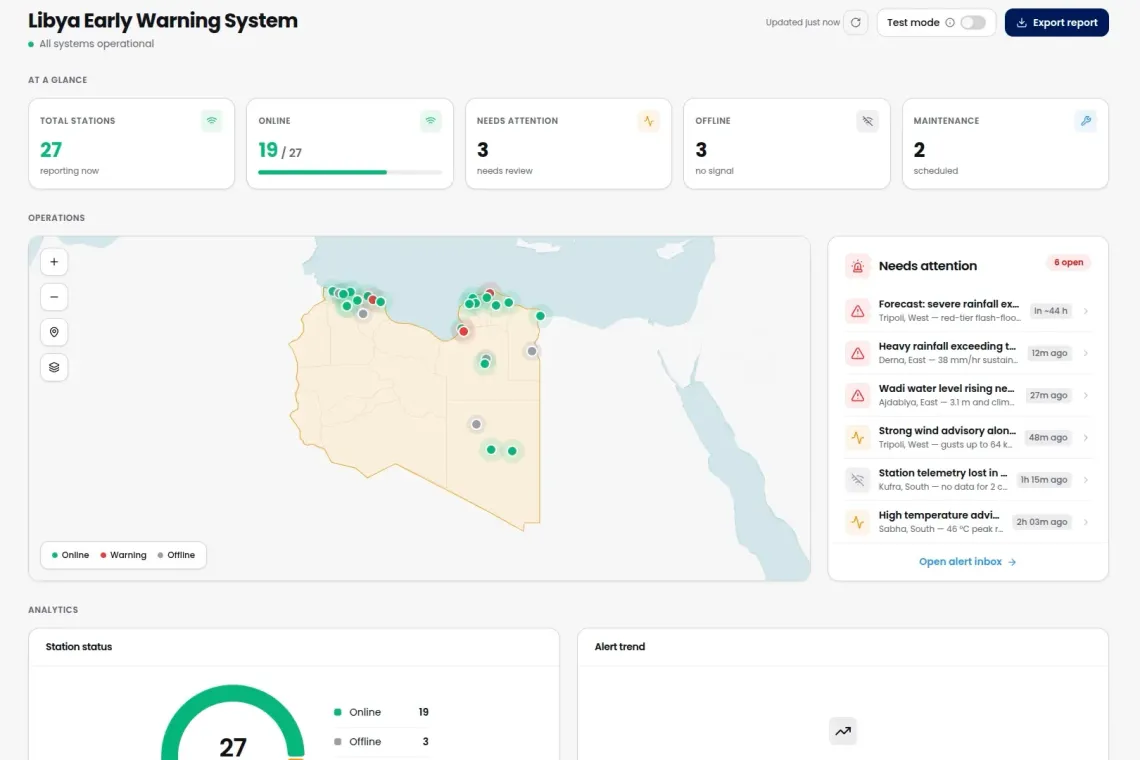
Today, Mozn has reached an estimated three million people through their app and social media channels, and observations and photographs shared by Roaya’s youth volunteers and community members help the team follow changing conditions on the ground and share timely information with the public. Combining information from 62 weather sensors across Libya, they are able to deliver hyperlocal readings every two seconds. Recent data indicated extreme risk due to a heatwave, and Mozn’s early warnings were broadcast across news and television nearly 30 times across Libya. For families, schools and communities, the value of that information is practical. Parents have used warnings to move their children away from potential flooding. Teachers can suspend classes or move students to safer locations, while drivers can avoid roads where conditions are becoming dangerous.
Moving an idea like Mozn towards national scale takes an ecosystem: young innovators and communities, government, technical expertise and sustained investment. Partners including The Prudential Foundation and the Swedish International Development Cooperation Agency help make this work possible. What started with 10 weather stations is now growing towards a national system, with the ambition to reach communities across Libya, online and offline. For the young people behind Mozn, the next challenge is making sure earlier warnings reach more people, with enough time to act.