Supporting Palestine refugee children’s well-being in Jordan
UNRWA and Tilli partner to deliver social-emotional learning to first graders
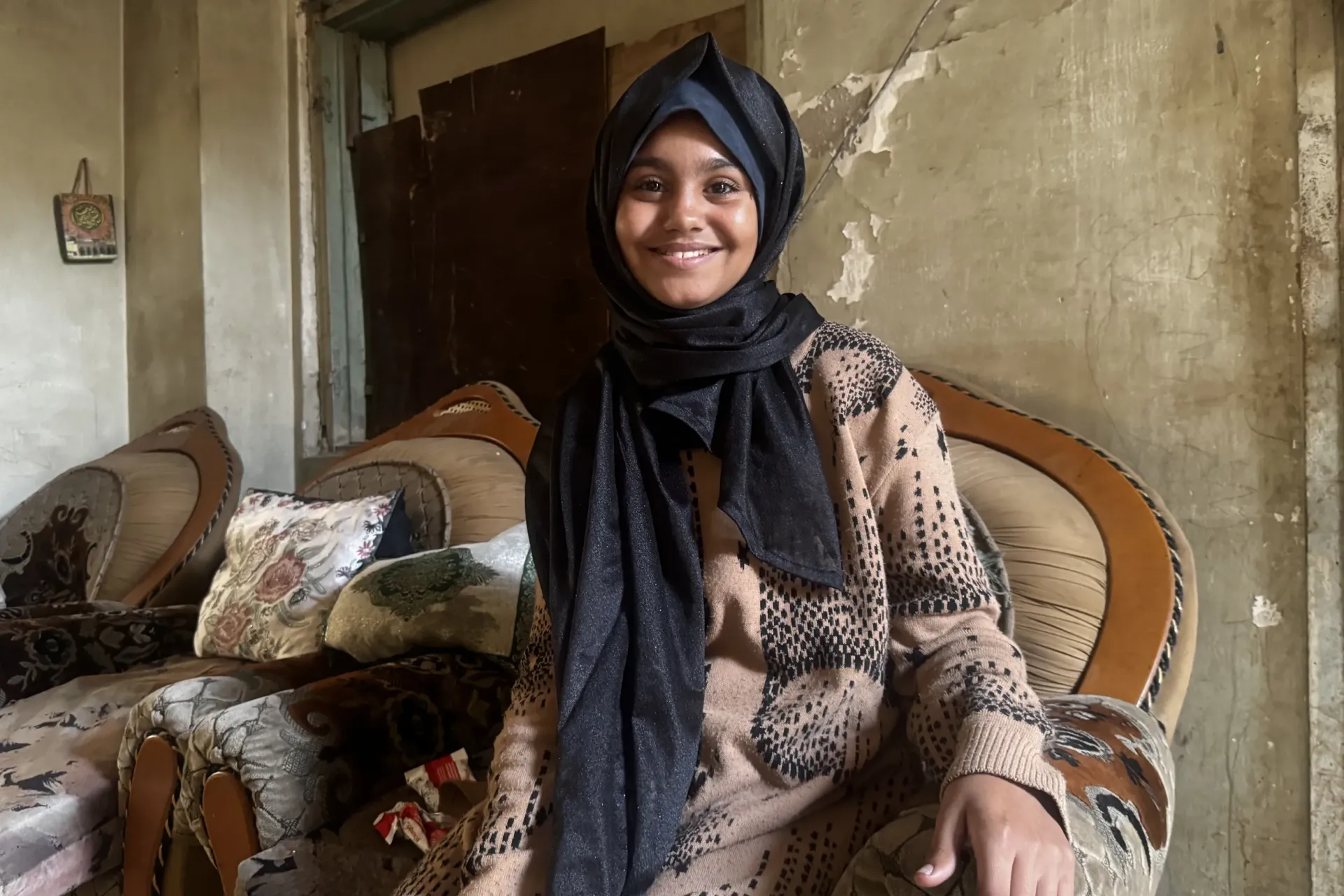
It is well established that the period from birth to age eight represents a sensitive and critical window in a child’s development. “Eighty per cent of brain development happens before a child turns ten,” explains Tilli’s co-founder and early childhood development researcher Kavindya (Kavi) Thennakoon. “That’s when foundational skills like attention, emotion regulation, and empathy are formed — the building blocks for everything from mental health to job readiness later in life.” These are the skills Tilli, a Venture Fund investee in its active growth phase, helps teachers nurture through play-based learning and emotionally engaging classroom experiences.
Through a new partnership with UNRWA, the United Nations Relief and Works Agency for Palestine Refugees, Tilli is working within a long-established education system serving Palestine refugee children. The pilot supports more than 270 teachers and education specialists to deliver social-emotional learning to 6,500 first-grade students across 17 UNRWA schools in Jordan, embedding social-emotional learning (SEL) directly into classrooms serving Palestine refugee children.
“The sessions can be emotional,” says Kavi. “Teachers often cry, not because it’s hard, but because we focus on their own social-emotional wellbeing first. Before we can teach children to regulate emotions, we have to make space for adults to do the same.”
This focus closely aligns with UNRWA’s long-standing approach to education in fragile, high-stress contexts. Grounded in the principles of Inclusive Education, UNRWA works to help young learners manage emotions, set goals, and thrive despite ongoing adversity. “By equipping students with the skills to manage emotions and build relationships, we are investing in their well-being and their future and the future of their communities at large,” said Dr. Oroba Labadi, Chief of UNRWA’s Field Education Programme in Jordan. Within this framework, social-emotional learning is not treated as an add-on, but as a foundation for learning itself.
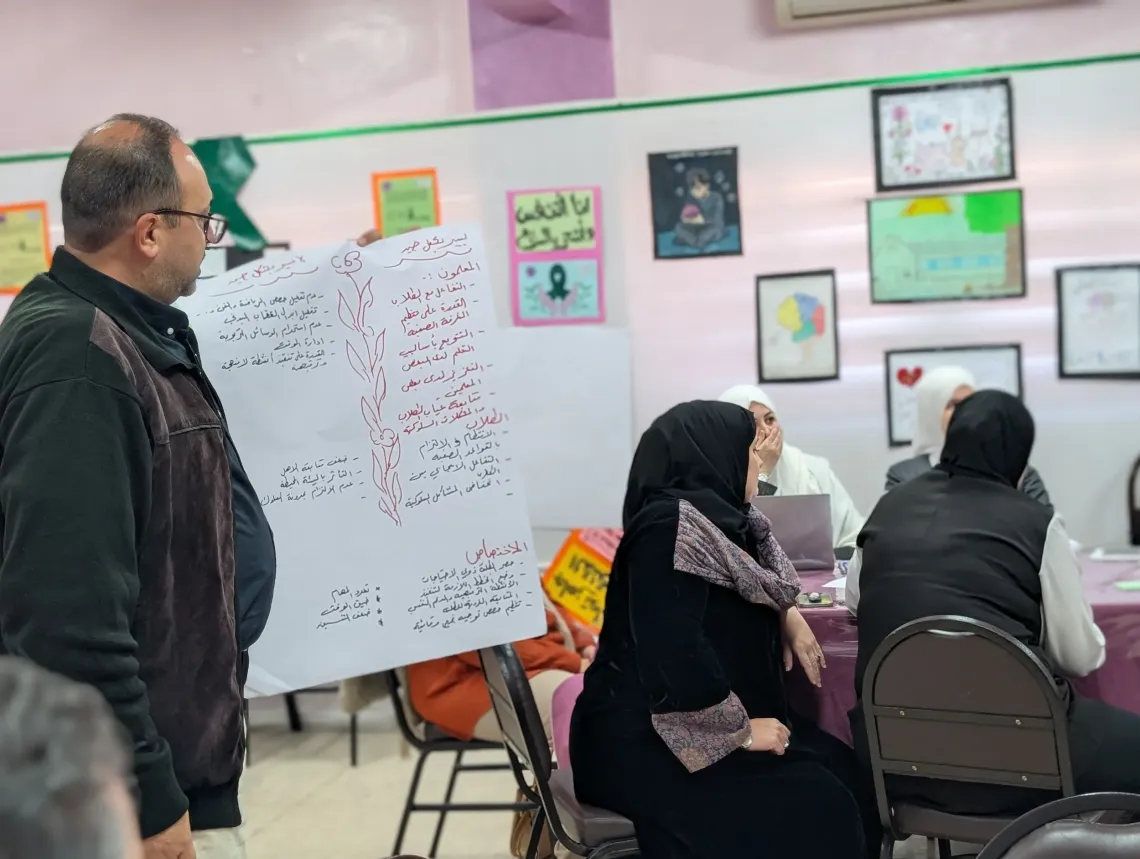
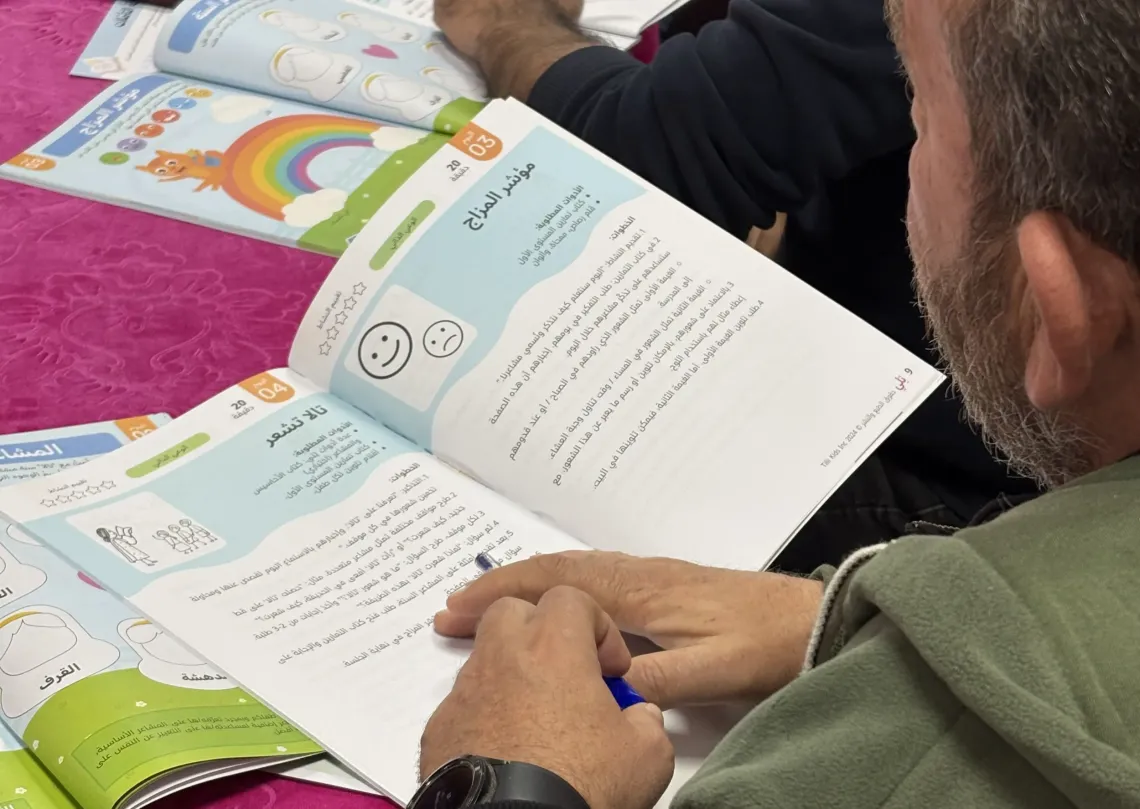
In practice, the pilot combines structured pedagogy with deeply human, locally grounded delivery. Educators receive hands-on training and printed guidebooks in Arabic, while each child receives a workbook containing thirty-six interactive lessons spread across the school year. Activities help children recognize and name emotions and build personal “toolboxes” for managing big feelings, whether that means colouring quietly, running outdoors, or talking things through. The approach reflects UNRWA’s decision not to introduce screens to its youngest learners, ensuring that learning remains relational and age-appropriate.
Behind the scenes, however, technology plays an important role. Tilli’s AI-enabled assessment model gathers insights from students, parents and teachers through WhatsApp-based surveys and combines them with direct child assessments to build a 360-degree picture of each classroom’s social-emotional growth. Education specialists and counsellors can explore the data in simple, natural language — asking questions like “Which classrooms show improvement in emotion regulation?” and receiving data-driven, personalized, culturally-specific answers. “We’re putting social-emotional data into the hands of teachers,” says Kavi. “It’s about empowering humans with evidence, not overwhelming them with screens.”
Founded in Sri Lanka and further developed through work with Stanford University’s School of Education, Tilli was rigorously tested in classrooms and has now served over 30,000 children aged five to ten. Scaling to Jordan with UNRWA, this pilot further demonstrates that educator-led innovation can adapt between contexts facing similar challenges. “This story matters because it shows that the origins of innovation are different today,” says Kavi. “Not from Europe or America to the world, but from people like us to other people like us.”
The rollout in Jordan is supported by local partners including Arab Renaissance for Democracy and Development. Five master trainers from Tilli are leading workshops in Amman, building the capacity of UNRWA’s education specialists to sustain the programme long after the pilot phase. Throughout the school year, UNRWA and Tilli will assess teachers, parents, and students at two points, contributing to an evidence base on the suitability, effectiveness, and uptake of technology-enabled SEL tools in low-resource settings.
For UNICEF’s Office of Innovation, the partnership reflects the Venture Fund’s convening role in connecting ventures, public systems, and local partners to support pathways to scale. “If we want innovation to truly reach children at scale, it can’t sit with one actor alone,” says Meghan Warner, Portfolio Manager with UNICEF’s Venture Fund. “It takes an ecosystem: startups, educators, local partners, and multilateral organizations, all pulling in the same direction.” Together, the partnership strengthens the people and institutions that support children’s well-being every day.