Investing in Blockchain, Web3, and AI for Social Impact
UNICEF Venture Fund Onboards Its Third Growth Cohort

Only 10 per cent of private capital investment in early-stage innovators reaches emerging markets. To address this gap, the UNICEF Venture Fund launched a new growth funding tier in 2021, with up to $400,000, available in both fiat and cryptocurrency, to support companies that have previously received seed funding and demonstrated promising results.
Fast forward three years, the Fund is onboarding three more companies to the growth cohort. Rumsan in Nepal, Xcapit in Argentina, and Tilli in Sri Lanka are companies illustrating the transformational role of frontier tech, specifically blockchain and AI, in delivering social impact and results for children. The additional companies bring the total cohort count to 15 startups.
Rumsan and Xcapit: Harnessing Blockchain and Web3 Tech to Bolster Humanitarian Aid Efficiency and Financial Inclusion
Blockchain technology has significant real-world implications for humanitarian aid. It addresses critical challenges such as transparency, accountability, efficiency in aid delivery, and financial inclusion of unbanked and underbanked populations.
Rumsan's Rahat platform, for example, leverages blockchain to manage digital cash and voucher assistance (CVA). An evaluation of a pilot by UNICEF Nepal using Rahat for a CVA project in 2023 found that, unlike traditional digital CVA platforms that rely on conventional digital security measures and face challenges like limited transparency, delayed monitoring, and less inclusive approaches, Rahat leverages blockchain’s tamper-proof data storage and encryption mechanisms to ensure robust security.
Its high level of transparency, with transactions recorded on an immutable public ledger, reduces disputes and enhances trust. Rahat also caters to both banked and unbanked beneficiaries, compared to traditional CVA platforms which often require beneficiaries to have bank accounts or specific technologies.
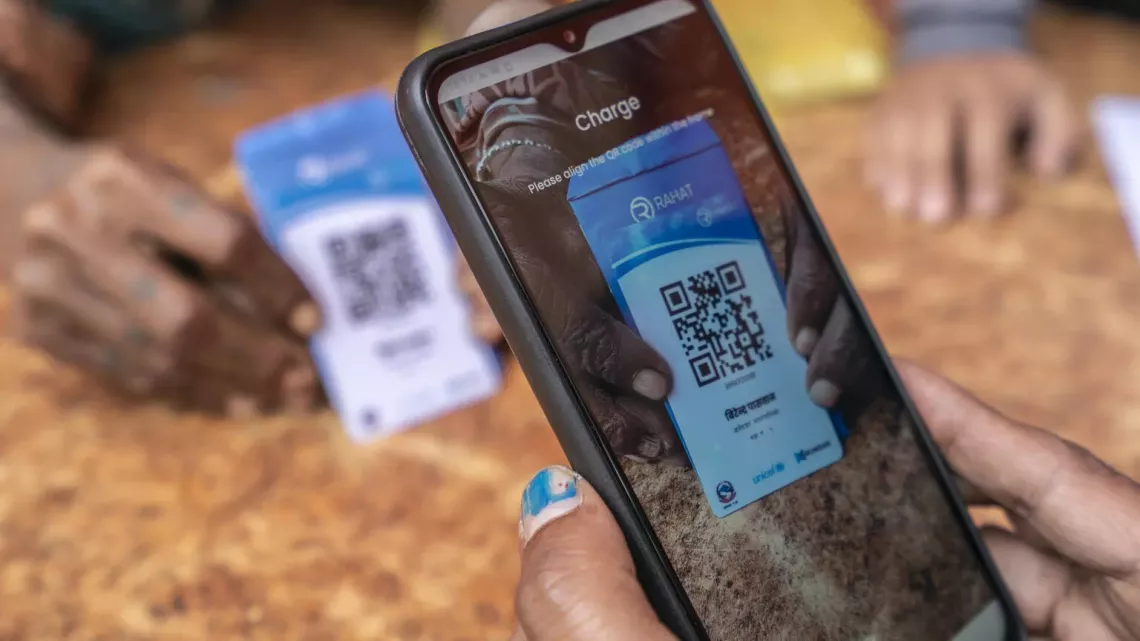
With initial seed funding, Rumsan developed core functionalities like beneficiary management and real-time reporting. Now, growth funding will enable the integration of digital assets, enhancing aid delivery by enabling the secure receipt and disbursement of digital assets to beneficiaries.
Xcapit's self-custodial Web3 wallet addresses financial inclusion challenges by providing unbanked populations with access to financial planning tools, gamified savings, and financial services like loans.
Shortly after it graduated from seed stage investment with the Fund in 2022, Xcapit conducted a pilot with one of Argentina's largest credit card issuers to increase access to financial services. Using stablecoin-collateralized credit, its escrow infrastructure significantly lowered the industry’s rejection rate of 92 per cent. Beneficiaries received credit in the local currency while saving in a stable currency (US digital dollar), improving their credit scores and entering the traditional financial market.
During the pilot, over 50 per cent of users transferred cryptocurrencies from other accounts to the wallet, indicating higher-than-expected crypto adoption. Although the pilot sample is small, the findings are essential for scaling the solution. Xcapit's Web 3 wallet proved to effectively serve gig workers (44 per cent), foreigners (44 per cent), and residents of remote areas (50 per cent)—groups typically underserved by traditional banks. By offering alternative ways to build credit history and join the digital economy, Xcapit demonstrates its potential to drive social and economic inclusion, showing that innovative financial solutions can bridge gaps and transform lives, even with a modest initial user base.
With the funding and technical assistance that comes with belonging to the growth cohort, Xcapit is developing a low-cost, low connectivity digital wallet for feature phones to further democratize access to digital assets, allowing even those without advanced smartphones or stable internet connections to participate in the digital economy.
Tilli: Empowering Children's Cognitive Skills and Emotional Well-being through Safe AI-driven Learning

Tilli is an AI-powered, play-based social-emotional learning (SEL) tool designed to develop and measure eight foundational cognitive skills in children by age 10, ensuring their safety, health, and happiness. It leverages data and generative AI to create comprehensive assessment tools that measure critical and hard-to-assess skills like self-awareness, management, and critical thinking in early learners, addressing a gap schools, parents, and curriculum providers face.
Additionally, Tilli provides actionable data and personalized interventions through its Parent's Dashboard, offering parents and caregivers easy-to-read information on their child's emotional mood, signs of distress, self-management techniques, and learning progress, enabling proactive and informed parenting decisions.
In the initial seed funding round, Tilli collaborated with Save the Children and UNICEF Sri Lanka to provide access to the platform to more than 4,700 children and trained over 90 case workers and probation officers to use the dashboard for case management in child protection.
During the growth investment period, Tilli will develop a fully functional Teacher's Dashboard and Assessment Tool and a well-trained Gen-AI model that generates personalized interventions. Tilli will also adopt crucial components from UNICEF’s ongoing AI Risk Assessment Framework to strengthen data protection and privacy measures.
The UNICEF Venture Fund follows a unique philanthropic model for equity and inclusivity in frontier tech for social impact by making equity-free financial and mentoring investments in open-source solutions that accelerate results for children, with an intentional lens on emerging markets.
By continuing to support companies like Rumsan, Xcapit, and Tilli and others exploring the possibilities of frontier tech to address some of the world’s most pressing development and humanitarian challenges, UNICEF aims to bridge the funding gap for early-stage innovators in emerging markets and empower communities to become active innovators in their own development and recovery.