The Skills-Building Power of Video Games for Girls in Morocco
When UNICEF’s Game Changers Coalition launched in Morocco, it proved as transformational for one of the trainers as for the girls with whom she worked

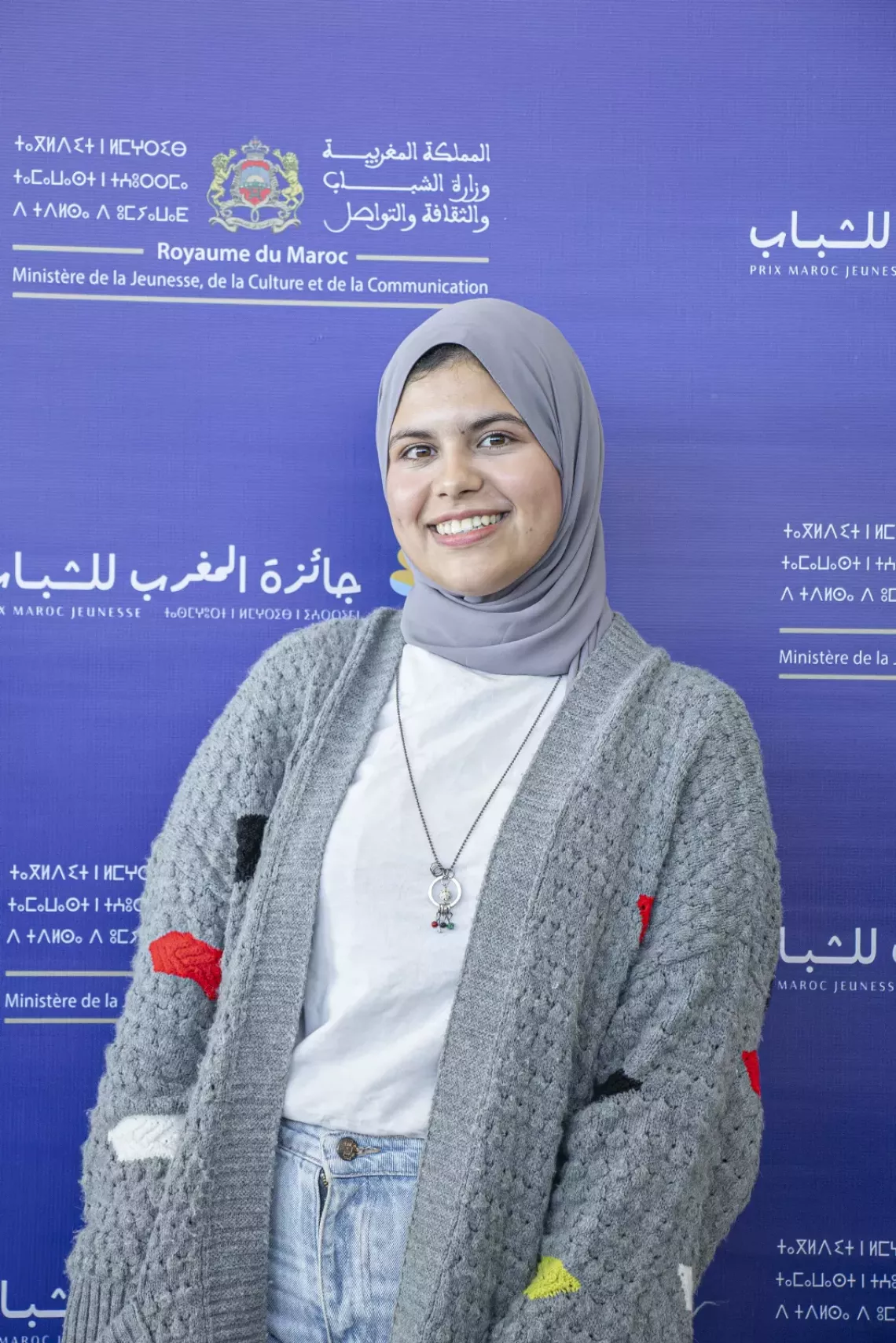
Growing up in the Moroccan town of Salé, across the river from the capital Rabat, Salma Nassiri was proud to be the first female in her family to go to school. At high school, the 22-year-old focused on mathematical sciences before studying primary education at university.
A driven and committed student, Salma was also community-minded and joined a national volunteer programme helping to set up a local youth club where her energetic volunteer work got her noticed. In 2024, when UNICEF and Morocco’s Ministry of Youth, Culture and Communications launched the Game Changers Coalition (GCC), Salma was tapped to become a trainer, despite never having played a video game in her life.
“I’m not a gamer!” she recalls thinking. “I don’t play games; I don’t create games. At the beginning I was questioning, is this my field or not? It changed when I became a trainer.” Salma was quickly convinced of the power of video games to deliver digital skills and education.
Bridging the digital gender gap
An estimated 2 billion people play video games worldwide, half of them girls and women. But when it comes to game development and the tech industry more broadly, only a quarter of the workforce are women. GCC is addressing the global digital gender gap enabling a transition from playing, to learning, to earning.
GCC launched in six countries in 2023 – Armenia, Brazil, Cambodia, India, Kazakhstan and South Africa – and has since expanded to Malaysia and Morocco, engaging with 154,000 adolescent girls, parents and teachers.
Through the Game Changers Coalition, UNICEF is working with the video game industry – with support from its founding partner the Global Video Game Coalition represented by its co-chairs Entertainment Software Association and Video Games Europe, and in collaboration with Electronic Arts, Roblox, Ubisoft and Sony Interactive Entertainment – in a shared ambition to reach 1.1 million students by 2027.
The initiative’s sustainability is ensured by investing in Moroccan trainers and building their capacity to help create a diverse, secure and inclusive future, in which girls and women are equipped to work and thrive in the digital world and the real world.
“GCC builds confidence, skills and knowledge,” says UNICEF Office of Innovation (OOI) curriculum designer Gustavo Oliveira Pugliese, who has run trainings in all seven countries.
More than 3,000 video games addressing issues such as cultural identity, gender equality, mental health and more have been created at GCC game jams, often by girls with little or no previous game development experience; girls like Salma once was.
Youth training each other
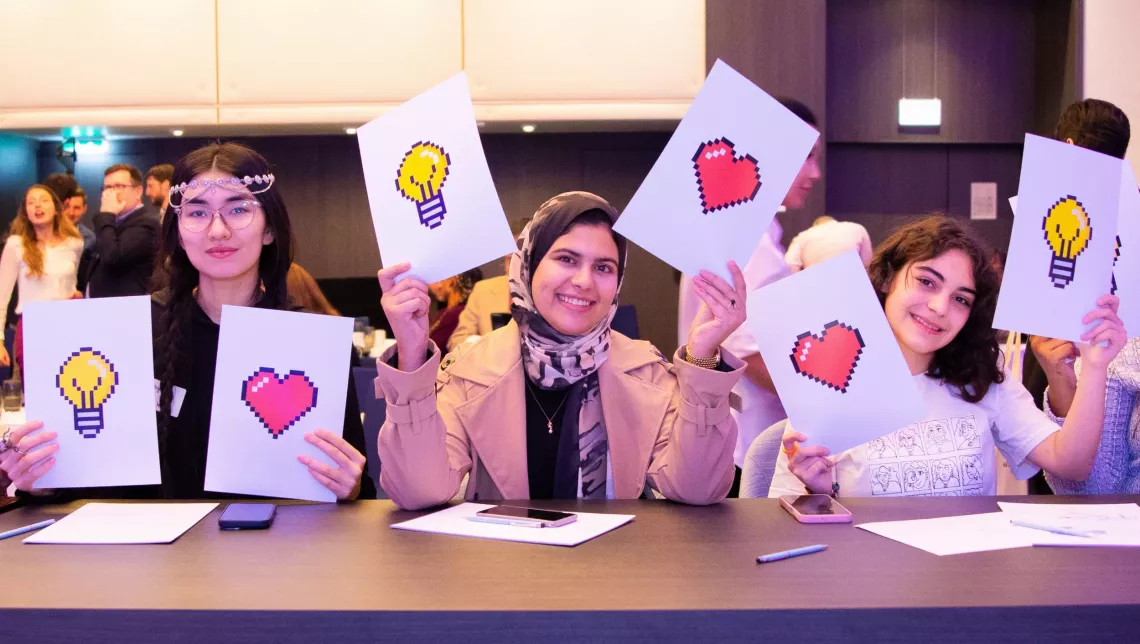
In Morocco, Oliveira Pugliese trained the trainers – including Salma – in key aspects of the GCC curriculum, such as coding and game development, after which they were able to work directly with younger adolescent girls, bridging age, language and gender divides, and ensuring participants progressed quickly.
Excited to share her new knowledge, Salma was astonished at how fast the girls she worked with learned new digital skills. “After just a few days' training, girls who did not even know how to use a laptop, were creating games!” she says.
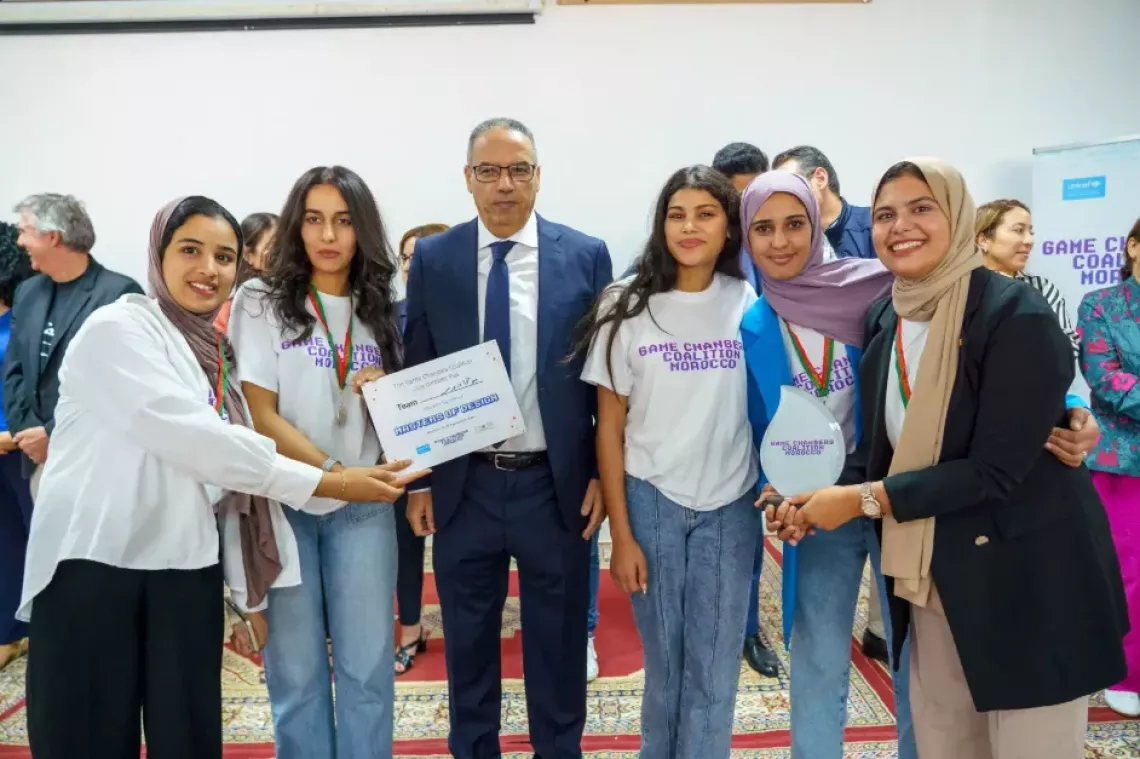
At a later one-day GCC hackathon or ‘game jam’, teams of girls competed to design and build video games reflecting their interests. Salma mentored a team that made a game in which users learn about Morocco’s cultural heritage by unscrambling images and answering multiple choice questions. Its aim was to connect young Moroccans to their history and culture because without that, “you are missing everything, you are missing your Moroccan-ness,” she says.
‘GCC is a lifestyle’
Salma’s involvement with GCC has been transformative for herself as much as for the younger adolescent girls she has led on their coding, game design, teamwork and storytelling journeys. Seeing firsthand the impact of game-based learning opened Salma’s eyes and she decided to take a master’s degree in technology, engineering and innovation, a decision that brought her education career full circle.
“I had many options for a masters, but once I participated in GCC I was inspired to think about how we can integrate games into education, and preschool education in particular. I also missed the mathematical science side of my studies, and engineering is a close match, so it brings it all together.”
Salma’s tech and leadership experience through GCC helped her secure a place on the course despite not having a formal background in technology, in fact “it has become one of my strongest assets,” she says. Salma began her master’s at a university in Rabat in November and has thrown herself into life there, drawing on what she learnt at GCC.
“Game-based pedagogy functions perfectly: it is the best way to transmit a message,” she says. “I am an ambassador for my university, a member of the education commission for sustainable development, and when we were thinking about events we could organize, I suggested a hackathon for games about sustainable development.”
“For me, GCC has become a lifestyle,” she adds.