

The next wave for climate entrepreneurship
Lessons learned from Innovation30 and the road ahead

Innovation30: Young Climate Innovators Shaping the Future set out to explore a big question: what does it take for youth-led climate solutions to take root in the real world? Launched as a pilot, it went beyond spotlighting promising ventures to testing how early-stage innovations could be introduced into systems that serve children and their communities.
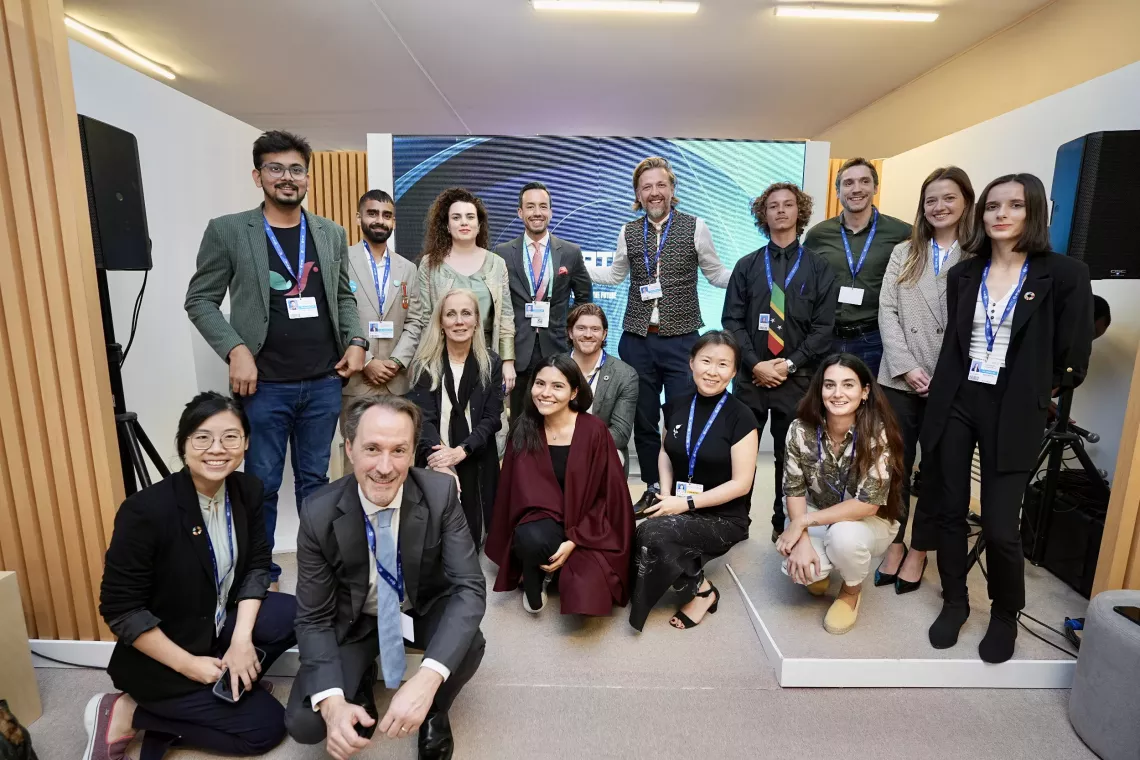
24 climate solutions developed by entrepreneurs under 30 were selected in partnership with leading climate accelerators worldwide. Over two years, through profile-raising opportunities at global events, coaching, and networking programmes hosted by ClimateX, a joint programme with the Cambridge Institute for Sustainability Leadership, the climate entrepreneurs and UNICEF country office teams explored how to pilot solutions in local contexts, testing what works.
What we learned
Key learnings from Innovation30 provided valuable insights for designing the next phase of equipping and supporting climate entrepreneurship. This was a sandbox to co-create with, and learn from, young innovators to find approaches and initiatives that can best equip them to thrive as key stakeholders in addressing the impact of climate change on this and future generations. Three key insights shaped this effort:
- Open doors and open wallets. Startups need more than funding—they need an entry point. Many of the entrepreneurs in our cohort had already received grants from other accelerators. What they found most valuable was structured access to UNICEF country offices to test and refine solutions in real settings, alongside conversations with government partners and support in navigating how to enter new markets. Acting as a connector proved to be one of the most catalytic roles we could play.
- Solutions need space to land. Successful pilots depended on strong alignment with local priorities. When country office teams were engaged early and innovations were designed to support existing programmes, the work moved faster and stuck better. Future efforts will start with those conversations from day one.
- Smaller cohorts, stronger support. A 24-venture cohort brought visibility and diversity but stretched our ability to provide tailored mentorship and deployment planning. More focused groups allow for deeper, higher-quality support.
Taken together, these lessons reinforce that scaling innovation isn’t just about capital or convening power. It’s also about creating the right conditions for solutions to take root, connect, and grow where they are needed most.
From testbed to trajectory
One of the clearest examples of what Innovation30 made possible is Cycleau, founded by Noemi Florea. Her greywater handwashing system was piloted through UNICEF Tajikistan and is now set to reach more than 15,000 young people across the country.
While the initial deployment is promising, the deeper impact is still unfolding. Local authorities have embraced Cycleau’s approach, and even if future systems don’t carry the company’s name, the model Noemi introduced is already shaping how public schools think about water reuse. It’s a shift that could benefit many more children in the years ahead.
Noemi’s pilot helped change the standard, and that’s what Innovation30 was designed to do: open doors, create early traction, and build the relationships that let a solution evolve over time. Some Innovation30 ventures are now in talks with governments, while others have adapted their models based on what they learned. Through Innovation30, we saw firsthand that convening and mentoring young entrepreneurs leaves them more connected and better positioned for what comes next.
“Innovation30 has shown that in a large multilateral institution like UNICEF, the real action happens at the country level. Local teams – born and raised in the countries that they're serving –have an acute understanding of the problems and can actually absorb these innovations. The opportunity to work with the UNICEF Tajikistan Country Office has been incredibly unique and eye-opening experience.”
Noemi Florea, Founder, Cycleau

Introducing the UNICEF Climate Ventures initiative
The need for climate innovation remains urgent, as does the need for funding to accelerate deployment. The UNICEF Climate Ventures initiative bridges this critical gap by investing in and supporting scalable solutions that protect children while advancing technologies and strengthening local systems to create more resilient, connected communities. Over five years (2025–2030), the initiative will invest in and support up to 60 ventures and function as a platform to deepen support and strengthen alignment with country programmes, helping scale the climate solutions children need most.
To achieve this, we’ll focus on:
- Solutions addressing child-critical climate challenges. Each new cohort will focus on a specific issue such as climate-resilient health systems or resilient energy systems, with tailored mentorship from frontier tech experts, peer connection, and clearer deployment pathways across UNICEF’s global network.
- Ventures that respond directly to the climate risks facing children. Country teams will be engaged from the start to co-create national integration plans and support pilots with the potential to grow.
- Building on proven success. Building on the UNICEF Venture Fund’s 10 years of work (153 investments, 68+ countries, 16.9M+ direct beneficiaries reached), Climate Ventures specifically targets climate solutions with the potential to achieve both meaningful impact and sustainable viability.
UNICEF Climate Ventures will also function as a catalytic connector, complementing rather than competing with other climate funding mechanisms. By sharing our pipeline with donors and partners, we’ll accelerate uptake and scale where it matters most.
Innovation30 was the start of a journey towards identifying and supporting climate entrepreneurship. As a pilot, it showed us how to support young climate leaders not just with visibility, but with real opportunities to test and grow their work. It revealed where UNICEF can add value, and how we need to evolve to go further.
Climate Ventures is building on that foundation: smaller cohorts, deeper partnerships, and real-world impact. The climate crisis demands solutions that are bold, impactful, and ready to scale. Young people are already leading, our role is to help clear the path.


