New Guidance for Child-Lens Investing in Listed Equity Published
The guideline introduces the emerging field of CLI to listed equity, offering concrete steps for investors in applying a child lens.

Equity markets are the second‑largest segment of the investable global capital market, after fixed income. With sustainable investment demand continuing to grow, listed equity investors hold significant untapped potential to advance child well‑being at scale.
The Guidance for Child-Lens Investing in Listed Equity is intended for investors, including asset managers and asset owners, investing in listed equities who seek to minimize risks and identify opportunities for positive outcomes for children. The guideline provides actionable recommendations for the investors' Environmental, Social, and Governance (ESG) practices and impact strategies.
“As the second-largest share of the global capital market, totaling USD 127 trillion as of 2024, equity markets include many of the world’s most influential companies in the world, which have a notable impact on the daily lives of children.”
- Securities Industry and Financial Markets Association (SIFMA) (2024)
The guideline aims to support both responsible and impact investors in strengthening their intentionality through policies and governance, and in enhancing investment selection, stewardship, and measurement practices. It demonstrates how investors in listed equities can leverage multiple avenues of influence throughout the whole investment cycle to improve children’s lives.
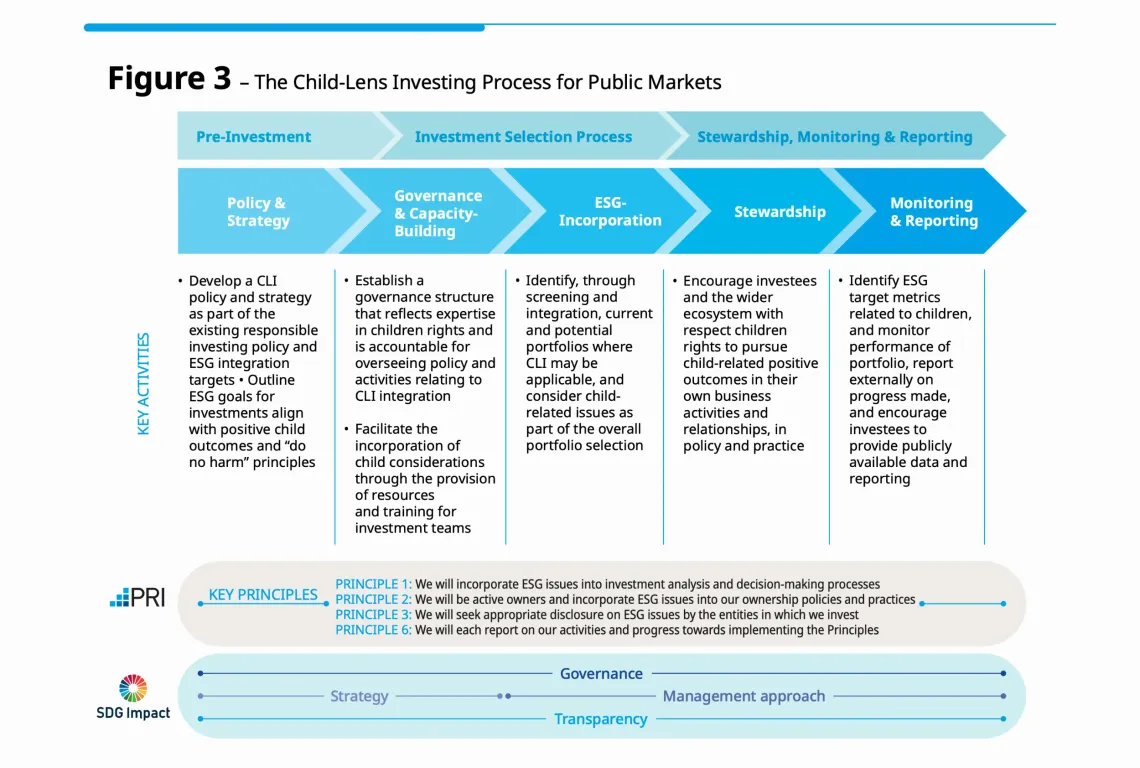
With the help of the guideline, investors can
- articulate an investment strategy that positions children as key stakeholders,
- understand the rationale for applying a child lens across investment processes, and
- gain a comprehensive view of child-related risks and opportunities linked to investees’ business activities, products, services, and value chains.
While primarily aimed at listed‑equity investors, the guideline also aims to inform the broader sustainable finance field, enabling all stakeholders to better understand their impacts on children.
Read the guideline here: Child-Lens Investing in Listed Equity