Innovation is not a privilege- It's a public good
What Tamil Nadu state in India learned from scaling UPSHIFT to every school — and why the world should pay attention
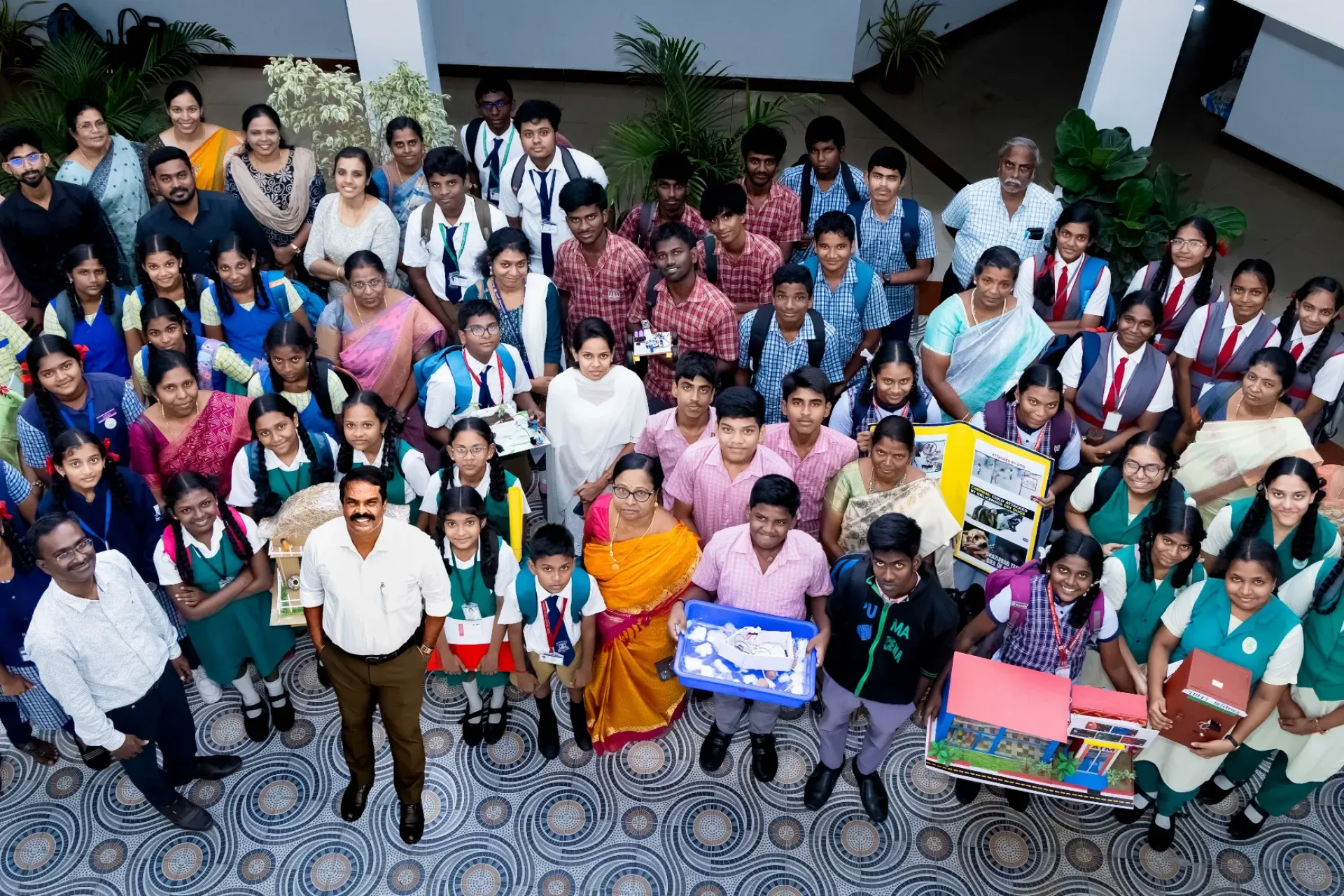
Across the world, we say that every child can innovate. But the reality is that the way innovation is taught and funded tells a different story, one that centres fancy labs, elite colleges, and private schools. Too often, children in rural areas, first-generation learners, and students in public schools are left outside that narrative.
In Tamil Nadu, we’ve chosen to challenge this story.
Our goal was bold: to build a statewide movement of young social innovators, addressing needs that neither traditional systems nor market forces had been able to solve. That conviction, and a belief that every child can innovate, is what shaped the School Innovation Development Project (SIDP), which integrates UNICEF’s UPSHIFT social innovation accelerator directly into our government school ecosystem.
Today, as we implement SIDP/UPSHIFT across 8,252 schools, our message is clear:
Innovation is teachable. Innovation is scalable. And when systems, teachers, and technology move together, innovation becomes universal.


Why and how Tamil Nadu scaled UPSHIFT in every school
Scaling SIDP/UPSHIFT across every government school in a state of over 75 million people required a systemic shift.
Today, UPSHIFT is integrated into 100% of Government Secondary Schools across Tamil Nadu — making innovation education part of the core schooling experience for every adolescent in the public system.
Before SIDP/UPSHIFT, we saw three core gaps across our education system:
- Students had creativity, but no structure to turn ideas into action.
- Teachers wanted to mentor, but lacked the tools and pedagogy for innovation.
- Districts had energy, but not the ecosystems to nurture youth ideas.
SIDP filled those gaps by embedding UPSHIFT directly into the state’s academic ecosystem and making innovation a shared priority across government
The most consequential decision was this:
We built SIDP inside government, not outside of it. That meant no parallel structures, no consultant-run pilots, and no initiatives that could disappear after a year.
Instead, the state strengthened its own capacity to deliver innovation at scale. District Project Managers and ECO Coordinators became SIDP’s backbone. Teachers became mentors. Students became problem-solvers. And technology provided the digital muscle needed for scale.
UNISOLVE, the platform delivering SIDP/UPSHIFT, enabled statewide access to content, tools, dashboards, and AI-supported evaluation. Whether a child was studying in a hilltop school in Kodaikanal or a coastal school in Nagapattinam, they all followed the same structured process.
This is what it means to treat innovation as a public good: make it part of a system that reaches every child.

When innovation becomes routine, transformation follows
Since launching in 2022, more than 850,000 students aged 10–15 have completed SIDP/UPSHIFT, guided by over 25,000 teachers trained as innovation mentors.
This year alone, UPSHIFT is running in 8,252 schools and has graduated 287,119 students who invested over 8 million learning hours and generated nearly 45,000 project ideas.
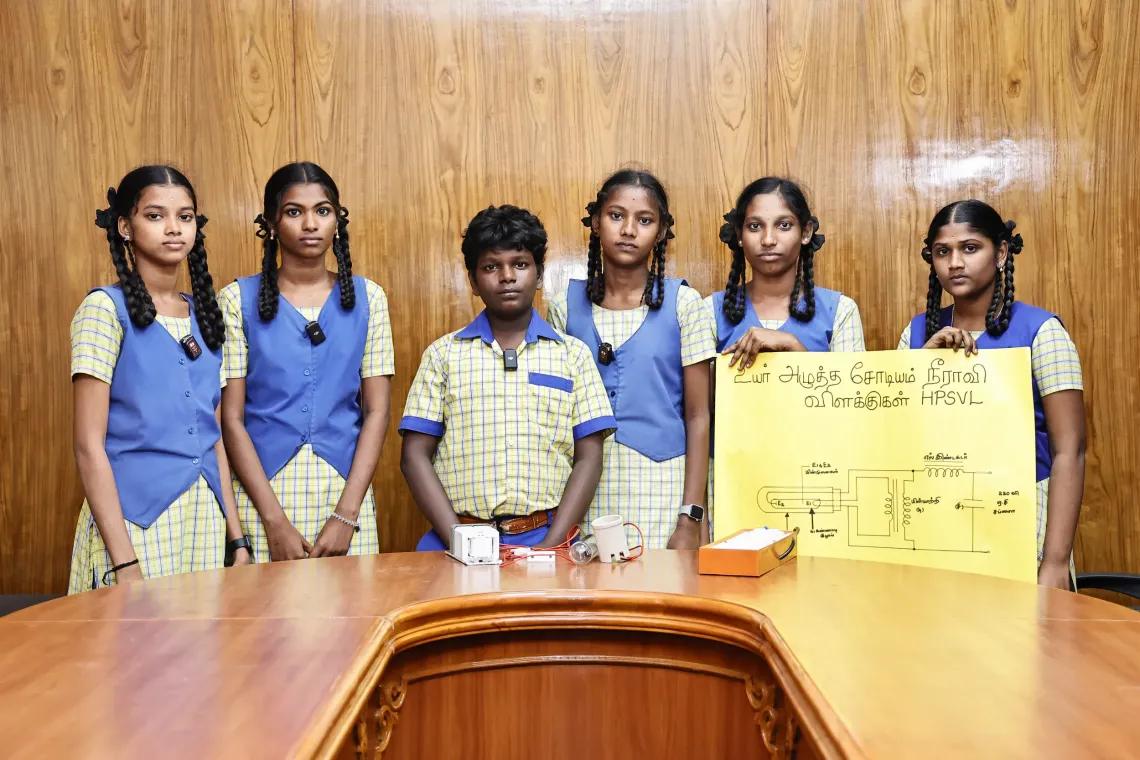
The team of girls in Ariyalur who built an Automatic Sanitation Cleaner went on to become state-level winners and symbols of rural girls solving community challenges through structured innovation. In another district, students created a Smart Helmet for Road Safety in response to frequent accidents in their community. The sensor-driven system prevents ignition if alcohol is detected or if the helmet is not worn. In both instances, the teams had never touched electronics before SIDP. Yet both built solutions capable of saving lives.
Through SIDP/UPSHIFT, these examples are no longer extraordinary outliers. They are becoming normal across Tamil Nadu.

What the world can learn from Tamil Nadu
Tamil Nadu now runs one of the largest UPSHIFT implementations globally. Our experience shows:
- Scale is possible when you stop thinking of innovation as an extracurricular activity.
- Teachers are the most underused innovation mentors in public systems.
- Technology accelerates equity when states own it, not outsource it.
- Rural youth don’t need motivation — they need a method.
- When systems trust children, children transform systems.


Tamil Nadu believed in its children, and they believed back, rising higher than anyone imagined. Our experience shows that ‘21st Century Skills’ are basic necessities, not privileged luxuries. If there is one message we hope others will take from Tamil Nadu, it is this: Innovation is not a privilege. It is a skill that every child can learn, and UPSHIFT offers a proven pathway for public systems to scale it.