Building the Foundation for Sustainable Innovation
How Open Source drives equity, transparency and growth

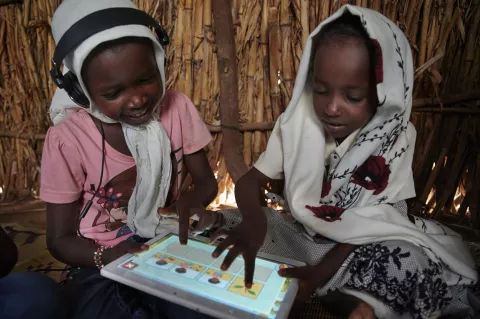
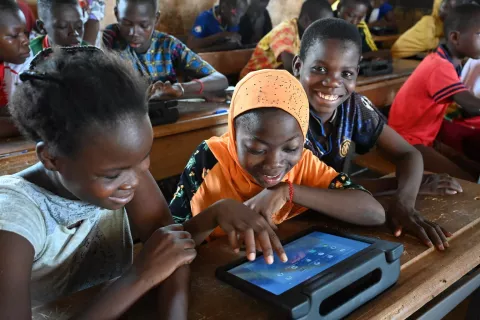
Imagine a world where a student in a low-resource community learns to code on freely available software, or a government builds a crisis response system without the cost burden of expensive licenses. Imagine these solutions being co-created, adapted, and improved by people everywhere—not locked behind paywalls or dependent on a single company.
For over a decade, the UNICEF Venture Fund has championed Open Source as the foundation for innovation that serves everyone. This isn’t just about technology; it’s about fairness, adaptability, and creating systems that endure. Yet, despite more than 90 per cent of companies using Open Source worldwide, it is often misunderstood — dismissed as less secure or commercially viable when compared to proprietary alternatives.
But Open Source isn’t just a nice-to-have; it’s a necessity. It enables the creation of public goods that evolve with changing needs, scale across communities, and uphold equity and transparency. Most importantly, it ensures that the tools we build today remain accessible to those who need them tomorrow.
Transparency, Accountability, and Data Sovereignty
In child protection and public health, trust is non-negotiable. Open Source fosters this trust by making systems transparent. Algorithms can be audited for fairness and bias. Data privacy safeguards can be validated.
Take, for instance, the challenge of "black-box" algorithms—proprietary systems where decisions are made without anyone outside the vendor knowing how. Imagine an algorithm determining access to aid, but no one can verify if it’s fair. Open Source flips this script. It allows humanitarian organizations to understand, adapt, and demand accountability from the tools they use.
This transparency also strengthens security. Vulnerabilities in Open Source systems can be identified and resolved collaboratively, often faster than in proprietary systems where fixes rely solely on vendors. For UNICEF, this transparency isn’t just technical—it’s about safeguarding the communities we serve and ensuring their data stays in their control.

Sustainability Without Dependence
Closed systems tie organizations to vendors. Price hikes, discontinued support, or licensing changes can leave critical systems inoperable. For resource-strapped communities, this can mean the difference between continuity and crisis.
Open Source eliminates this dependence. If developers move on, the code remains. Others can step in, adapt, and continue the work. It’s a model built on resilience and collaboration. UNICEF has seen this firsthand. Tools developed in one region can be tailored for another, enabling innovation that outlives its original creators.
Sharing doesn’t dilute impact; it amplifies it. A single Open Source tool can transform into countless iterations, each addressing unique local challenges while contributing to global progress.
Quality Through Collaboration
Contrary to misconceptions, Open Source is often more reliable than proprietary software. Some of the world’s most essential systems—like Android and Linux—are Open Source, and over 90 per cent of companies incorporate Open Source software within their proprietary systems. Why? Because collaboration drives quality.
Developers from diverse backgrounds contribute to improving Open Source systems, resulting in adaptable, refined, and contextually relevant solutions. Studies have shown that Open Source code often surpasses proprietary options in meeting stringent quality benchmarks by 30 per cent.
This collaborative model empowers innovators in underserved regions. In Africa and Central Asia, for example, new Open Source repositories are enabling developers to build tailored solutions without starting from scratch.
It’s not just about social impact. The global Open Source market is projected to nearly double by 2030, offering economic opportunities alongside innovation. UNICEF’s Venture Fund startups embody this dual potential: more than 70 per cent generate revenue, and over 40 per cent are profitable. Among the portfolio, 20 startups have raised more than $1 million, four have surpassed $5 million, and one has secured over $10 million. To date, eight portfolio companies—Dymaxion Labs, GeoSpoc, Veative, Leaf, Kimetrica, Giraffe, Atix Labs, and Weni—have successfully exited through acquisitions, reflecting strong investor confidence in their market viability and growth potential.

A Shared Vision for Global Good
The UN Secretary-General’s Digital Cooperation Roadmap champions solutions that serve the public good. Open Source brings this vision to life, transforming public investments into shared resources. More than code, it’s a philosophy—breaking barriers, empowering communities, and ensuring no one is left behind.
Governments are catching on. Countries like India and Switzerland have embraced Open Source-first policies to power their digital infrastructures. Tools like KoboToolbox, RapidPro, and DHIS2 demonstrate the power of Open Source to scale impact, build trust, and foster collaboration across borders.
For UNICEF, Open Source represents a commitment to equity and long-term impact with and for children. Through initiatives like the Open Source Toolkit and the Digital Public Goods (DPG) Registry, we are equipping startups and developers to build adaptable solutions for all. In partnership with like-minded collaborators like Norad, we are advancing digital public goods and infrastructure to drive inclusive digital transformation.