Bridging the Gender Gap with Digital Public Goods
How girls are leading the way in digital innovation with open source solutions

In our tech-driven world, innovative digital solutions continually reshape reality. Yet, a widening gap exists between young digital natives from the Global North and their peers from developing countries who face barriers to access and skills.
What does digital inclusion look like in practice? In Kazakhstan, it's about empowering girls with the tools and opportunities to shape their own futures. As the digital world rapidly evolves, many are left behind—particularly girls, with over half of the world’s female population still offline. By equipping them with skills to access, contribute to, and create Digital Public Goods (DPGs), Kazakhstan is taking a critical step towards bridging this gap.
DPGs— open source resources like software and data—are powerful tools designed to address global challenges. Developed with open source principles, DPGs are freely available for anyone to use, modify, and share, making technology more accessible and inclusive. This openness helps bridge the digital divide and creates a fairer, more equitable world.
Giving girls the knowledge and tools to leverage DPGs not only boosts their digital literacy but also equips them to thrive in the digital economy. By fostering innovation, collaboration, and leadership, this creates a more inclusive digital landscape where girls can contribute to solving the world’s most critical challenges. For adolescent girls, DPGs offer more than just access—they provide tangible opportunities to learn, grow, and succeed. This ensures that girls are not only participants in our digital future, but vital architects shaping it.
What if digital education could be fun, collaborative, and transformative for girls?
UNICEF Kazakhstan is at the forefront of harnessing DPGs for national priorities in education and gender equality, equipping girls with cutting-edge skills in Science, Technology, Engineering, Arts, and Mathematics (STEAM). From gamified education to nanosatellite training, these initiatives are more than just tech programs—they’re a movement to close the digital gender gap.
One of the most exciting initiatives is a product development program equipping girls to design DPG solutions. Through online courses, open source tools, and a game-based DPG simulator, participants not only learn data, AI, and coding but also cultivate teamwork, creativity, and critical thinking skills. Instead of competitive hackathons, the program emphasizes collaboration, with girls working together to build prototypes under the mentorship of IT professionals. Each completed task earns them badges, marking progress in both skills and teamwork, making this journey as rewarding as it is educational.
The latest cohort of participants developed a series of inspiring and impactful solutions, including a platform to prevent child marriage, a game for climate change awareness and emergency preparedness, a mobile app for real-time water quality data, and a youth-focused platform for networking and mentoring.
“This course has opened my eyes to how DPGs and modern technologies can help solve global challenges.”
Aleksandra, 17.

DPG Simulator is a game that puts players in charge of a start-up dedicated to creating DPGs. Players must balance strategies, finances, team size, and the development process to successfully release products that aid those in need. The DPG Simulator is free, open source, and available on GitHub.
“UNICEF hopes that this course will be the first, but not the last, and that many girls who want to start their growth in STEAM and IT can. If we don’t act now to champion DPGs for girls in Kazakhstan, we are not only missing out on their insights, perspectives, and potential for developing solutions for creating a better future for all, but we also fail to build on this momentum to address existing gender-based challenges - from higher rates of gender-based violence and lower educational attainment to limited economic opportunities for girls,'" says Tatiana Aderkhina, UNICEF Kazakhstan Education Specialist.
DPGs in Kazakhstan’s digital transformation and gender equality strategy
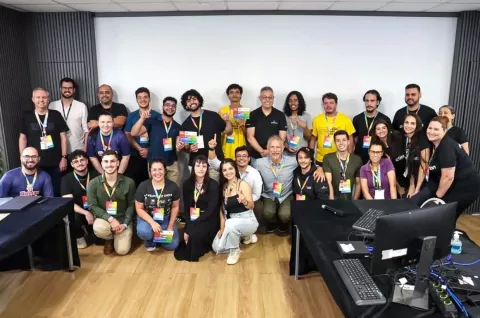
As Kazakhstan advances its digital transformation strategy, DPGs and open source tools are driving the shift. In 2023, UNICEF joined forces with the Kazakh-British Technical University and the Nazarbayev University Accelerator and Business Incubator (NURIS) to push this agenda further. Together, they promoted DPG standards for sustainability, supported the Ministry of Digital Development in monitoring start-ups, and trained over 250 adolescents—especially girls—in IT and STEAM. By upskilling young women to create and influence DPGs, Kazakhstan is giving them a gateway in to tackling challenges from climate change to education, using innovations tailored to their unique experiences.
These tools are not only vital for bridging the gender gap in technology but also for driving smarter, more inclusive policies. By using open data to analyze trends in education, employment, and climate change through a gender lens, Kazakhstan is shaping a future where technology benefits everyone equally, and girls are at the forefront of designing it.
In collaboration with partners like NORAD, UNICEF continues to invest in DPGs towards an open and secure digital future for this and coming generations.