Artificial Intelligence for early childhood innovation
How frontier tech is helping UNICEF Bolivia and government partners deliver for families

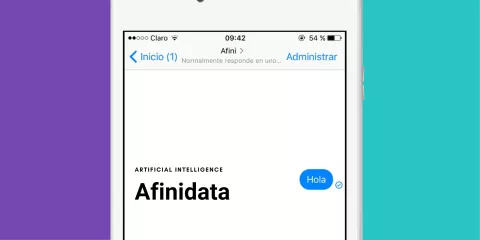
Across Bolivia, parents are receiving tailored guidance on how to support their children’s development through a chatbot powered by artificial intelligence. Developed by the Guatemalan startup Afinidata, the platform is now being integrated into Bolivia’s national early childhood health, education, and care programmes, bringing personalized, evidence-based support directly into homes.
In 2025, UNICEF Bolivia and Afinidata were named finalists in the Spark Accelerator, a global initiative of the UNICEF Office of Innovation that offers funding and mentorship to fuel partnerships between startups, governments, and country teams to deliver scalable solutions for children. Their recognition reflects how their innovation is moving from pilot projects to real-world integration, helping strengthen public systems while meeting families where they are.

This partnership builds on years of progress. Backed early by UNICEF’s Venture Fund in 2018, Afinidata began as a small experiment in Guatemala to make early learning advice accessible to any caregiver with a mobile phone. After graduating from the Fund in 2020, the platform expanded across Latin America, showing how digital innovation can cross borders and adapt to new contexts.
Bolivia became one of the first countries to adopt and scale the solution. With support from UNICEF’s Regional Office for Latin America and the Caribbean, the country office began collaborating with Afinidata and government partners in 2021 to strengthen services for families with young children. The pandemic had revealed the fragility of in-person support networks and underscored the need for digital tools that could complement traditional outreach.

Today, Afinidata is embedded within Bolivia’s early childhood development ecosystem. The chatbot begins by asking caregivers about their child’s age and and whether they are meeting developmental milestones according to standards set by the Ministry of Health, then suggests daily or weekly activities that foster play, learning, and emotional connection. When a caregiver has a question that needs a human response, the conversation is transferred to an expert for follow-up. This blend of AI-driven assistance and human support ensures that families receive practical guidance around the clock.
Thousands of families have used the platform since its initial rollout, and the results are compelling. Nearly 90 per cent of caregivers report that their children have developed new skills, while a similar share say the tool has strengthened their relationship with their child. For frontline workers, it has become a complementary resource to guide parents and monitor developmental milestones, creating a feedback loop between families and public services.

“The partnership with UNICEF Bolivia was a true milestone for us, because it demonstrated that our solution could move beyond pilots to become a national programme,” said Afinidata Co-Founder and CEO Andreana Castellanos. “At the beginning, there is no clear roadmap for scaling — everything starts small. With UNICEF Bolivia’s support, we went from a municipal pilot reaching 2,000 children to a nationwide initiative backed by both the Ministry of Health and the Ministry of Education.”
That collaboration between Afinidata, government ministries, and UNICEF Bolivia is what makes this initiative stand out. The platform’s content and indicators are aligned with Bolivia’s Early Childhood Development Surveillance Standard under the Ministry of Health, allowing health and education workers to share consistent messages and refer families for follow-up when needed. By embedding a digital tool within existing structures, the government is creating new pathways for coordination across sectors that traditionally worked separately.

“I consider that for UNICEF Bolivia, innovation means designing and implementing solutions that respond to the challenges and needs of children and their families, taking into account their social and cultural context, and aiming to positively transform their lives.”
Adriana Ayala, Early Childhood Development Officer, UNICEF Bolivia
"“This involves working with the State to develop new approaches where technology is a key ally to reduce gaps in access and connection”, she said.
Challenges remain. Internet access and device availability are still uneven, especially in rural areas, and content must be continuously adapted to Bolivia’s diverse cultural and linguistic landscape. Integrating Afinidata fully into government data systems will also take time. Yet these efforts are strengthening national capacity and offering valuable lessons for how digital solutions can be localized and scaled sustainably.
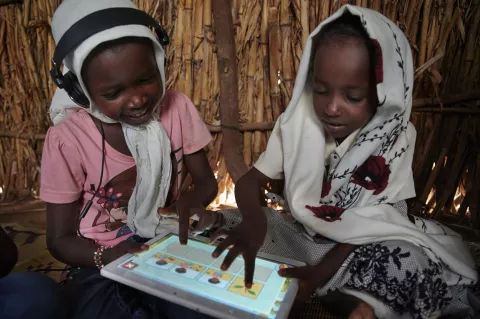
For UNICEF Bolivia, the work is ongoing. The office continues to explore how frontier technologies can enhance access to education, health, and early childhood development, particularly for children with disabilities and those living in remote areas. By linking data, technology, and frontline practice, Bolivia is showing how innovation can grow within public systems rather than outside them, turning a regional startup into a shared tool for families and a model for countries across Latin America.