

Redefining Educational Boundaries
How the EdTech for Good Framework is setting a new standard for safe, inclusive and effective digital learning

Educational technology (EdTech) has the power to transform learning and address the global learning crisis and there is an overwhelming number of tools available. To ensure these tools enhance learning experiences and bridge equity gaps, the Ed Tech For Good Framework enables decision makers, especially in the Global South and underserved regions to assess and compare ed tech solutions and identify the most beneficial tools for their contexts.
The Framework is a first-of-its-kind initiative designed to set a global benchmark for safe, effective, and inclusive EdTech. Developed by UNICEF Global Learning Innovation Hub in collaboration with the Ministry for Foreign Affairs of Finland, the Asian Development Bank (ADB), Arm, and key industry leaders, the framework provides a structured approach to evaluating EdTech tools with children’s needs at the centre.
“The EdTech for Good Framework is a transformative tool for decision-makers in developing countries, offering much-needed clarity amidst an overwhelming abundance of EdTech solutions. By addressing the challenges of local resource contexts, it ensures that no school or community is left behind.”
Jeffrey Jian Xiu, Senior Education Specialist, Asian Development Bank
A Framework Built for Children
The EdTech for Good Framework builds on ADB’s QESA model (Quality, Effectiveness, Scalability, Affordability) but adds a critical focus on child-centred learning. It assesses EdTech solutions through five key pillars:
- Safety comes first, ensuring children’s privacy and security are protected while preventing technology from causing harm.
- Learning impact is at the core, measuring how effectively tools enhance educational outcomes.
- Design matters too—EdTech must be age-appropriate, engaging, and aligned with children’s cognitive and developmental needs.
- Accessibility is key, ensuring tools are cost-effective, scalable, and practical for low-resource settings.
- And no one should be left behind, with a strong emphasis on equitable access for all learners, particularly girls and children with disabilities.
By establishing these standards, the framework helps governments, educators, and EdTech developers make informed decisions, ensuring that technology serves as an equalizer in education.
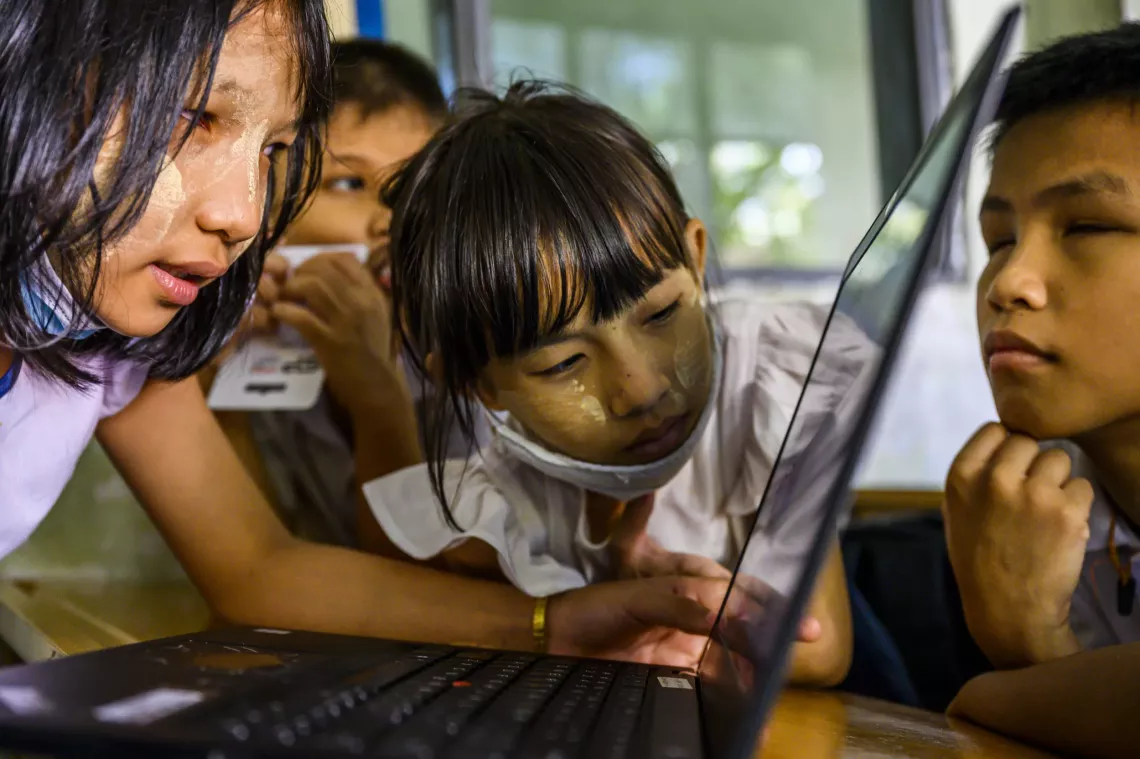
The framework is designed to be more than just a guide—it is a commitment to building a more inclusive and effective digital learning ecosystem. It is part of a broader effort that includes the Learning Cabinet, a publicly accessible platform that will showcase rigorously vetted EdTech solutions. Together, these initiatives aim to bridge the digital divide and connect decision-makers with the tools that best serve children’s learning needs.
“The EdTech for Good Framework exemplifies the power of collaboration in setting new benchmarks for educational technology. By leveraging our combined networks, Arm and UNICEF have positioned this framework to empower global and local ecosystems, supporting meaningful progress in education worldwide.”
Gian Marco Iodice, Principal Software Engineer, Arm
The framework is particularly relevant for countries facing challenges such as low connectivity, device shortages, and gaps in digital literacy. By providing a structured way to evaluate EdTech, it helps ensure that the best tools reach the learners who need them most.
“We believe this framework can not only accelerate progress but also serve as an equalizer—helping education truly fulfill its promise as a great leveller and transforming how we address the learning needs of children worldwide.”
— Frank van Cappelle, Head, UNICEF Global Learning Innovation Hub
Looking Ahead: A Living Framework
In its beta phase, the framework will continue to evolve based on input from educators, technologists, policymakers, and learners. This ongoing refinement ensures that it remains relevant in shaping the future of digital learning. The framework will also directly inform the Learning Cabinet, helping UNICEF and its partners curate world-class EdTech solutions for global adoption.
With the EdTech for Good Framework, UNICEF and its partners are setting the stage for a transformative shift in education—one where every child, regardless of background, has access to safe, effective, and inclusive learning technology.
Get Involved
To learn more about the EdTech for Good Framework and explore solutions that meet these standards, visit www.learningcabinet.org.