

Situation of world children
Examining key issues affecting children supported by detailed information and data.

-
- Ελληνικά
- English
The Convention on the Rights of the Child, adopted by the UN General Assembly in 1989, has already changed the way children are viewed and treated around the world by recognizing that childhood is a vulnerable time, and that children need special care and protection.
In the following three decades in spite of an exploding global population, we have reduced the number of children missing out on primary school by almost 40 per cent. The number of stunted children under 5 years of age dropped by over 100 million. Three decades ago, polio paralyzed or killed almost 1,000 children every day. Today, 99 per cent of those cases have been eliminated.
However, despite these and many more advances, poverty, inequality, discrimination and distance continue to deny millions of children their rights every year, as 15,000 children under 5 still die every day, mostly from treatable diseases and other preventable causes.
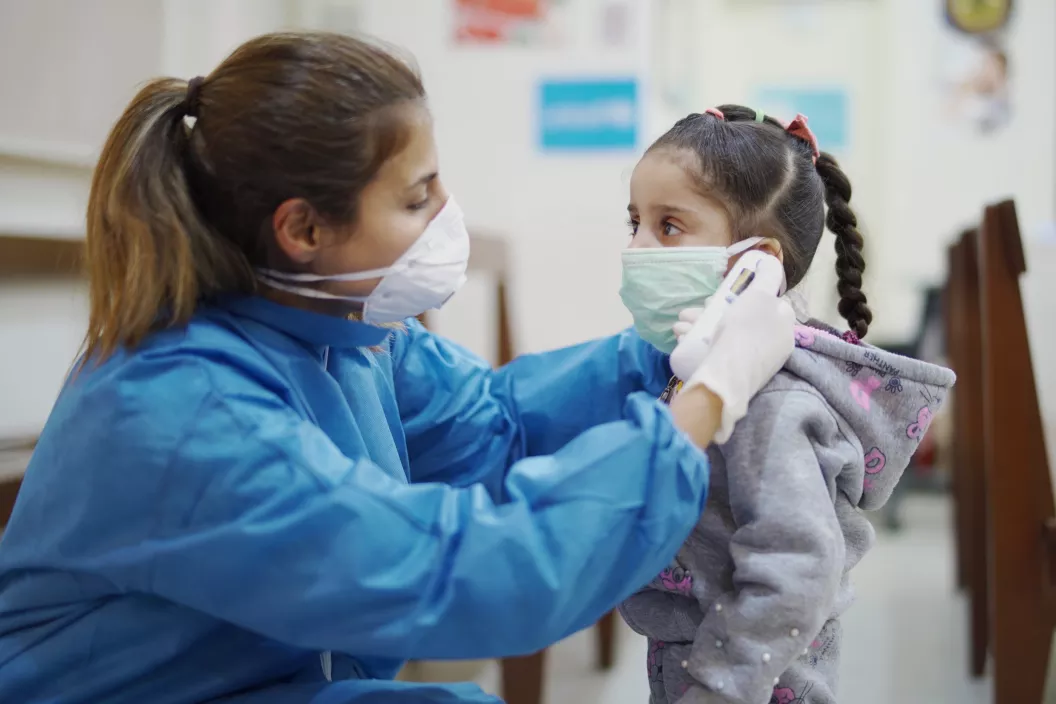
This year, the COVID-19 pandemic has upended the lives of children and their families across the globe.
Progress towards the Sustainable Development Goals is slipping backwards, and children continue to pay the steepest price. Without coordinated, global action to prevent, mitigate and respond to the effects of the pandemic, the consequences for children now, and for the future of our shared humanity, will be severe.
Despite being less affected than any other age group, emerging data suggest that children and young people’s health may be more directly impacted by COVID-19 than originally anticipated when the crisis began in late 2019.
Disruptions to essential services such as education, health care, nutrition and child protection interventions are harming children. A severe global economic recession is impoverishing children and compounding deep pre-existing inequalities and exclusion.
UNICEF is working with experts to promote facts over fear, bringing reliable guidance to parents, caregivers and educators, and partnering with front-line responders to ensure they have the information and resources they need to keep children healthy and learning.
Global coordination is urgently needed to prevent the COVID-19 crisis from becoming a child-rights crisis.
UNICEF's six-point plan proposes a set of practical and concrete actions to reunite the world around a common cause: the realization of the Sustainable Development Goals and the Convention on the Rights of the Child.
To do so, decision makers must start by listening to children and young people and including them in decision-making. It is they – especially girls; children facing poverty, exclusion, or violence; those with disabilities; children affected or displaced by humanitarian crisis; and children without parental care – who will live with the impact of this pandemic for decades to come.
We recognize that the 21st century has brought forth new challenges in the form of, inter alia, a global pandemic, climate change, rapid urbanization, unsustainable exploitation of natural resources, protracted conflict and humanitarian crises, forced displacement, digitalization and mass connectivity, and multi-dimensional and inter-generational poverty with a profound impact on children’s rights and well-being. It also brings new opportunities, including through the advancement of science, technology and innovation, for our renewed collective and concerted action with, and for, the 21st century child.
Resources
Areas we’re involved in
 Page
PageChildren with disabilities
Read how UNICEF upholds the rights of children with disabilities ensuring they stay with family, get a good education and participate in community life.
 Programme
Refugee and migrant children
Read how UNICEF are supporting child refugees and migrants who have arrived in Europe.
 Page
PageYouth development and participation
Read how UNICEF supports youth and adolescents by offering services to build life skills and develop civic competencies.