UNICEF organizes a capacity building workshop for Social Workers at the Hellenic Mediterranean University at Heraklion
UNICEF is launching an initiative aiming to enhance social workers' knowledge on how to advocate and apply child rights in their daily practice

- Ελληνικά
- English
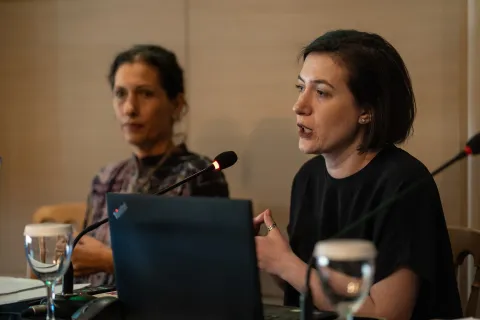
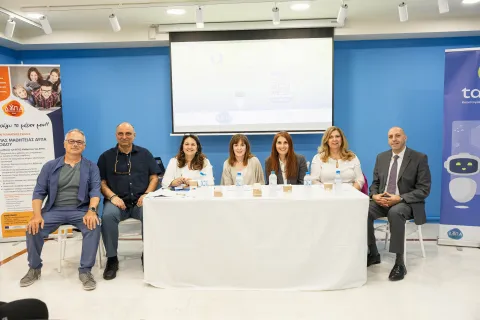
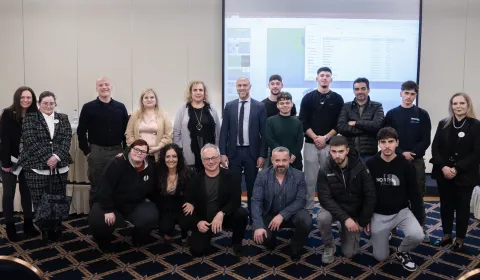
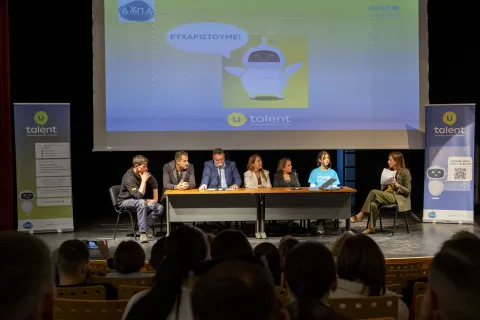
HERAKLION, September 11 2024— The first two-day capacity building workshop for social workers was organized at the Hellenic Mediterranean University at Heraklion, Crete, by UNICEF’s Child Protection experts, on September 9 and 10, with opening remarks by UNICEF Representative in Greece, Dr. Ghassan Khalil, Mr. Giorgos Tsagkarakis, Vice Mayor of Heraklion, Mr. Αthanasios Malamos, Vice Rector of the Hellenic Mediterranean University (ELMEPA), Ms. Maria Papadakaki, President of the Department of Social Work of the Hellenic Mediterranean University and Ms. Poly Agoraki, President of the Hellenic Association of Social Workers - Crete Regional Office.
The workshop marks an extremely important collaboration between the Hellenic Association of Social Workers, the Department of Social Work at ELMEPA University and the Municipality of Heraklion, as current and future professionals in the field of Social Work connect with the Municipality, where social services are designed and delivered, with UNICEF aiming to strengthen the implementation of children's rights in practice, through the presentation of the principles of the Convention on the Rights of the Child and the understanding of the role of social workers in defending the rights of children. The exchange of expertise between professionals and academic staff with the purpose of shaping the relevant curriculum to include and enhance the protection of children's rights is a vital and necessary step for improving social services for children in Greece.
UNICEF Representative in Greece, Ghassan Khalil, stated: “Social workers are literally at the forefront of response for children in need of protection and as such they are among the most important agents for protecting and promoting their rights. Embedding and enhancing children’s rights in social work through developing a child rights-based approach is an integral element of a well-functioning child protection system, which requires relevant knowledge and practice by the social workers. UNICEF is very happy and proud to be working together with the Hellenic Mediterranean University, the Municipality of Heraklion and the Hellenic Association of Social Workers to this end”.
During workshop sessions, presenters elaborated on the strong relation between social work and children’s rights, examined moral issues and concerns that arise during everyday practice of social work and highlighted the pivotal role of social workers in securing the “best interest of the child”, aiming at empowering social workers to actively apply child rights in the broad range of their work.
By establishing and strengthening the bonds between social workers and children’s rights, UNICEF aspires to improve the delivery of child protection services and help social workers to strongly advocate for children's right to have access to quality health, education and social services to promote their overall wellbeing and adopt a more holistic approach considering the full spectrum of children's rights , including their right to physical, emotional, and psychological development. Moreover, empowered social workers will facilitate children’s participation in decisions affecting their lives, ensuring that children's voices are heard, while a new generation of social workers who are committed to creating long-term positive change will be fostered.
Media contacts
Αbout UNICEF
The United Nations Children's Fund (UNICEF) promotes the rights and wellbeing of every child around the world. Together with our partners, we work in 190 countries and territories to translate that commitment into practical action, focusing special effort on reaching the most vulnerable and excluded children, and all children, everywhere.
UNICEF is financed exclusively by voluntary contributions from individuals, the private sector, foundations and UN member states, including the EU. Donor support is crucial as we create a global alliance for reaching every child without any exception.
For more information about UNICEF and its work for children in Greece, visit the UNICEF Greece website here.
Follow UNICEF Greece on Facebook, Instagram, Twitter and YouTube.