UNICEF and KOICA ink US$39 million deal to provide children with climate-smart services
Climate Action for the Last Mile: Reaching the Most Vulnerable Children

Nearly every child alive now faces at least one climate shock a year, such as a cyclone or heatwave. Half the world’s children – over 1 billion – are at extreme risk from climate-related disasters. Today, on the sidelines of the World Water Conference 2024 in Bali, UNICEF and the Korea International Cooperation Agency (KOICA) signed a landmark deal of US$39 million to provide children with climate-smart and gender-responsive social services in the areas of education, health, nutrition, protection, and water, sanitation, and hygiene.
This three-year project will provide financial support to five countries – three in the East Asia and Pacific Region (Papua New Guinea, Solomon Islands, Timor-Leste) and two in the Eastern and Southern Africa Region (Comoros, Zimbabwe). This timely and invaluable contribution comes as climate change is the greatest current and future threat to children’s care in the two regions – where it is happening now, with devastating consequences for children and their families.


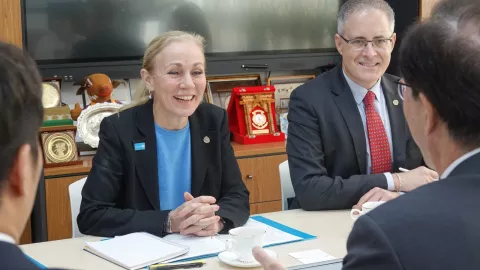
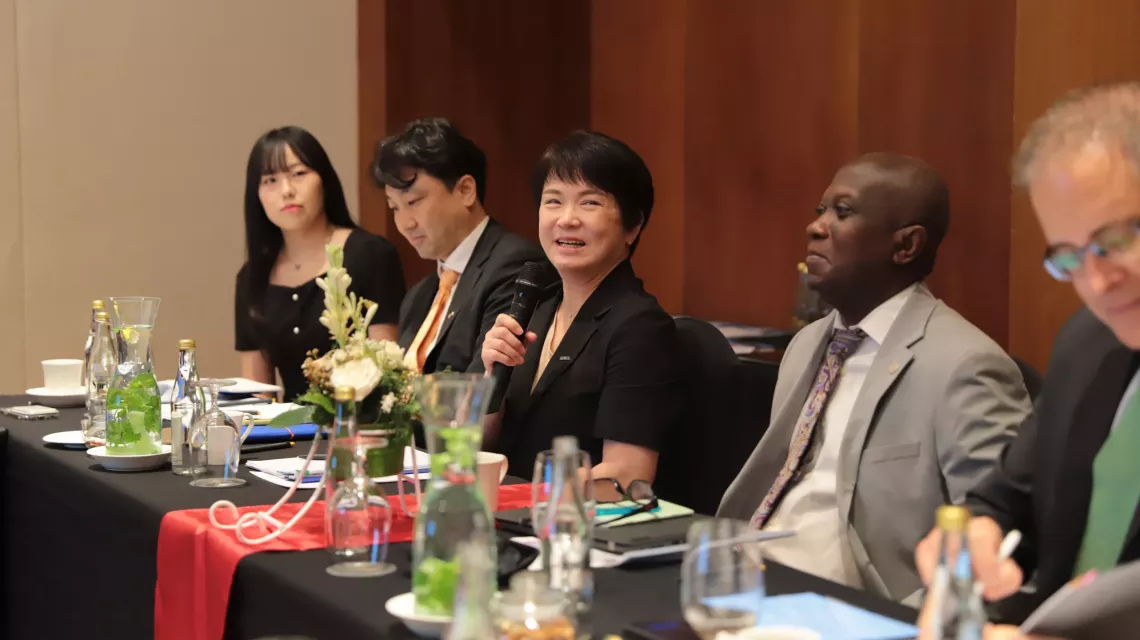
The Korea International Cooperation Agency’s delegation was led by Jungmee Sohn, Vice President of KOICA, and UNICEF was represented by George Laryea-Adjei, Director of the UNICEF Programme Group Leadership Team. The two delegations are committed to ensuring that children and young people have an active and meaningful role in addressing the climate crisis, including providing them with the necessary skills and resources to become agents of change and, as a result, to increase their climate resilience.
“KOICA’s climate grant will help UNICEF strengthen the climate resilience of essential service systems to protect children and communities,” declared Ms. Sohn. "The selected regions in Asia and Africa are among the most disaster-prone and vulnerable in the world. The Government of the Republic of Korea, under its vision of a Global Pivotal State, is committed to leading all nations on a sustainable path to tackling the climate and environmental crisis.”

In the East Asia and Pacific Region, children born today will experience six times more climate-related disasters than their grandparents. The region has the highest proportion of children facing three, four, or even five types of overlapping shocks, stresses, and hazards linked to climate change and a degraded environment.[1]
Changing climatic conditions in the East and Southern Africa Region have also compounded environmental degradation and contributed to increased displacement and migration, with 86 million internal climate migrants recorded, thus further reducing access to basic social services, increasing gender inequality, and deteriorating livelihoods and food security.[2]
“Our shared goal is to increase access to social services and strengthen the adaptative capacity of the institutions to reduce the overall climate risk,” explained George Laryea-Adjei, Director of the UNICEF Programme Group Leadership Team. “This includes implementing climate-smart programmes in several thematic areas, including health, nutrition, water and sanitation, education, child protection, and social protection programmes.”
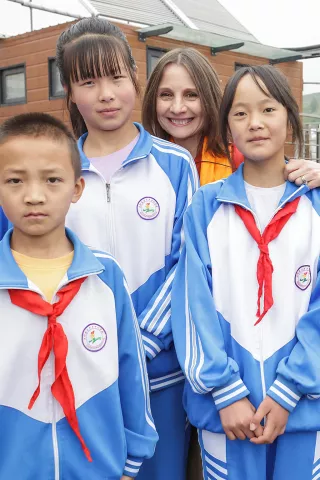
With generous funding from the government of the Republic of Korea, UNICEF plans to reach over 120,000 children with climate-smart social services and infrastructures across five countries during the project implementation until 2026. The activities encompass:
(1) strengthening water resource management in homes, schools, and health-care facilities;
(2) integrating climate change in teaching and learning, especially equipping adolescents with green skills allowing them to participate in the growing green economy;
(3) enhancing ongoing nutrition surveillance mechanisms within high-risk climate areas and expanding access to nutrition services;
(4) improving the climate responsiveness of social protection systems to better adapt to the rapidly changing natures of climate shocks;
(5) adapting child protection systems and workforces so that they can respond to children’s protection needs before, during, and after climate-related shocks and hazards;
(6) implementing measures that help better prepare for climate-related disasters by adopting early warning systems.


“Climate change is not just something to worry about in the future. It is arguably the greatest current threat to children,” said Oren J. Schlein, Head of the UNICEF Seoul Liaison Office. “Children often have understandably high levels of anxiety around climate change. Therefore, UNICEF – in partnership with the government of the Republic of Korea – will greatly enhance our efforts to address climate change, ensuring that children are protected and well cared for against climate-related shocks.”
With its strong in-country presence and capacities, UNICEF will work alongside local governments, civil societies, youth, and women’s groups, and the private sector to make social services ‘climate smart’, thus positioning itself for a holistic response to the climate crisis for children – across the humanitarian, environmental, and development nexus.
Building on the success of the long-standing partnership between UNICEF and KOICA, in the years to come the two development and humanitarian organizations will continue to expand their collaboration around the progressive and cross-cutting programme Climate Action for the Last Mile: Reaching the Most Vulnerable Children.

The KOICA fund represents the single largest climate grant received from the Government of the Republic of Korea, with $29 million allocated to the East Asia and Pacific Region and $10 million to the Eastern and Southern Africa Region.