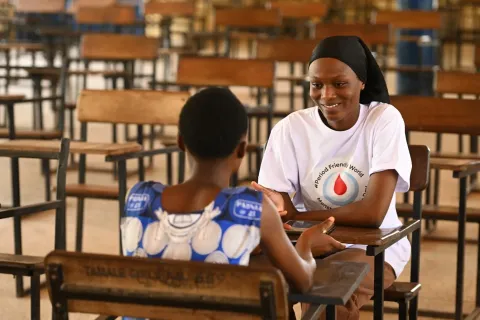
In Tamale, Northern Ghana, Kodu Technology, a mission-driven social impact startup, is tackling a deeply rooted yet often overlooked issue: period poverty. For many girls and women in rural areas, access to safe, hygienic, and affordable menstrual products remains a challenge — one that affects their health, dignity, and education.
Kodu Technology’s founders, moved by personal experiences and firsthand accounts from their communities, sought to create a solution that is both sustainable and socially impactful. Their answer? Biodegradable sanitary pads crafted from agricultural waste — specifically, discarded banana and plantain stems.
This innovation not only provides cost-effective menstrual products, but also reduces environmental waste, aligning menstrual health management with circular economy principles. These eco-friendly pads are designed to be accessible to girls and women in low-income communities, ensuring no one has to choose between hygiene and affordability.
By using locally available agricultural waste, Kodu reduces reliance on plastic-based pads, and helps ensure that even girls in remote communities have access to safe menstrual care. Their approach reflects a powerful blend of social innovation and environmental responsibility.
The Role of the UNICEF StartUp Lab
Kodu’s breakthrough came when the team joined the UNICEF Startup Lab — a move that marked a turning point in their journey. Co-Founder Dr. Latifa affirms that the UNICEF Startup Lab programme was critical to strengthening and scaling their impact.
“Being part of the accelerator has allowed us to work with UNICEF programme specialists, particularly the WASH programme, to align with government priorities that are trying to address period poverty and hygiene-related issues.”
Through the Lab’s accelerator programme, Kodu Technology received targeted mentorship and access to a robust network of industry and UNICEF programme’s technical experts and fellow social entrepreneurs. A comprehensive needs assessment during the accelerator programme helped the team identify and prioritize the specific areas that needed strengthening — from refining their value proposition to tailoring their communications for different audiences. Crucially, funding support from the Lab enabled them to improve their product design thinking process, transforming it into a market-ready solution.
Scaling impact
With their foundation strengthened, Kodu is now working with the Lab on a scale-up project that will bring their solution to even more communities. The project aims to establish menstrual pad banks in senior high schools accross the Northern, Upper West, and Upper East regions — creating consistent, stigma-free access for schoolgirls.
Alongside this, Kodu will lead menstrual health management workshops to promote awareness, hygiene, and confidence. The expected impact is profound: improved school attendance, better academic performance, and a healthier, more empowered generation of girls. At the same time, Kodu is exploring new market opportunities in these regions, hoping to build a model that is both socially impactful and economically sustainable.
A Shared Mission for Change
Kodu Technology’s mission aligns closely with UNICEF’s commitment to gender equality and girls’ empowerment. Together, they are addressing a deeply rooted challenge through innovation, compassion, and collaboration.
From waste to wellness, and from stigma to strength — Kodu is showing what’s possible when young innovators are given the tools and support to lead change in their own communities.
To learn more about Kodu Technology, visit www.kodutechnology.com . You can support the project by donating, volunteering, or spreading the word about their mission.
Eradicating period poverty requires collective effort. Join in making a difference in the lives of women and girls in Africa.