Stitched with Ambition
How Tizibit is Tailoring a New Future
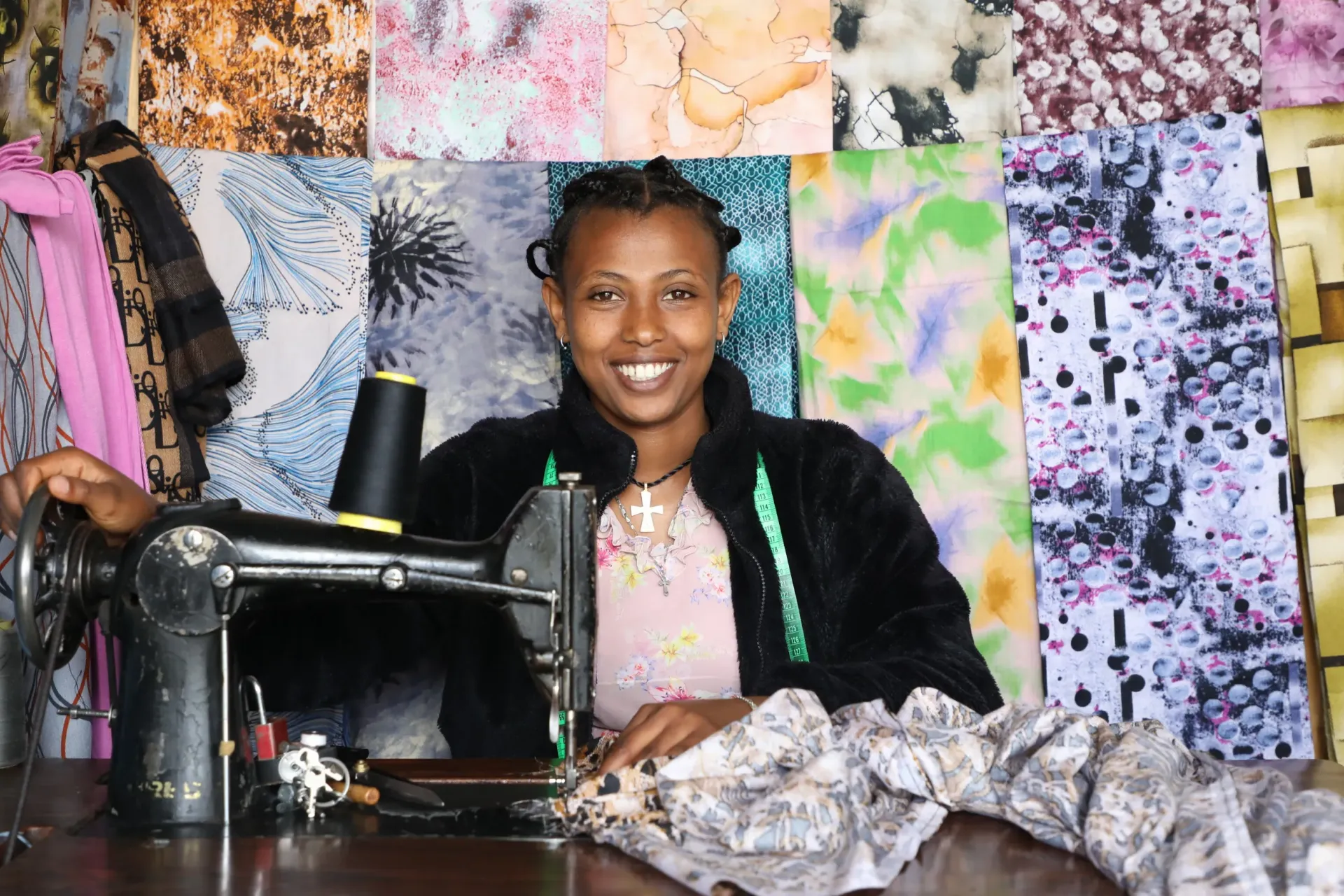
In a small rented workshop in the center of Debre Berhan, where the steady hum of a sewing machine fills the air, 25‑year‑old Tizibit Degefe is quietly transforming her life and building a new future for herself and her four‑year‑old son. Much like the other thousands of young people finding new direction through the Biqu Wetat (ብቁ ወጣት) programme in partnership with Mastercard Foundation and UNICEF, her steps forward have begun to take on new meaning.
For years, she visited the workshop simply to help her friend. Curious about tailoring, she worked for free so she could learn, even though she had never received formal training. But things have changed. Her friend has moved to a new location, and today Tizibit runs the workshop herself with growing confidence.
Her journey into tailoring was far from direct. After finishing 10th grade, she completed a TVET programme in machinery, only to realize that there were very limited job opportunities in the industrial sector.
“My passion, from the very beginning, was to become a designer,” Tizibit said.
Without a steady job, she depended on her parents, smallholder farmers, to help support her young son.
Everything changed when she joined the Biqu Wetat programme, supported by UNICEF and the Mastercard Foundation. “During the hands-on training, I learned design, pattern making, cutting, and sewing,” she says. “I also gained important customer‑service skills, which have helped me keep clients and build strong word‑of‑mouth.” With this foundation, Tizibit finally began turning her passion into a real livelihood.
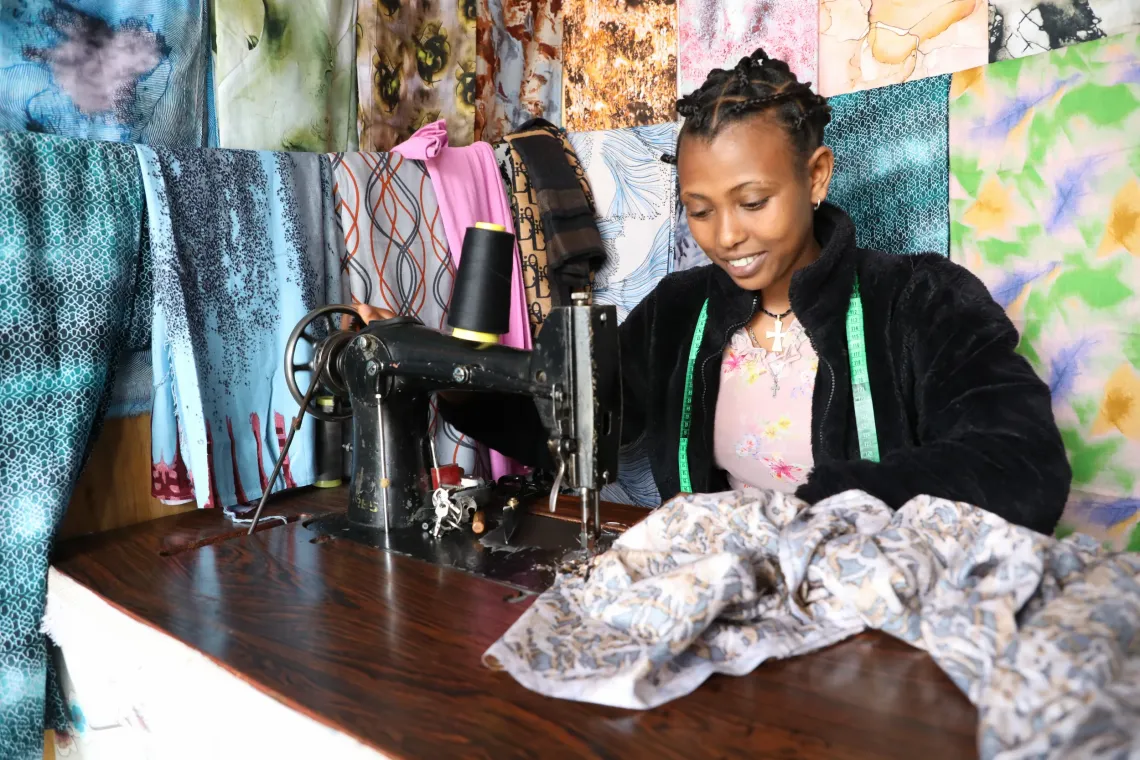
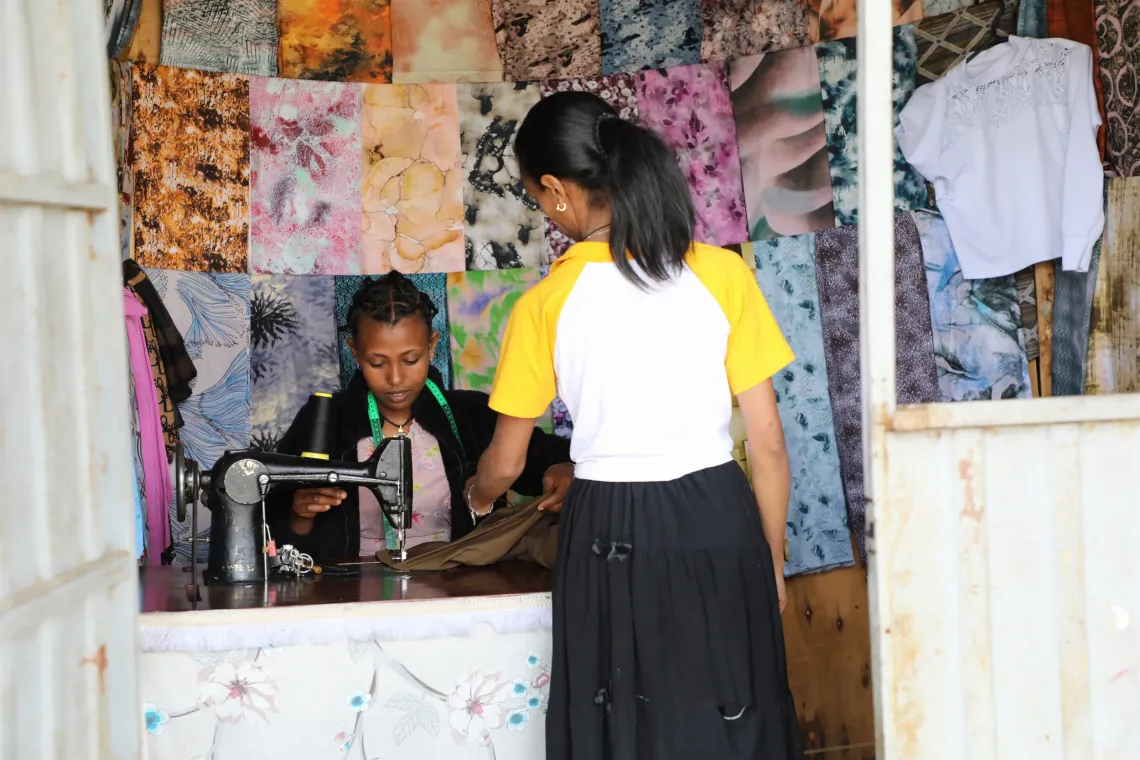
Tizibit didn’t wait for the programme’s machinery support to arrive. Motivated by her ambition, she convinced her family to buy her a used manual sewing machine so she could begin right away. Taking over the workshop, she soon attracted her first customers. Now she produces T‑shirts, shirts, dresses, and chiffon pieces, and her productivity keeps rising. “I started two months ago with this machine and some fabrics,” she says. “Now there is real progress. I’m creating my own work, and I’m already making a profit.”
Her ambitions extend far beyond her small shop. At a recent competition, Tizibit proposed a bold idea: producing school bags for rural students, a project that reflects her drive to support her community while expanding her business. She is also a proud member of a “Mother’s Group,” a collective of women designers who work together to produce school uniforms and other apparel.
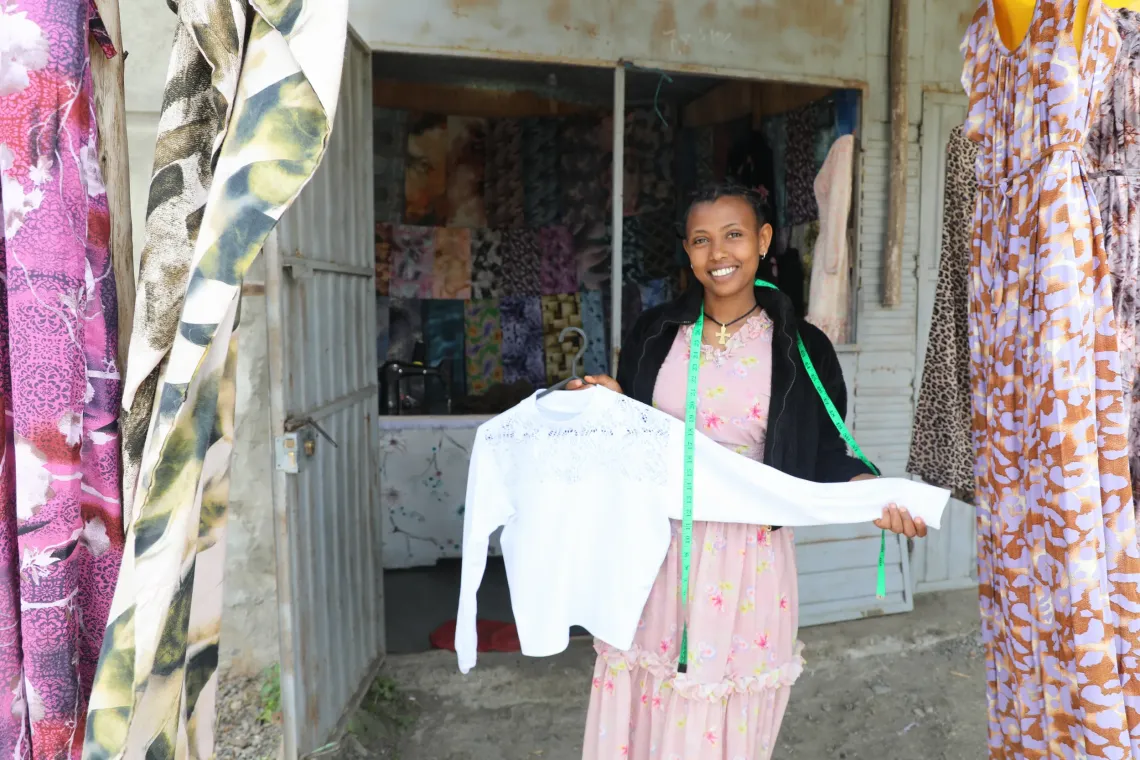
Tizibit is just one of many young people whose lives are being transformed by the programme. Supported by UNICEF and the Mastercard Foundation, Biqu Wetat aims to extend this impact even further by equipping 120,000 disadvantaged youth with practical skills and mental health support by 2027, helping them learn, earn, and build stronger futures for themselves and their communities.