A Long Walk to a Brighter Future
A young girls commitment to continue her education

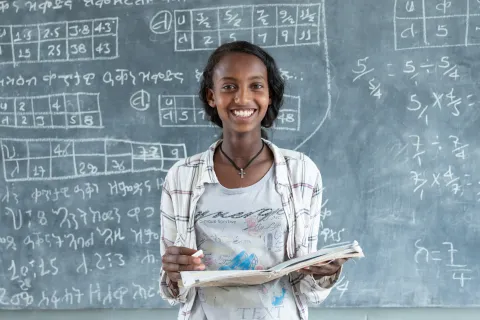
Frehiwot Kahsay, 20, is a grade 12 student at Negash High School, located in the Negash kebele (sub-district) of Kilte Awlaelo woreda (district) in the Tigray region. She missed three years of school due to conflict and would already be at university had her education not been interrupted.
All four of her siblings are in school, and her parents are deeply committed to their education, determined that their daughters will not marry before completing their studies.
Frehiwot travels an hour each way to and from school every day. Despite the tiring trek, she has never missed a class.
When Frehiwot first enrolled at Negash High School, before its reconstruction and rehabilitation, the state of the classrooms and facilities was far from conducive to learning. There were no windows or doors, insufficient desks, no functioning toilets, no menstrual hygiene management room, no water, and no textbooks.
“My parents were disappointed by the damage to the school and assumed it would close,” Frehiwot says. “They were proposing to send me to Wukro High School, 15 kilometers away from Negash.”
The poor classroom environment also severely dampened teachers’ motivation. “It was a frustrating moment for us to succeed in such a challenging school situation,” Frehiwot adds. “Teachers and students were missing classes; students were leaving classes. It was a noisy environment, and it was difficult to focus and concentrate.”

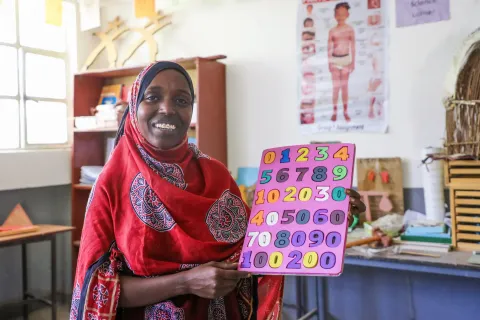
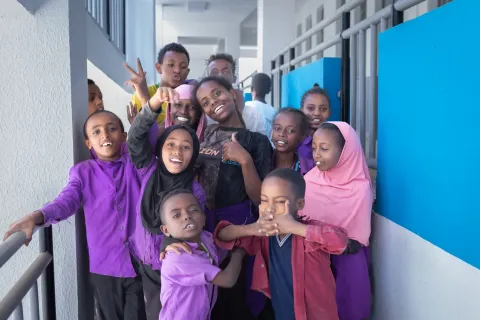
Currently, with the generous funding from JICA, UNICEF has rehabilitated 17 classrooms and 16 latrine stances, constructed four new classrooms and one menstrual health management (MHM) room, as well as provided school supplies, including 300 combined desks. This support has led to increased attendance and boosted teacher motivation. Parents, including Frehiwot's, no longer need to look for alternative schools further from the kebele for their children's education.
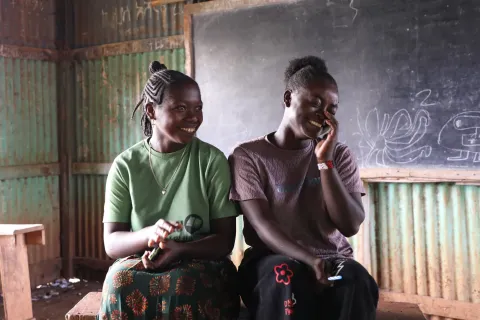
The new MHM rooms have been particularly impactful in retaining adolescent girls. The dedicated space includes four functional partitions, handwashing facilities, and a shower room. Additionally, the school’s water pipe has been connected to the main distribution system, further improving the learning environment.
“Girls who used to be absent from class during their menstrual period can now go to the MHM room instead,” Frehiwot says. “Our gender focal person is also planning to buy a kettle and a coffee pot to have refreshments for girls while they are resting in the MHM room.”

Beyond the physical improvements, the JICA-funded intervention has helped students like Frehiwot refocus on their futures.
“Now the school management and our teachers are giving us hope that the situation will gradually improve and advise us to focus on our studies,” she says. While she enjoys all her subjects, her favorite is chemistry, and she hopes to become a chemist one day.