A Boy, a Goat and the Path from Drought to Recovery
With timely assistance, a displaced family in Ethiopia regains stability.

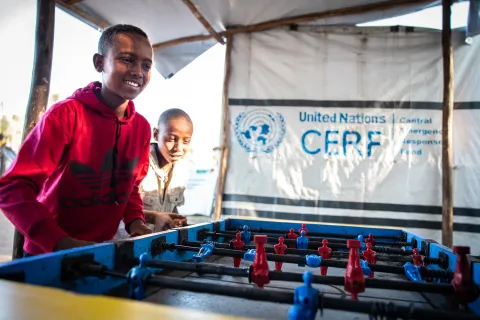
Seven-year-old Derara plays on the sun-scorched ground, his laughter rising above the stillness of the camp for displaced persons in Dubuluk, Southern Ethiopia. The camp is lined by makeshift shelters, and a heavy sense of uncertainty lingers. But for Derara, it has become a home – a place where normality is slowly returning.
“I like it here because I have a lot of friends,” he says with a smile, wiping his nose with the back of his hand.
As she watches him play, Derara’s mother, Kabale Molu Godana, recounts the painful memory of the drought that took away her family’s livelihood and sustenance.
“Children were crying day and night and passed out from hunger,” Godana says. “I struggled to find milk, so I added sugar and tea to boiled water as a fleeting comfort.”

Four years ago, when drought conditions devastated their farmland, the family were forced to leave. Godana describes their experience of walking for hours to reach the nearest camp. “We walked here penniless and slept on the roadside. I carried Derara (then aged 3) most of the way,” she says. “I had 25 cattle and all perished. Not even one survived. We left with nothing. I didn’t know what we’d find here, but we had no other choice.”
Since arriving at the camp, the family has relied on varying amounts of cash, ranging from 1,000 to 3,000 birrs (approximately US$7 to US$21), provided by multiple aid organizations. They have used it to buy food. Although helpful, the small amounts have not been enough for them to rebuild their lost livelihood.

Recently, as part of a cash-plus climate awareness programme, Godana received a larger amount of cash support, as well as knowledge about climate change mitigation and adaptation. The programme provided her with two transfers of 10,000 birrs each (approximately US$70) over two months.
“The first things I bought were essential home items and clothing for my children and me,” explains Godana.
The Ethiopia Crises 2 Resilience programme, funded by the Foreign, Commonwealth and Development Office (FCDO), has supported over 1,200 vulnerable households in Dubuluk camp.
For Godana, the support of 20,000 birrs (approximately US$140) has made all the difference.
“I purposely bought a pregnant goat and chickens. I don’t want to rely on aid forever, so I plan to grow my livestock and start selling eggs. Our life is here now, and with God’s will, we hope to build a better future,” says Godana. “If I can escape this poverty and help my children finish their education, then with God’s help, I will find happiness.”
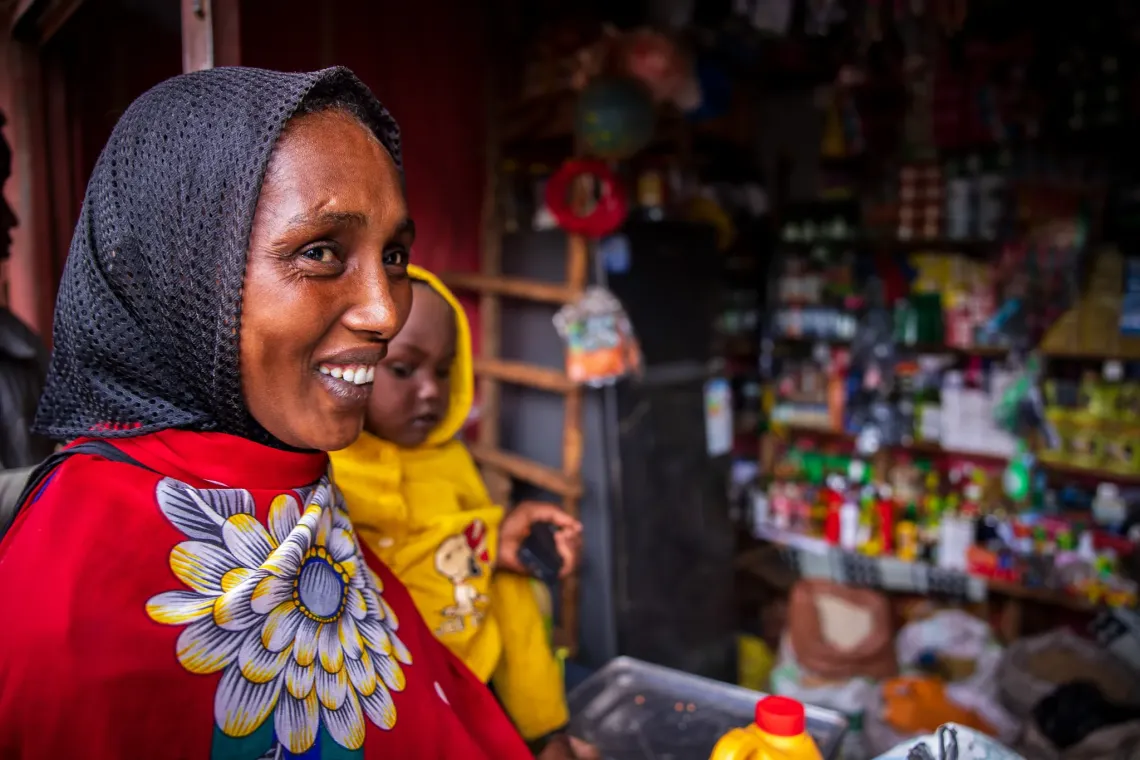
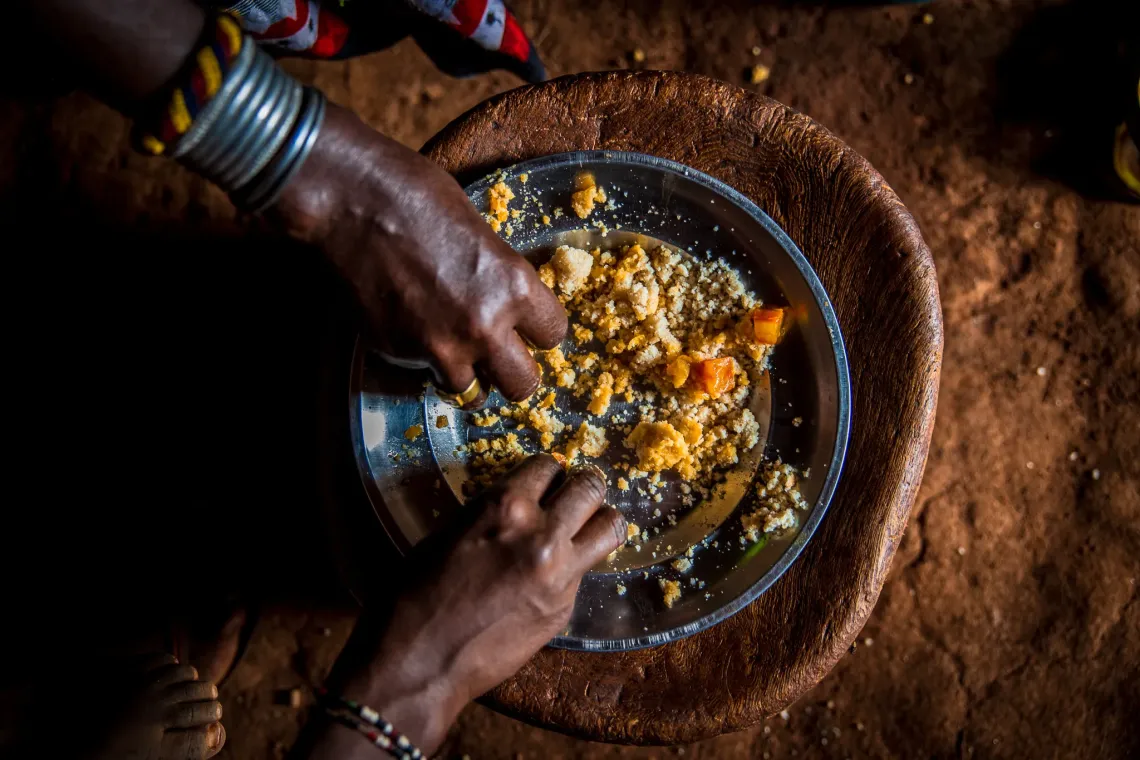
In displacement camps like Dubuluk, cash transfers bring relief for families struggling to build a life beneath tarpaulin shelters. The money provides them with a warm meal, a change of clothes and a chance to start over.
For Derara and his family, their goat is more than just an animal: it brings hope for a better future.
He describes a normal day at the camp. “In the mornings, I eat boshi [maize flour], and then I play with my friends. During the school break, my brother and I also take our goat out to graze. We play together while the goat is grazing.”

As part of the Gada heir indigenous governance system, Derara is learning the values of leadership and accountability that are passed down through generations. Caring for the family goat is teaching him the importance of care and responsibility.
Although Derara doesn’t yet understand the wider forces shaping his life, he knows what matters most.
“I love my mum because she is strong,” he says. Godana smiles back at her son.
Derera dreams of riding a bicycle and living in a real house someday. With a loving family and some timely support, those dreams are no longer out of reach.