World Youth Skills Day 2024
Investing in skills to empower young people for life and work in the 21st century

On World Youth Skills Day, UNICEF calls on stakeholders and partners to join hands and invest in equipping youth with the skills and tools they need to thrive and create change for a more prosperous, peaceful and sustainable future. This Day is celebrated by youth, education institutions, employers, policymakers and development partners to underscore the importance of developing skills for young people’s engagement, employment and empowerment towards sustainable development.
For young people to become successful life-long learners, find productive work, take informed decisions that affect their lives and actively engage in their communities, they need to access inclusive, relevant learning and skills development opportunities.
Across Eastern and Southern Africa, adolescents and youth face multiple challenges in learning and making the transition from school and higher education into the workforce. These obstacles include a mismatch between skills development and opportunities, a lack of access to flexible, accredited and recognized learning opportunities and a lack of decent work opportunities for youth. Adolescent girls and young women, youth with disabilities, displaced youth and youth from lower wealth quintiles and rural areas are often disadvantaged.
Many young people lack secondary education skills: in the region, only 33% of adolescents complete lower secondary, which drops to 24% completing upper secondary. In addition, most young people lack the digital skills to thrive in future labour markets.
Youth are not only facing a challenging present, but also an uncertain future: By one estimate, 85 per cent of the jobs that today’s learners will be doing in 2030 have not yet been invented, putting immense pressure on all stakeholders, including youth, to think creatively to acquire a different set of skills and competencies to secure the jobs of the future. Unless there is a radical transformation of engagement, learning and skills attainment and availability of opportunities, Africa’s youth risk being unable to compete globally and locally in the labour market.
We therefore need to create work opportunities for the some 150 million young workers that will transition into the labor market in the next ten years. This represents an enormous opportunity and a pivotal moment to transform the lives of millions of youth and drive sustainable development and inclusive economic growth across the region.

To leverage this opportunity, UNICEF and key partners are promoting flexible, accredited learning pathways that equip youth with essential skills for academic learning, personal growth, employment and civic engagement in the 21st century. Such skills include foundational skills (basic literacy and numeracy), transferable skills or life skills (problem solving, communication, empathy, among others), digital skills, entrepreneurship and technical skills, and green skills.
To equip all youth, including the most vulnerable, with those skills, UNICEF emphasizes the importance of flexible and multiple pathways to respond to the needs and interests of adolescents and youth by:
- Promoting/creating relevant, flexible, credited learning opportunities (with 21st century knowledge and skills) through multiple pathways (from formal education to non-formal and community settings to the world of work).
- Accelerating alternative learning to earning opportunities and transitions into work
- Leveraging technology, innovations and new strategic partnerships
Adolescents and youth’s learning and skills development, especially for the most marginalized, is a priority for the organization’s efforts around the second decade and links directly to the achievement of SDG targets, including ending poverty, enhancing education and life learning opportunities, promoting employment and decent work for all.
Partnerships and joint actions are key to advance skills development at scale.
Partnerships and joint actions are key to advance skills development at scale.
Skilling young people alone will not create jobs; strategic partnerships are required to influence the ‘demand side’ of the labour market by promoting/offering opportunities such as internships, apprenticeships and mentorships, and by connecting the ‘supply side’ to the ‘demand side’.
Through partnership platforms such as Generation Unlimited, and with the support of partners such as the Austrian Development Agency (ADA), the Dutch Ministry of Foreign Affairs, and the German Agency for International Cooperation (GIZ), we are making collective efforts to skill-up and connect young people with opportunities and expanding public-private-youth partnerships.
While progress in skilling youth is promising, significant investments and joint efforts from partners and key stakeholders are still needed to bridge the skills gap.
Significant investments and strengthened coalitions of key stakeholders – governments, private sector, experts, development partners and youth – remain crucial to unlock the potential of youth. Together, we must continue to innovate, collaborate, and invest in empowering young people with the skills and tools they need to become leaders, entrepreneurs and changemakers. By fostering strong partnerships, advocating for inclusive education, and expanding opportunities for skills development, we can ensure that every young person has the chance to fulfill their potential and contribute meaningfully to society.
UNICEF making strides in bridging the skills gap for young people across Eastern and Southern Africa
Burundi
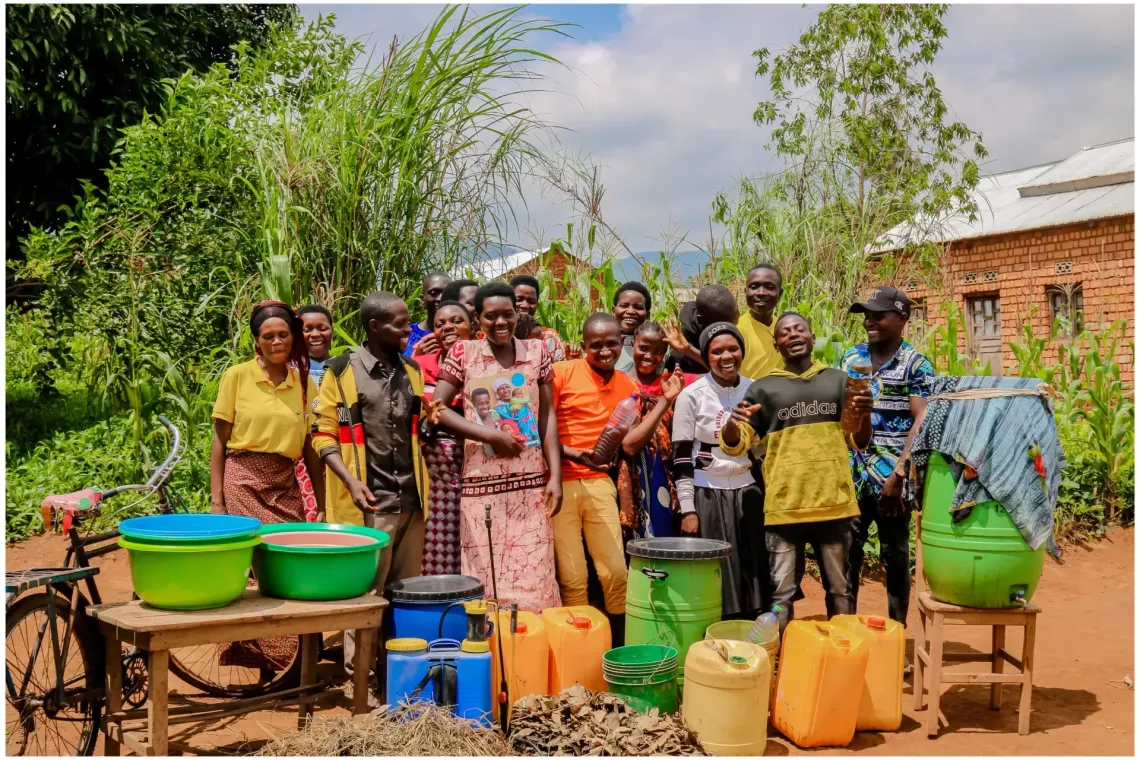
In Burundi, UNICEF and its partners has been implementing a comprehensive skills-building programme dedicated to empowering adolescents and youth. Since its launch in 2019, the programme has reached over 300,000 adolescents, with 50% girls, through community initiatives that promote social cohesion, economic empowerment and self-reliance via solidarity groups. Since 2020, the programme has broadened its impact by integrating UNICEF’s innovative ‘UPSHIFT’ methodology for entrepreneurship and social innovation, and emphasizing STEM skills for girls. Collaborating closely with government, NGOs, and the private sector, UNICEF Burundi is driving youth, with a focus on girls, towards sustainable economic empowerment by offering targeted training in 21st-century skills, entrepreneurship and green skills. Learn more about this programme here.
Eugénie Niyimbona, leader of her solidarity group, uses her recently-acquired STEM and entrepreneurship skills to create eco-friendly fertilizers and earn an income, while reducing hunger in her community.
Read Eugenie’s story here:
Giharo commune: young teenagers turn community challenges into opportunities. | UNICEF Burundi

Kenya
Through joint actions of UNICEF, UNHCR and partners, more than 20,000 young people from refugee camps and host communities in Northern Kenya were empowered with integrated skills-building programmes, on the job training, mentorship and career guidance sessions, bootcamps and school clubs, enhancing employability, gender inclusivity and social cohesion.
Media mentor incubator hubs equipped young people with transferrable skills through a combination of mentorship sessions, career guidance and coaching, media skills training, life skills training, bootcamps and career talks with alumni and partners. To further support the adolescents in refugee secondary schools, film clubs were established, exposing adolescents at an early stage to other career opportunities in the creative industry and empower them to become advocates and change-makers, using their storytelling skills to influence the community on specific thematic issues.
To break gender biases and barriers to access to STEM education and careers for refugee young people, UNICEF teamed up with Windle International Kenya and UNHCR to promote the uptake of STEM subjects and improve learning outcomes in secondary schools in 3 refugee camps. This initiative included capacity building of teachers, provision of STEM materials, establishment of innovative virtual labs, mentorships and career guidance with female role models, and participation in science fairs and competitions. With enhanced digital literacy, STEM knowledge and life skills, girls and young women in these displacement settings have boosted their confidence and ambition to defy the odds and pursue careers in STEM.
Watch more of this work on the ground here.

Eswatini
Youth unemployment rate in Eswatini remains high, estimated at 58.2 per cent among youth aged 15-25 years, with a disproportionate impact on adolescents and youth residing in rural areas (65.9 Per cent). Through a partnership with Junior Achievement Eswatini, UNICEF supports secondary schools reaching over 3000 adolescents to deliver a Financial Literacy and Entrepreneurship Skills Program. Thirty-five per cent of youth in Eswatini are not in education, employment, or training. UNICEF partnered with local NGOs, JAE and Likusasa, to coordinate and run Business Incubation Centers for social entrepreneurship. Skills delivered to young people at the centers include basic accountancy training, job search support, career planning, life skills and livelihood skills training. Forty-eight young people received basic accounting training, 1,865 utilized Likusasa Incubation Centers, 155 were supported to get employment, 637 were supported in career placement, 36 teenage mothers completed entrepreneurship and life skills training courses, and 18 were engaged in livelihood skills training.
Learn more about the programme here: Lifelong learning protection and development (LLPD) | UNICEF Eswatini
Voices from the field
Out of school Adolescents gain life skills, technical skills, and entrepreneurship skills through IPOSA in Tanzania.
From the battlefield to a transformative journey on life skills and technical skills in Somalia.
Life skills boost confidence of children with disabilities in Zimbabwe.