Improving child nutrition and keeping children safe from malaria through human-centred design
UNICEF ESA works with communities and partners in South Sudan
Recently, UNICEF Eastern and Southern Africa (ESA) organized a workshop on strengthening community engagement, as well as empowering mothers and families in South Sudan.

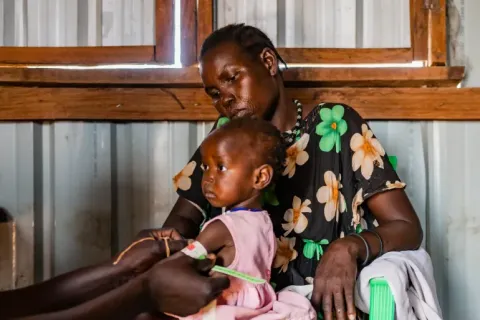
One of the participants, Nyaluak, is a nutrition coordinator and a nurse in Abyei county. As a nutrition coordinator, she conducts training sessions for government partners and NGOs in South Sudan on strengthening community engagement. As a nurse, Nyaluak provides support to mothers on nutrition, by helping them ensure their children are well nourished.
Every working day, Nyaluak helps local communities to improve children’s nutrition by ensuring they are fed healthy and regular meals. To do so, Nyaluak is keen to use new approaches of working with communities to ensure the programmes implemented are effective and sustainable.
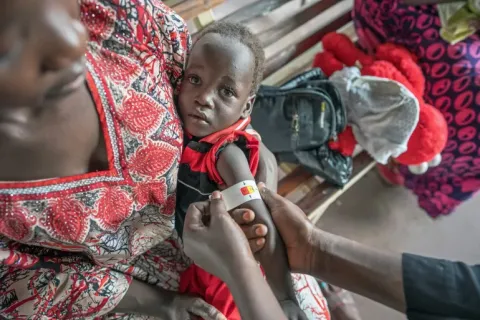
The nutrition situation in South Sudan remains critical. In 2022 alone, an estimated 1.34 million children under five suffered from acute malnutrition.
“One of the main challenges I face is how to quickly identify gaps in our support to children and families. Quite often, the activities start off well, but then certain issues or challenges emerge at the community level. We need to react quickly to get as much information as possible and address these gaps,” notes Nyaluak.
To support partners and empower communities, UNICEF’s Social Behaviour Change team is utilizing human – centred design (HCD). As human behaviour is influenced by a range of factors, to encourage behaviour change, the process identifies priority drivers, barriers and the best approaches that are most likely to achieve the desired change. Human-Centred Design (HCD) is a participatory SBC approach that centres people and communities in all stages of the evidence collection, analysis, design and implementation of programmes. HCD has long played a central role in UNICEF’s work. This approach is especially useful in understanding the communities UNICEF works with, in their cultural, contextual and cognitive dimensions. HCD helps in identifying any underlying programmatic assumptions, uncovering community needs, and engaging with the community. Scaling up capacity on HCD is essential to ensure that the approach can easily be adopted, adapted and scaled up.
To encourage the use of HCD, the regional Social Behaviour Change team conducted HCD training in South Sudan and Kenya.


When Nyaluak was invited to participate in the workshop, she happily agreed. HCD wasn't new for her, however, she was keen to better understand the approach. At the workshop Nyaluak was empowered in the process and guided on the ways to design impactful solutions that strengthened communities. She was pleased with how this supports her work.
“Community members felt empowered. When I asked mothers about the issues they faced, they were happy to share their opinions, they were glad to be heard, and their contributions improved our nutrition support.”
The knowledge and skills earned will now help Nyaluak and other colleagues working directly with communities ensure nutrition interventions are effective and sustainable. At the workshop, Nyaluak also learned how to apply HCD in guiding families on the usage of nutrition supplies. This will go a long way towards ensuring nutrition supplies distributed by UNICEF and partners support the beneficiaries and do not end up on the black market.
Similarly, to Nyaluak, Theresa is working at the Ministry of Health malaria prevention programme as an SBC Specialist. Despite efforts, malaria is still a huge threat to children in South Sudan. In 2022, malaria was the leading cause of death in the country, accounting for 36 per cent of total primary healthcare consultations. The work Theresa does is challenging. The population is aware of malaria but doesn’t always know how to prevent it. Theresa supports the distribution of mosquito nets to ensure household members know how to use and wash the nets.
“For example, mothers understand how important mosquito nets are in protecting their children from malaria. However, they don’t always know that the net should not be placed in direct sunlight and should be washed according to specific rules.“

At the HCD workshop, Theresa learned how to apply the principles of HCD in her community engagement and noted that now she’s much better equipped to address community knowledge gaps and behaviour barriers to prevent malaria. “Before, we were very specific when conducting research and were getting only the information we were looking for. Through HCD, I can now get comprehensive information from mothers about their daily lives and better understand the root causes of why they are not always properly using the mosquito nets.
As children and families in South Sudan and Kenya benefit from human-centred design, UNICEF ESA plans to expand workshops to benefit more partners and communities in the region.