16 million children across Eastern and Southern Africa in urgent need of US$1 billion humanitarian support
Global funding shortfalls further compound humanitarian crises caused by climate shocks, conflict and economic challenges
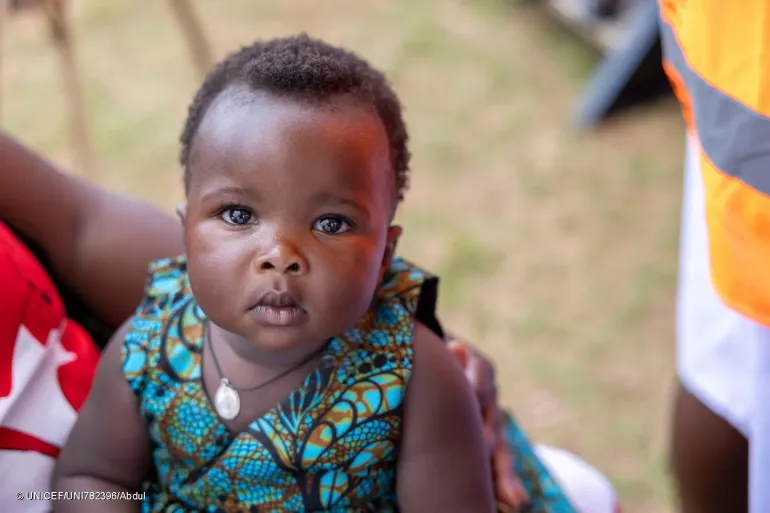
Nairobi, 15 December 2025 – Across Eastern and Southern Africa, crises fueled by rising hunger, protracted conflict, climate shocks, mass displacement, and deepening funding cuts are driving humanitarian needs for children to unprecedented levels. UNICEF is calling for US$1 billion through its 2026 Humanitarian Action for Children appeal to support 16 million children across 22 countries in the region.
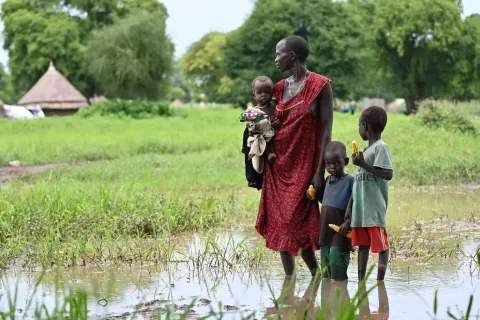
“This appeal comes at a critical time where extremely vulnerable children and their families are in need of urgent humanitarian assistance due to the scale of severity of multiple, overlapping emergencies exacerbated by the global funding crisis,” said UNICEF Regional Director for Eastern and Southern Africa, Etleva Kadilli. “I recently visited South Sudan and met with families who have been uprooted time and again by conflict and floods. They are living on the brink and their access to lifesaving services is rapidly slipping away. Sadly, this is an unwanted trend across the region where children are paying the highest price as humanitarian budgets decline.”
In 2025, UNICEF faced one of its most acute funding gaps, leaving almost US$700 million unmet – 60 per cent of the total request.
“The funding shortfalls have forced us to make difficult choices,” said Kadilli. “We are having to prioritise our response to reach extremely vulnerable children which means in some cases reducing service frequency or scaling back interventions that families rely on for survival.”
Despite the funding constraints that have disrupted lifesaving programmes, UNICEF and partners have continued to make an impact thanks to the generosity of flexible funding. As of mid-2025, nearly 900,000 children received treatment for severe wasting across the region, 12 million children were vaccinated against measles, and approximately 4.4 million people gained access to safe water.
In addition, UNICEF is adapting its humanitarian response to meet the region’s evolving challenges while staying grounded in child rights and the Core Commitments for Children in Humanitarian Action. Its focus includes prioritizing lifesaving interventions, strengthening partnerships with governments and local actors, investing in preparedness and risk analysis, and building resilient national systems to enhance humanitarian response.
“We remain committed to the region’s extremely vulnerable children and are working to sustain our emergency response despite immense challenges,” said Kadilli. “We cannot let these crises or children living through them be forgotten. Predictable, flexible funding is essential, so children continue receiving lifesaving support and their right to survive and thrive with dignity is upheld.”
UNICEF is urging national governments, public sector donors and private sector partners to increase investment in children, with an emphasis on flexible and multi-year funding; support locally led response and national systems; uphold humanitarian principles and the centrality of protection; and remove barriers that impede humanitarian access.
####
UNICEF is 100% donor funded. Your support enables us to respond quickly in emergencies, scale up proven solutions, and invest in sustainable, long-term development. By joining forces, we can protect the lives and futures of millions of children across Eastern and Southern Africa. Donate today
Note to Editors:
- The region is experiencing one of the world’s largest displacement crises, partly due to the conflicts in Sudan and the Democratic Republic of the Congo. More than 13 million people are uprooted, and children face escalating risks of separation, recruitment, violence, and exploitation. With 46 million children out of school, vulnerability continues to deepen.
- Malnutrition is reaching critical levels: 4.2 million children under five suffer from severe acute malnutrition, and one in three children (25 million) are living in severe child food poverty.
- Public health crises are intensifying, with 19 of 22 countries simultaneously confronting outbreaks of cholera, mpox, Ebola, Marburg, and vaccine-preventable illnesses such as measles and polio. Cholera cases increased by 21 per cent in 2025 compared with the same period in 2024, while deaths rose by 35 per cent.
Media contacts
Additional resources