1 in 3 children in Africa live in severe child food poverty due to inequity, conflict, and climate crises – UNICEF
Children experiencing this level of food poverty are up to 50 per cent more likely to suffer from life-threatening malnutrition, new analysis finds
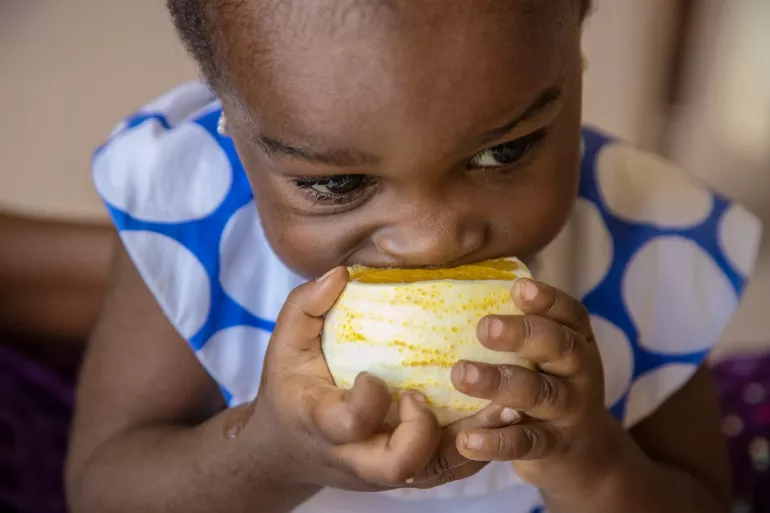
JOHANNESBURG, 6 June 2024 – Around 64 million children in Africa under 5 years of age – or 1 in 3 – are experiencing severe child food poverty, making them up to 50 per cent more likely to experience wasting, a life-threatening form of malnutrition, a new global UNICEF report reveals today.
For the first time, Child Food Poverty: Nutrition Deprivation in Early Childhood analyses the impacts and causes of dietary deprivation among the world’s youngest people in nearly 100 countries, and across income groups. It warns that millions of children under the age of five are unable to access and consume a nutritious and diverse diet to sustain optimal growth and development in early childhood and beyond.
Severe child food poverty affects all regions of the world, but not equally: Africa is home to approximately one-third of the 181 million children living in severe child food poverty across the world, with the Democratic Republic of the Congo, Egypt, Ethiopia, Ghana, the Niger, Nigeria, Somalia, South Africa, Uganda, and the United Republic of Tanzania carrying the heaviest burden of children living in severe child food poverty in the region.
Children who consume, at most, two of eight defined food groups per day are considered to be in severe child food poverty. Four out of five children in this situation are fed only breastmilk/milk and/or a starchy staple, such as rice, maize, or wheat. Less than 10 per cent of these children are fed fruits and vegetables. And less than 5 per cent are fed nutrient-dense foods such as eggs, fish, poultry, or meat.
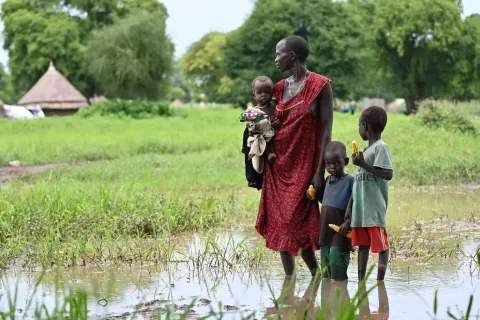
“There is no doubt that conflict and the effects of the climate crisis, such as drought and floods, have a tremendous impact on families’ abilities to feed their children,” said Etleva Kadilli, UNICEF Regional Director for Eastern and Southern Africa. “This causes severe disruption in food production, so nutritious foods become less available and more expensive for vulnerable households and parents are unable to feed their children adequately.”
The report warns that while countries are still recovering from the socio-economic impacts of the COVID-19 pandemic, the effects of growing inequities, conflicts, and the climate crisis have pushed food prices and the cost of living to record high levels. In vulnerable communities in the Democratic Republic of the Congo and Somalia, more than 80 per cent of parents and caregivers reported that their child had been unable to eat for an entire day because of a lack of money or other resources.
In Somalia, a country experiencing conflict, drought, and floods, 63 per cent of children are living in severe child food poverty. In Guinea Bissau, where 53 per cent of children live in severe food poverty, disparities between poorer and wealthier households widened by 27 percentage points in the last decade.
While low household income is a significant driver of severe child food poverty, more than half of the children living in severe child food poverty worldwide belong to households in the middle and two upper wealth quintiles. This finding reveals that there are other important drivers of severe child food poverty besides household income.
Several factors are fueling the child food poverty crisis, including ineffective food systems that fail to provide children with nutritious, safe, and accessible options, families’ inability to afford nutritious foods, and parent’s inability to adopt and sustain positive child feeding practices. In many contexts, cheap, nutrient-poor, and unhealthy ultra-processed foods and sugar-sweetened beverages are aggressively marketed to parents and families and are the new normal for feeding children. These unhealthy foods and beverages are consumed by an alarming proportion of young children experiencing food poverty, displacing more nutritious and healthier foods from their daily diets.
At the same time, there have been notable successes. For example, Burkina Faso has halved the prevalence of severe child food poverty from 67 per cent (2010) to 32 per cent (2021), and Rwanda has cut the prevalence from 20 per cent (2010) to 12 per cent (2020).
“We call on governments, development and humanitarian organizations, donors, civil society and the food and beverage industry to act urgently to end child food poverty,” said Gilles Fagninou, UNICEF Regional Director for West and Central Africa. “Together we can transform food systems to make nutritious, diverse, and healthy foods more accessible, affordable and desirable for caregivers to feed young children. Health and protection systems also play an important role to deliver better food and nutrition to vulnerable children and their families.”
To accelerate actions to prevent child food poverty and reduce malnutrition, as well as treat severe wasting, the Child Nutrition Fund (CNF) was launched last year by UNICEF, with the support of the UK Foreign Commonwealth and Development Office (FCDO), the Bill and Melinda Gates Foundation, and the Children’s Investment Fund Foundation (CIFF). The CNF is a UNICEF-led multi-partner financing mechanism that incentivizes domestic investments to end child malnutrition. UNICEF urges governments, donors and financial partners to support the CNF and prioritise sustainable policies and practices to end severe child food poverty and malnutrition.
####
Notes to editors:
Download photos and b-roll.
Download the full report.
Categories of child food poverty
If children are fed:
0–2 food groups/day, they are living in severe child food poverty,
3–4 food groups/day, they are living in moderate child food poverty,
5 or more food groups/day, they are not living in child food poverty.
Media contacts
About UNICEF
UNICEF promotes the rights and wellbeing of every child, in everything we do. Together with our partners, we work in 190 countries and territories to translate that commitment into practical action, focusing special effort on reaching the most vulnerable and excluded children, to the benefit of all children, everywhere.
For more information about UNICEF and its work for children, visit www.unicef.org.
Follow UNICEF in Africa on Twitter and Facebook