Future leaders unite: Inside the first Small Island Developing States children and youth summit
Nianna St. Claire shares her experience at inaugural event

Brades, Montserrat - Intelligent! Passionate! Unique! These are just a few words to describe the amazing young people that I have met over the past few days. The first ever Small Island Development States Children and Youth Action Summit underscored the imperative of involving youth in decision-making processes and equipping us with the tools to champion change in our communities and beyond. From immersive tours to thought-provoking discussions and innovative solutions, this summit is undeniably one for the history books.
Beginning with a Bang
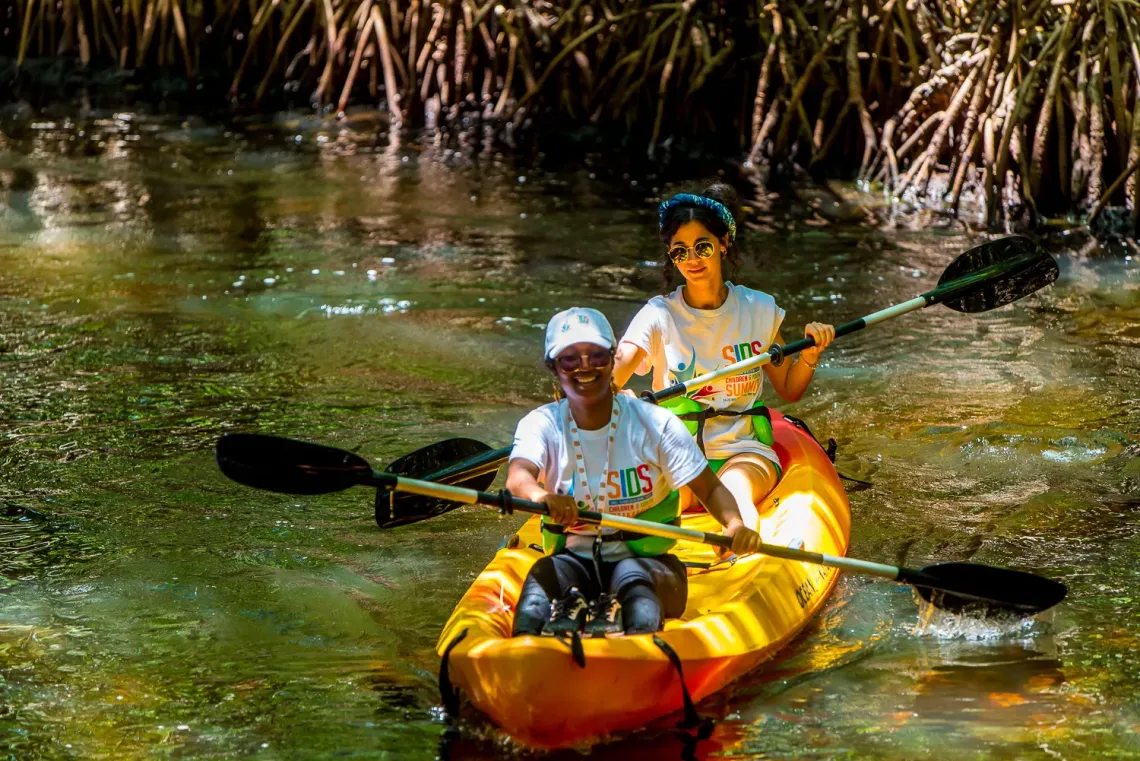
The first day was an exhilarating adventure. We sported our branded t-shirts and hats as we visited South Coast Horizons, a villa in Cades Bay, for a tree planting exercise and eco-tours that involved a boardwalk and kayak tour. Trees, the unsung heroes of our ecosystem, play a pivotal role in regulating the water cycle, purifying the air, and fostering healthy soils—a cost-effective remedy for climate change! This immersive experience not only served as a team-building exercise but also provided a platform for us to bond over our shared passion for environmental conservation. The highlight of the day was undoubtedly the boardwalk where we immersed ourselves in the mangroves, gaining firsthand knowledge of watercourses, mangrove tunnels, and the diverse marine life. While I regrettably missed the kayak tour, I eagerly anticipate the opportunity to experience it in the future.

Later that day, we had our grand opening ceremony at the Government House in St. John’s, which was live streamed on the UNICEF Eastern Caribbean YouTube channel. The cultural fashion show stole the spotlight as we were invited on stage to celebrate our cultural heritage and creativity while raising awareness about environmental issues, showing how art and advocacy can go hand in hand. I of course wore Montserrat’s National Madras with colours of green, orange, and white, expressing the Irish and African culture the island is known for. I added my own little twist to make it a bit more “ball-gownish” and created necklaces that were originally from Christmas ornaments, promoting the message of upcycling which reduces the number of materials in landfill. One gown that caught the attention of most eyes (including mine) was St. Vincent and the Grenadines’ Adia Daniel. Adia flaunted an ombré blue mermaid-esque dress with paintings of species of the ocean and jewels. Food wrappers were also attached, representing the litter that pollutes the marine environment. She gracefully walked the stage with confidence while holding a sign that read, “Resilient recovery in the Caribbean’s ocean-based economy hinges on sustainable practices that protect marine ecosystems, support local livelihoods, and fortify against climate impacts, ensuring long-term prosperity and environmental stewardship for future generations.”

Capacity Building Matters
Day two was filled with masterclasses for delegates, a panel discussion, and an exciting activity where we created a wall of commitment.
The masterclasses included advocacy, strengthening youth movements, negotiations, and communications. Bertrand Moses, Child Protection Officer at UNICEF Eastern Caribbean, facilitated the session on youth movements, which I attended. We discussed various topics, including the core components of a movement: leadership, strategic plan, narrative, brand, team structure, format for actions, and training. An important point while discussing leadership was that the creators of the movement do not govern it; they design and protect the core components of the movement, recruit, organize, and train. The cycle of movement, which is to negotiate, advocate, raise awareness, and grow, was mentioned as well.
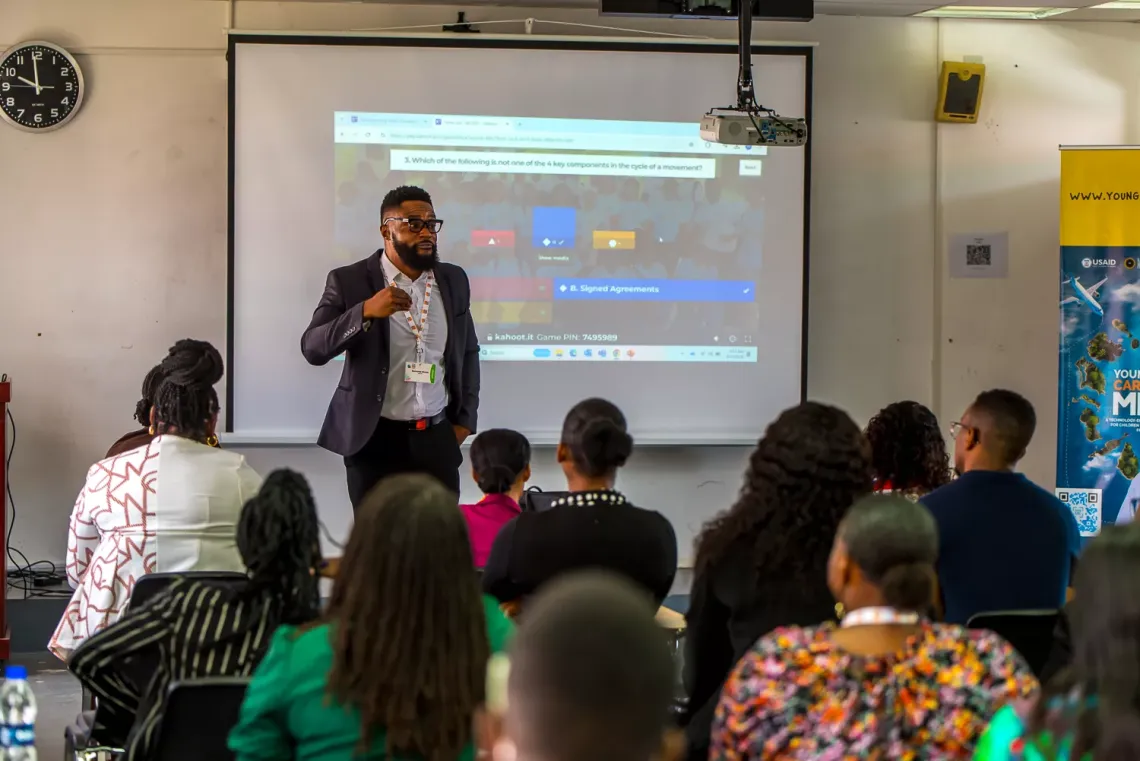
Moses also shed light on notable youth initiatives, such as the youth-led NGO “Let’s Unpack It,” based in Barbados. Recently, they have gained recognition for their mental health website, youngcaribbeanminds.com, a collaborative effort involving USAID, Caribbean Airlines, the University of the West Indies, and UNICEF. This platform hosts various resources, including games, directories, and a workbook crafted by youth representing 17 different Caribbean countries and territories including Montserrat! I had the opportunity to participate in the creation of the workbook. By spotlighting successful youth initiatives, it inspired and provided models for us to use as a guide, demonstrating the impact of effective youth advocacy.
These masterclasses played a crucial role in enhancing skills and expertise in targeted domains, equipping us with the tools to lead with confidence. Serving as a clear roadmap, they demystified the starting points and subsequent steps often unclear to many young individuals. In particular, the youth engagement session underscored that initiating a movement is more manageable than perceived, while also motivating me to expand my network, recognizing the importance of teamwork in any endeavour.
The panel discussion themed ‘Building Commitment’ was moderated by youth steering committee member Teshana Panchu. Senator Caleb Gardiner, Executive Secretary of the Prime Minister’s Entrepreneurial Development Programme for the Government of Antigua and Barbuda, and Lakshita Kanhiya, who is also a member of the youth steering committee, were panelists. Gardiner delved into “safe and prosperous societies,” while Kanhiya spoke on “a secure future” where they shared diverse perspectives and expertise, fostering a deeper understanding of key issues and encouraging collaborative problem-solving.

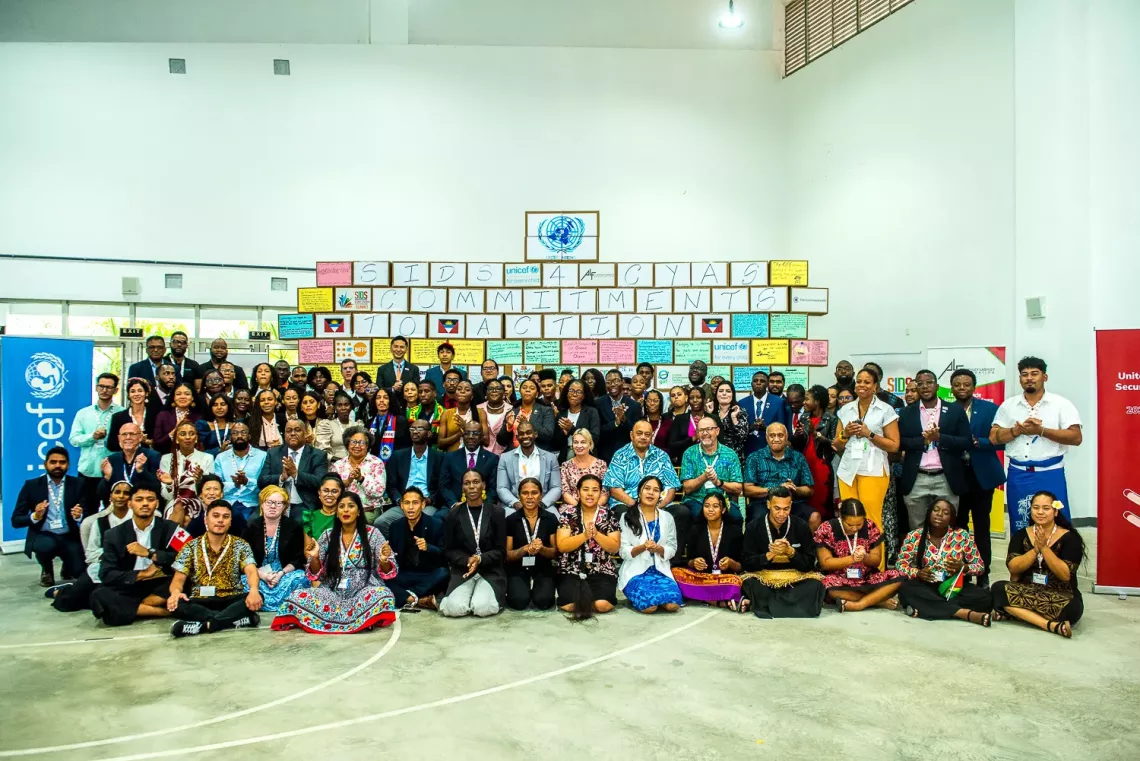
The day drew to a close with the Wall of Commitments, where each of us penned a pledge to dedicate ourselves to a specific activity or cause. Divided into groups, we deliberated our aspirations for the future before committing them to paper, attaching them to designated boxes. Opting for a straightforward approach, I resolved to educate the youth in my community about climate change. As the “wall” took shape, it symbolized our collective commitments, fostering a sense of accountability and personal responsibility. Engaging in this creative activity was immensely enjoyable, its novelty adding to its appeal.


A New Chapter Awaits
A few weeks preceding the summit, we convened with representatives from our respective regions to craft a proposal intended for presentation to various stakeholders. As part of the Caribbean delegation, we put forth “Agri-Wave,” aimed at tackling Sustainable Development Goals (SDGs) such as zero hunger, quality education, decent work, economic growth, and climate action. Our initiative seeks to equip farmers with education and innovative tools while inspiring more youth to explore careers in agriculture. Through the process of developing proposals and presenting them, we learnt essential skills such as articulating ideas, seeking funding, and engaging with stakeholders, all vital for turning concepts into reality. Representing the Caribbean region were Caden Fahie (British Virgin Islands), Amber Turner (The Bahamas), and Tamoy Campbell (Jamaica).
The Inaugural Small Island Development States Children and Youth Action Summit holds immense personal significance for me. Hailing from Montserrat, a tiny island often overlooked, especially when it comes to the concerns of its youth, I find common ground with many fellow delegates who share similar sentiments. I hold genuine hope that this summit will yield concrete results. Too often, I have witnessed enthusiasm fade as discussions fail to translate into action. As the 4th International Conference on Small Island Developing States commences, I anticipate our suggested solutions will be taken into account. Remember, youth voices are crucial; we are the architects of the future!