Eleven young climate leaders appointed as L.E.A.F Ambassadors in St. Kitts and Nevis
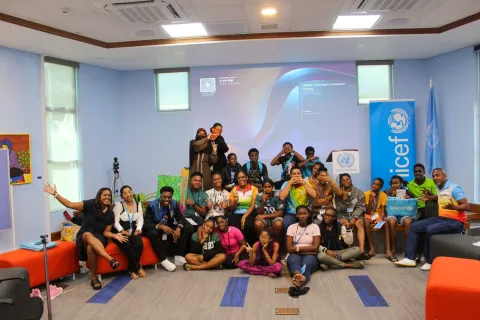
Youth Symposium led by the Ministry of Environment empowers 75 students to shape climate action with support from UNICEF

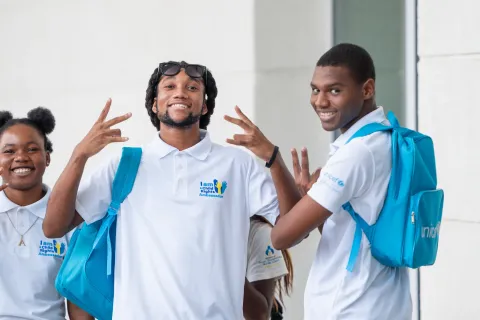
BASSETERRE, 4 March 2026 - Eleven young people in Saint Kitts and Nevis have been appointed as Leaders for Environmental Action and the Future (LEAF) Ambassador following a national Youth Symposium that brought together 75 students aged 12 to 21.
Led by the Ministry of Environment, Climate Action and Constituency Empowerment with support from UNICEF, the symposium marked a step forward in strengthening youth leadership in climate action. The newly appointed ambassadors have already begun their work and will take part in upcoming school tours to raise awareness about their country’s plans to reduce greenhouse gas emissions and adapt to climate impacts.
The symposium was also used as an opportunity to collect youth perspectives on climate change via U-Report as part of the Ministry’s work to develop the new Nationally Determined Contributions (NDC) and National Adaptation Plan (NAP). Developed in collaboration with UNICEF, the U-Report poll is the first mechanism through which the Ministry will be collecting and incorporating youth priorities in the updated NDC and NAP.

“I’m glad that I got to see people stand up for themselves and speak up for their communities,” said Ewin, 19, reflecting on the experience. “It tells me that there are youths out there… not afraid to speak up for themselves and for their families.”
The symposium created a platform for young people to engage with climate issues through interactive sessions, innovation labs and creative workshops, while also contributing ideas to national climate discussions.
For Tamia, 17, the experience highlighted the importance of collective action.
If we can get a group of people working together… we can actually make a bigger difference and help mitigate climate change.
From learning to leadership
Participants explored climate science, digital advocacy and creative approaches to raising awareness, building both knowledge and confidence.

Some… were not really aware of the issue before, and coming out of today, they are excited. They want to learn more. Seeing that kind of inspiration… is what drives me forward.
The symposium also created space for youth perspectives to shape solutions.
“Moments like these allow us to hear from youth today… as well as seeing some of their ideas come to life,” said Siobhan Phipps Harding, CARICOM Youth Ambassador.


Driving climate action forward
Addressing the opening of the symposium, Clive Murray, UNICEF Climate and Disaster Risk Reduction Specialist identified the Caribbean as one of the world’s most vulnerable regions to climate change. He described youth engagement as critical to building resilience.
“Children and young people are uniquely positioned to be drivers of transformation in the fight against climate change,” Murray told participants. “You are the agents of the change you want to see.”
As the ambassadors begin outreach in schools and communities, their voices and ideas are set to play an important role in shaping a more sustainable and resilient future for the country.