'Be led by evidence,' Barbados Minister tells CARICOM statisticians
Regional experts meet in Barbados to strengthen statistics, advance preparations for the 2030 Population and Housing Census, and promote evidence-based policymaking across the Caribbean
BRIDGETOWN, Barbados, 2 July 2026 – Strengthening the quality and use of data is essential to improving the lives of children, families and communities across the Caribbean. With countries preparing for the 2030 Population and Housing Census and facing increasingly complex social, demographic and climate-related challenges, regional statisticians, policymakers and development partners have gathered in Barbados to advance evidence-based decision-making.
The 35th Meeting of the CARICOM Advisory Group on Statistics (AGS), a week-long technical meeting, is being convened by the CARICOM Secretariat in collaboration with the United Nations Population Fund (UNFPA) and UNICEF.
“I want to encourage us to be led by evidence,” Hon. Marsha Caddle, M.P., Minister of Economic Affairs and Planning, Office of the Prime Minister of Barbados, told experts during the opening ceremony.
The Minister made her remarks as she reflected on current conversations about falling fertility, ageing and immigration occurring in Barbados and other parts of the world, and the anecdotes that appear to be fuelling the discourse.
“It is also important to establish a single source of truth,” she added, pointing out that it is critical to know why data matters.
As she characterized statisticians as the “unsung heroes of evidence-based policymaking in the Region”, the Minister called for greater investment in data collection and statistical systems.
The meeting's wide-ranging agenda includes advancing implementation of the Regional Strategy for the Development of Statistics (RSDS), reviewing and refining the Draft Regional Census Strategy for the 2030 Population and Housing Census Round, and considering the proposed establishment of the CARICOM Regional Population Commission.
A key feature will be the Dialogue on South-South Cooperation in Census Readiness, which will bring together CARICOM Member States, development partners and technical experts from the Government of India to exchange technical expertise and explore innovations in census preparation. The dialogue forms part of the Enhancing Census Preparedness in the Caribbean initiative, supported by the UN-India Sustainable Development Goals Country Fund, and is expected to strengthen regional readiness for the 2030 census round.
Halim Brizan, Director of the Regional Statistics Programme at the CARICOM Secretariat, said the meeting is taking place at a pivotal moment for statistics in the Caribbean, highlighting the Region's preparations for the 2030 Population and Housing Census Round and the assessment of progress in implementing the RSDS.
“The overarching objective of this Thirty-Fifth Meeting of the AGS is to advance the implementation of the RSDS. During this meeting, we will also exchange experiences on the RSDS implementation framework, CARICOM's regional mechanisms for South-South Cooperation and consider the establishment of the CARICOM Regional Population Commission among other important initiatives,” he said in opening remarks.
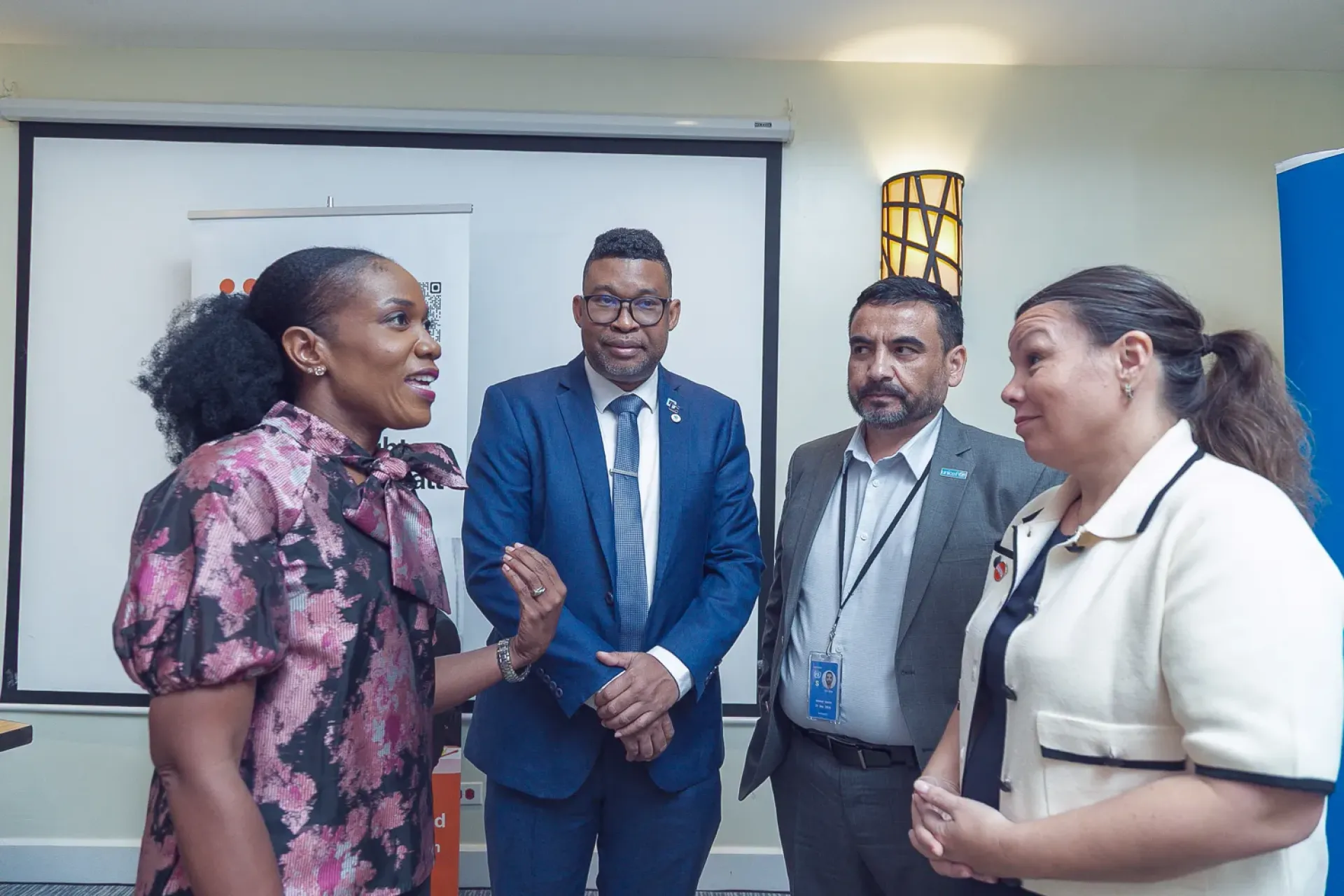
Speaking on behalf of UNICEF, Shohrat Orazov, Planning, Monitoring and Evaluation Specialist for the UNICEF Office for the Eastern Caribbean Area, underscored the importance of reliable, timely and comparable data for effective policymaking, particularly as Caribbean countries navigate increasingly complex social and climate-related challenges.
“Strong statistical systems not only help us understand these challenges but also enable governments and partners to design more effective responses and measures to progress overtime,” he said.
Jenny Karlsen, Deputy Director of the UNFPA Sub-Regional Office for the Caribbean, highlighted the value of regional collaboration in strengthening statistical systems and emphasized the importance of demographic data as the foundation for decision-making across government sectors. She acknowledged the unique challenges the Caribbean faces in collecting and disseminating data and described 2026 as “a year of urgency and opportunity” for developing new approaches.
“As the 2030 Census round begins, the Caribbean Community stands to benefit from the strong technical and strategic relationships that its Member States share, embodied in the Regional Strategy for the Development of Statistics, as well as common initiatives in capacity strengthening. The Advisory Group on Statistics provides a strong platform to leverage ongoing collaboration and to think strategically about how to collect and use population data over the coming years,” she stressed.
The 35th Meeting of the Advisory Group on Statistics continues throughout the week, providing an important platform for regional cooperation, technical exchange and coordinated action to strengthen statistical systems and ensure that governments have the evidence needed to develop policies and investments that improve the lives of people across the Caribbean.