The private sector in the Caribbean – taking the lead in humanitarian action
With the hurricane season approaching, partners join forces to help the business community prepare for emergencies

BRIDEGETOWN, 21 May 2026 - What can businesses do to ensure the safety, health and well-being of their employees, their families and their communities when all-too-common disasters strike? The leading Caribbean private sector umbrella organisation and the United Nations have come together to offer a practical and effective suite of tools that encourage vital planning and action.
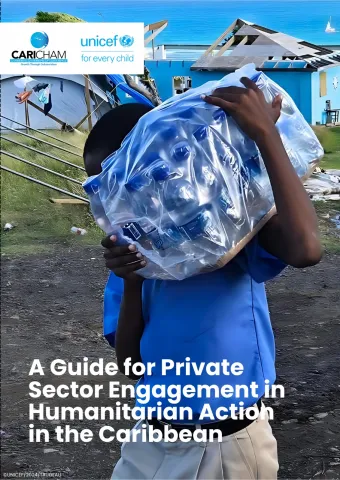
UNICEF and the Caribbean Chambers of Commerce (CARICHAM) are launching the Caribbean Private Sector Engagement in Humanitarian Action guide. Accessible and full of grounded advice, the guide highlights the unique contribution the private sector can make before, during and after emergencies such as hurricanes, earthquakes, sea level rise, floods and heatwaves. It shows how businesses - whether micro, small, medium-sized or large - can use their agility, innovation, resources and logistical expertise, to really make a difference.
In addition, the Family-Friendly Business Continuity Plan Supplementary Checklist provides step-by-step advice on creating a realistic plan to be activated to cover the short- medium- and long-term. The guide is supported by CARICHAM, UNICEF, the UN Office for Disaster Risk Reduction (UNDRR) and the aligned Private Sector Alliance for Disaster Resilient Societies (Arise).
CARICHAM Chair, Martin Cave, recognizes the importance of the private sector in emergencies. “We know the critical role we need to play. After all, what are businesses but people in enterprises? And these form a critical part of the fabric of communities,” he maintained. “When disasters occur, we are often there - providing shelter, supplies, communication, and support - and stay there long after the emergency phase is over, helping families and communities recover, rebuild, and regain a sense of stability.”
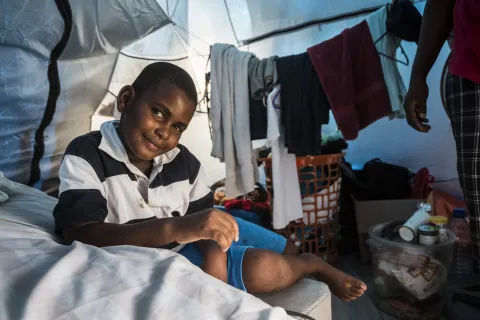
Maryam Abdu, UNICEF Representative (a.i.) for the Office of the Eastern Caribbean Area, agrees and considers the private sector an invaluable partner. “Children are among the most vulnerable during disasters, especially when families lose access to essential services, goods and livelihoods. This is why partnership with the private sector is so important: it helps keep communities connected, supports access to vital supplies and assistance, and helps ensure that children and families are not left behind in times of crisis.”
Being ready to deal with hazards is key in one of the most disaster-prone regions in the world. Emergencies such as hurricanes and volcanic eruptions take a tremendous toll not only through physical destruction but also long-term social, psychological and trauma impacts, especially on children and vulnerable families. They also place a heavy burden on often fragile economies. For example, the estimated cost of loss and damage following 2024’s Hurricane Beryl in Grenada and Saint Vincent and the Grenadines was over US$600 million.
Business community readiness can go a long way towards mitigating some of these impacts. According to Sarah Wade-Apicella, UNDRR Global Coordinator of ARISE, “Private sector engagement is critical; from investing in resilient infrastructure to ensuring risk-informed business continuity planning, to participating in early warning systems and community preparedness,” she said, adding, “Building resilience is not only a humanitarian priority - it is also essential for protecting economies, jobs, and long-term sustainable development.”
Media contacts
About UNICEF
UNICEF promotes the rights and wellbeing of every child, in everything we do. Together with our partners, we work in 190 countries and territories to translate that commitment into practical action, focusing special effort on reaching the most vulnerable and excluded children, to the benefit of all children, everywhere.
For more information about UNICEF and its work for children, visit www.unicef.org.