Advancements in Djibouti's Healthcare: Oxygen Therapy Impact
Health in Djibouti: Strengthening Capacities with Oxygen Therapy


Djibouti is making significant advancements in its healthcare system through essential initiatives in hygiene and oxygen therapy, supported by UNICEF and the Republic of Korea. A few months ago, a crucial workshop on oxygeno therapy was organized to train healthcare professionals on hypoxoemia management. Funded by the Republic of Korea, this workshop established high standards for respiratory emergency in general, and specialy the neonatal care.
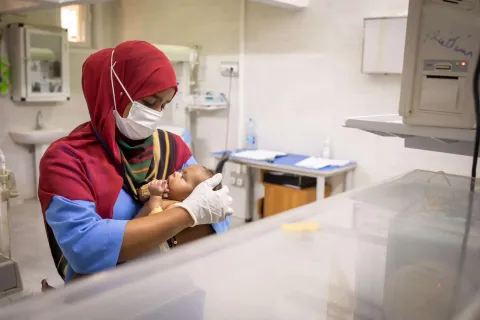
Moktar Abdillahi Mohamed, an anesthetist nurse at Cheiko Hospital in Balbala since October 2011 and head of neonatal resuscitation, participated in the oxygen therapy for managing respiratory issues. Neonatology is a critical specialty that focuses on the care of newborns, especially those who are premature or have health problems at birth. Neonatology units play a vital role in managing the medical conditions of newborns, including respiratory disorders, which require specialized care and attention.
Oxygen therapy is particularly vital in neonatology. Newborns, especially those born prematurely or with complications such as respiratory distress syndrome, often need respiratory assistance to maintain adequate oxygen levels in their blood. The rapid and effective availability of oxygen can significantly impact the survival and development of these infants.
He shares: "This training was very beneficial for me and my colleagues as we acquired valuable skills over these few days. Oxygen therapy is crucial for patients with respiratory disorders. It enhances their quality of life, treats various lung diseases, and can save lives. A pulse oximeter measures blood oxygen saturation (SpO₂), which indicates the percentage of hemoglobin that is saturated with oxygen. Oxygen therapy devices have specific capacities to deliver a determined percentage of oxygen, and the effectiveness of the therapy can be assessed using SpO₂. These skills are essential for the newborns we care for every day."

"These advancements clearly reflect the dedication of the Ministry of Health, the technical support provided by UNICEF, and the substantial contribution of the Republic of Korea towards strengthening Djibouti's public health system. The positive impact of these efforts will be felt for years to come as Djibouti continues to build a more robust and responsive healthcare system that addresses the needs of all its citizens. Congratulations to the Ministry of Health, kudos to all the participants, and a heartfelt thank you to the Republic of Korea for its unwavering support!"
The collaboration between UNICEF, the Republic of Korea, and the Djiboutian Ministry of Health has not only enhanced the capabilities of healthcare professionals but also ensured the sustainability of these advancements. By integrating international expertise and local knowledge, these initiatives address both immediate healthcare needs and long-term challenges. The ongoing commitment to training and resource provision strengthens the foundation for a more resilient healthcare system in Djibouti. This partnership exemplifies how global cooperation can lead to significant improvements in public health, providing a model for other countries facing similar challenges. As Djibouti continues to advance its healthcare system, the lessons learned, and successes achieved through these collaborations will serve as a beacon of hope and progress for the future.
Fozia, a matron with over 34 years of experience at Cheiko Hospital in Balbala, supports her colleague's remarks by highlighting the significant improvements in the healthcare system due to these advancements. She has observed firsthand the positive impact of the new oxygen therapy devices and the overall enhancement in the quality of care provided to patients: "After more than 34 years of working at Cheiko Hospital in Balbala, I am delighted to witness and testify to the significant improvements in our healthcare system brought about by these advancements. Seeing the positive impact of the new oxygen therapy devices on patient care has been truly rewarding, and I am proud to have had such a long career to witness these transformative changes."