Human rights and environmental due diligence legislation
Corporate accountability for children’s rights.

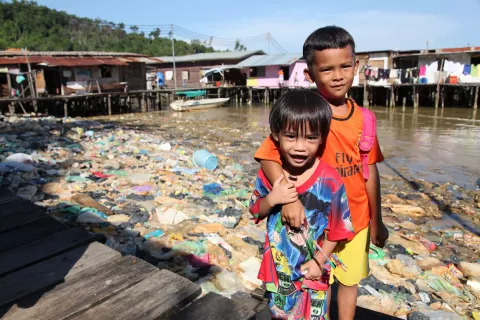
Children can be impacted by almost every aspect of business activities. While these interactions could bring positive impacts, many can lead to negative impacts. Children can be exploited by business, they can be displaced by business projects, they can be exposed to toxic pollutants and contaminated areas.
Child-responsive due diligence (i.e. human rights and environmental due diligence that integrates child rights considerations and addresses the root causes of child rights systemic challenges) is one of the most effective ways for businesses to prevent and mitigate adverse impacts on children. It is a process that enables companies to identify actual and potential negative impacts, take action to prevent, mitigate and account for them.
Children are often invisible in human rights and environmental due diligence mechanisms, thus leaving negative impacts unaddressed. While some companies have integrated some child rights aspects in their due diligence, voluntary action by business alone does not bring scale, does not provide remedy to victims, and does not ensure equal implementation across countries and companies. State action is needed to require by law that companies conduct human rights and environmental due diligence.
Mandatory human rights and environmental due diligence has the potential to shape business behavior, making sustainability and respect for human and child rights a standard business practice, as well as ensuring remedy for when abuses occur.
However, legislation and mechanisms designed only around adults do not capture salient issues for children. Unless children’s rights are explicitly made visible, there is a significant risk that they will be overlooked in companies’ sustainability due diligence, and therefore leave adverse impacts on children unaddressed. Missing out children risks missing out 30% of rights holders, with consequences that can be life-long, preventing children reaching their full potential.
UNICEF recognizes mandatory human rights and environmental due diligence as an effective tool at the disposal of governments to shape business behavior towards respecting human and children’s rights and to ensure accountability in line with their international obligations deriving from the UN Convention on the Rights of the Child and its Optional Protocols.
However, for mandatory human rights and environmental due diligence to be effective for children, children’s rights must be reflected in both the instrument and in all mechanisms and guidance enabling its implementation. The risk is otherwise that impacts on children will be overlooked in companies’ due diligence. In practice, this means that legislation should include:
- The full breadth of human and child rights as covered by the legislation
- An explicit identification of children as rightsholders and stakeholders
- An explicit requirement for businesses to pay special attention to children and other groups in vulnerable and marginalized situations in the conduct of human rights and environmental due diligence
- A due diligence obligation that covers the whole value chain and requires companies to prioritize risks to children based on saliency (scope and severity of adverse impacts)
- A human and child rights-based approach to human rights and environmental due diligence
- The strengthening of children’s access to justice and effective remedy
- A comprehensive package of supporting measures, including implementation guidelines, coherence with other laws and regulations (e.g., trade and investment laws) and supporting foreign policy and international cooperation efforts
UNICEF advocates for the introduction of robust mandatory human rights and environmental due diligence in countries and provides technical advice on how to design and implement this legislation in a way that integrates children’s rights to effect change in the lives of children and the way companies do business.